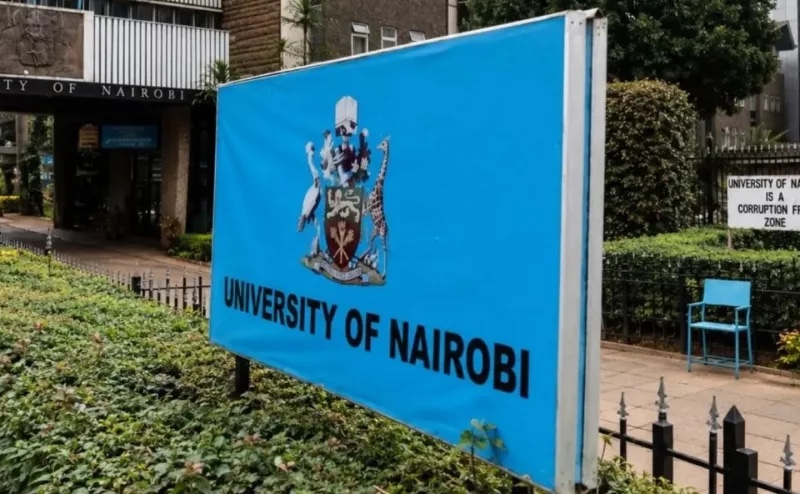
Transport along Waiyaki Way was disrupted on Wednesday, October 21, as University of Nairobi (UoN) students staged demonstrations over the ongoing lecturers’ strike that has paralysed learning in public universities across Kenya.
The protests came as a deadline issued by the University of Nairobi Students’ Association (UNSA) to the government to resolve the lecturers’ dispute expired, raising pressure on education authorities to find a lasting solution to the impasse.
Footage from the demonstrations shows groups of students marching along the road, with some raising their hands as they moved together. The protests brought the students’ grievances beyond the university grounds as the industrial action continued to interrupt academic activities.
On October 16, UNSA leaders gave the government 72 hours to address the strike, warning that students would take to the streets if no resolution was reached by Wednesday, October 21.
The association said the prolonged disruption had taken a toll on students’ academic progress and welfare, with learners facing uncertainty over examinations and the completion of their studies.
UNSA President Ahmed Rashid warned that students would demonstrate if the strike remained unresolved beyond the deadline.
The students’ action adds another layer to a dispute that has already kept lecturers away from classrooms for nearly three weeks, leaving students caught between university staff and the government over employment terms and outstanding financial commitments.
The strike began on October 2 after negotiations between university staff unions and the Inter-Public Universities Councils Consultative Forum failed to produce an agreement acceptable to the parties.
The Universities Academic Staff Union (UASU) and the Kenya Universities Staff Union (KUSU) are demanding the implementation of the 2025–2029 Collective Bargaining Agreement (CBA), alongside the resolution of outstanding salary and employment-related issues.
The unions have maintained that they will not call off the industrial action until their demands are addressed.
The government has, however, maintained that it has made efforts to address the lecturers’ grievances, with Education Cabinet Secretary Julius Ogamba previously urging the striking staff to resume teaching.
The stalemate has continued despite attempts to reach an agreement, with the unions rejecting the government’s proposed financial settlement, arguing that it does not adequately address their demands.
For students, the consequences extend beyond missed lectures. Learners have raised concerns over lost academic time, delayed examinations, uncertainty surrounding graduation plans and the continued cost of accommodation and other living expenses while classes remain suspended.
An earlier report on October 13 documented students’ concerns over the financial and academic consequences of the strike, including the burden of paying rent while unable to attend classes.
The demonstrations along Waiyaki Way signal growing frustration among students who are demanding that the government and university staff unions resolve their differences and allow learning to resume.
Attention now turns to whether the government and the striking unions can reach an agreement following the students’ ultimatum, as the continued impasse threatens to prolong disruptions to academic programmes in public universities.