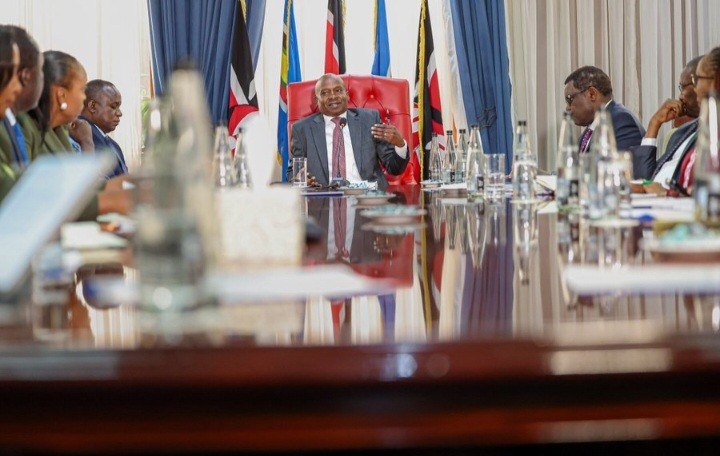
Deputy President Kithure Kindiki has announced intensified government operations against illicit alcohol, revealing that multi-agency teams have conducted 125 raids in the past 10 days as authorities move to dismantle criminal networks behind the trade.
Speaking in Karen, Nairobi, on Wednesday, October 21 2026, Kindiki said nine operations had targeted illicit ethanol, while another 116 raids focused on illegal brews produced without meeting public health and quality standards.
Kindiki said the government had finalised legislative proposals aimed at tightening enforcement against manufacturers, distributors and other individuals suspected of enabling cartels that supply alcohol allegedly laced with dangerous chemicals.
The Deputy President also held deliberations with Inspector General of Police, the Director of Public Prosecutions, representatives of the Council of Governors, principal secretaries and heads of relevant government agencies to review the progress made and discuss additional measures.
The government is seeking to strengthen coordination between security and regulatory agencies, with a framework for involving local communities in the fight against illicit alcohol expected to be released next week.
A permanent coordination mechanism bringing together state agencies and national government institutions has also been established at Harambee House Annex to improve cooperation in tackling illicit alcohol and drug networks.
Kindiki said the government was finalising legal measures to enable the seizure and confiscation of assets and funds linked to the illicit alcohol and drug trade.
The proposed measures are intended to weaken the financial power of the cartels by targeting the proceeds of their activities. The government plans to channel recovered assets and funds towards the rehabilitation of people struggling with addiction.
The crackdown will also seek to formalise traditional alcoholic brews that meet Kenya Bureau of Standards requirements, allowing compliant producers to obtain licences.
The move is expected to distinguish traditional brews that meet the required standards from products manufactured or distributed outside public health and quality regulations.
The latest measures come amid government efforts to address the health risks associated with illicit alcohol and the wider impact of drug trafficking. Authorities are seeking to combine enforcement operations with stronger regulation and support for affected communities.
Kindiki's deliberations with security officials and other stakeholders focused on improving the response against those involved in producing and distributing unsafe alcoholic drinks, as well as strengthening cooperation between agencies.