The United Nations and Switzerland have called for renewed efforts to de-escalate the conflict in Sudan as international delegates meet in Geneva to explore practical measures towards a comprehensive ceasefire and a lasting political solution.
The discussions are focused on strengthening coordination among international and regional mediators, building confidence between the parties and creating conditions for an end to the fighting that has devastated the country for more than three years.
Pekka Haavisto, the Personal Envoy of the UN Secretary-General for Sudan, urged delegates to use their respective channels of engagement to build trust and identify practical steps towards ending hostilities.
“Our first session, devoted to de-escalation, will offer an opportunity to explore practical ways forward,” Haavisto said, calling on participants to help establish conditions conducive to a comprehensive ceasefire.
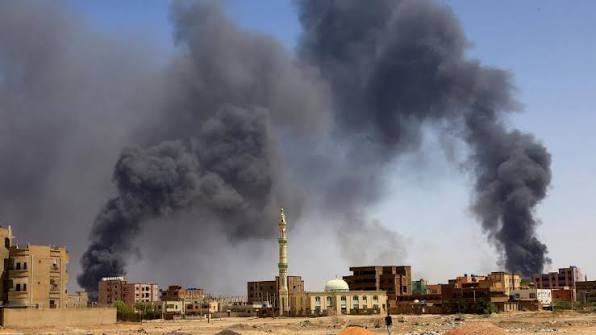
The conflict erupted in April 2023 between the Sudanese Armed Forces (SAF) and the paramilitary Rapid Support Forces (RSF), former allies who jointly seized power in a 2021 coup before turning against each other.
Since then, the fighting has triggered a major humanitarian crisis, with civilians bearing the brunt of violence, displacement, hunger and the destruction of essential infrastructure.
Switzerland, which is co-hosting the Geneva meeting with the United Nations, warned that drone attacks have increasingly become a defining feature of the conflict, causing widespread civilian suffering.
Alexandre Fasel, Switzerland’s State Secretary, said the war had increasingly become a drone war in which civilians were paying the highest price.
He also warned that famine-like conditions persist in Darfur, Kordofan and other parts of Sudan, stressing that the ongoing conflict is a major driver of hunger across the country.
Fasel emphasised that international humanitarian law requires all parties to protect civilians and allow humanitarian assistance to reach those in need, regardless of progress towards a ceasefire or political settlement.
According to figures cited during the discussions, nearly 34 million people in Sudan require humanitarian assistance, highlighting the scale of the emergency facing aid agencies and relief organisations.
The crisis has also disrupted education, with approximately eight million Sudanese children currently out of school, according to information from the United Nations Children's Fund (UNICEF).
Officials warned that prolonged school closures threaten children's right to education and could undermine Sudan's prospects for long-term stability and recovery.
The conflict has also been associated with renewed conflict-related sexual violence, which Fasel said has been used to terrorise and humiliate civilians, including people targeted because of their ethnicity or perceived affiliations.
Beyond efforts to secure a ceasefire, the Geneva talks are expected to examine the possibility of a Sudanese-led transitional political process that reflects the aspirations and diversity of the country's population.
Haavisto stressed that the international community's role should be to support Sudanese people in determining their country's future through an inclusive and credible dialogue.
The latest meeting forms part of a series of consultations aimed at improving coordination among organisations and countries involved in peace efforts. Previous meetings have taken place in Cairo, Djibouti, Nouakchott and Brussels.
Neither the Sudanese Government nor the RSF is represented at the Geneva meeting because the consultations are designed to coordinate the efforts of mediators rather than negotiate directly with the warring parties.
On the sidelines, Haavisto was also expected to engage with representatives of the Quad mechanism, comprising the United States, Saudi Arabia, the United Arab Emirates and Egypt.
Discussions were also expected to involve the Quintet, which brings together the African Union, the Intergovernmental Authority on Development (IGAD), the United Nations, the European Union and the League of Arab States.
The Geneva consultations followed separate humanitarian discussions involving UN officials, international non-governmental organisations operating in Sudan, the International Committee of the Red Cross and the Sudan INGO Forum.