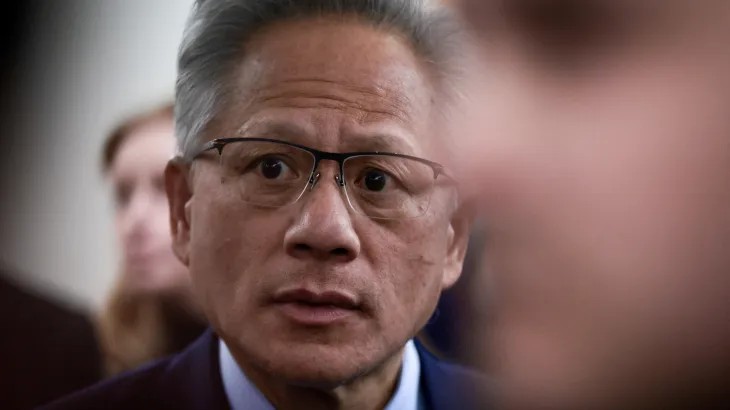
Three senior United States congressional committee chairmen have demanded that Nvidia founder and former Chief Executive Jensen Huang appear for a closed-door interview as lawmakers investigate allegations surrounding his reported personal relationships and possible links to Chinese intelligence.
In a letter dated November 12, 2026, the lawmakers requested a transcribed interview with Huang on December 1, seeking answers to questions arising from their committees' investigations.
The letter was signed by Brian Mast, Chairman of the House Foreign Affairs Committee; John Moolenaar, Chairman of the House Select Committee on the Chinese Communist Party; and Eric A. “Rick” Crawford, Chairman of the House Permanent Select Committee on Intelligence.
The three lawmakers said the interview would be conducted behind closed doors and transcribed, allowing congressional investigators to obtain Huang's account of the issues under investigation.
They warned that failure to cooperate could prompt the House Foreign Affairs Committee to issue a subpoena compelling Huang to testify in a format determined by the committee.
The letter further required Huang to provide written confirmation accepting the request by 8 p.m. Eastern Standard Time on November 13, 2026, warning that a subpoena would otherwise be issued.
The congressional intervention comes amid reports of alleged extramarital relationships involving Huang, including claims that one of the individuals may have connections to Chinese intelligence.
The allegations have attracted attention in Washington, where lawmakers have increasingly scrutinised China's access to sensitive American technology and the potential security implications of the growing artificial intelligence industry.
Huang's reported departure from the helm of Nvidia has also intensified attention on the company, which has become one of the world's most valuable technology businesses through its dominance in the production of advanced artificial intelligence chips.
Nvidia's position at the centre of the global AI industry has made its leadership, corporate governance and relationships with foreign interests matters of strategic importance to Washington.
The company has also operated against the backdrop of growing US restrictions on the export of advanced semiconductor technology to China, with American officials citing national security concerns over Beijing's technological and military ambitions.
The investigation could therefore extend beyond Huang's personal affairs to broader questions about corporate security, foreign influence and the protection of sensitive technology.
However, the allegations linking Huang to Chinese intelligence remain unproven, and the congressional letter does not establish that he engaged in espionage or that Nvidia's proprietary technology was compromised.
Huang's response to the lawmakers' request is expected to determine whether the committees proceed with a voluntary interview or invoke their subpoena powers to compel his appearance.