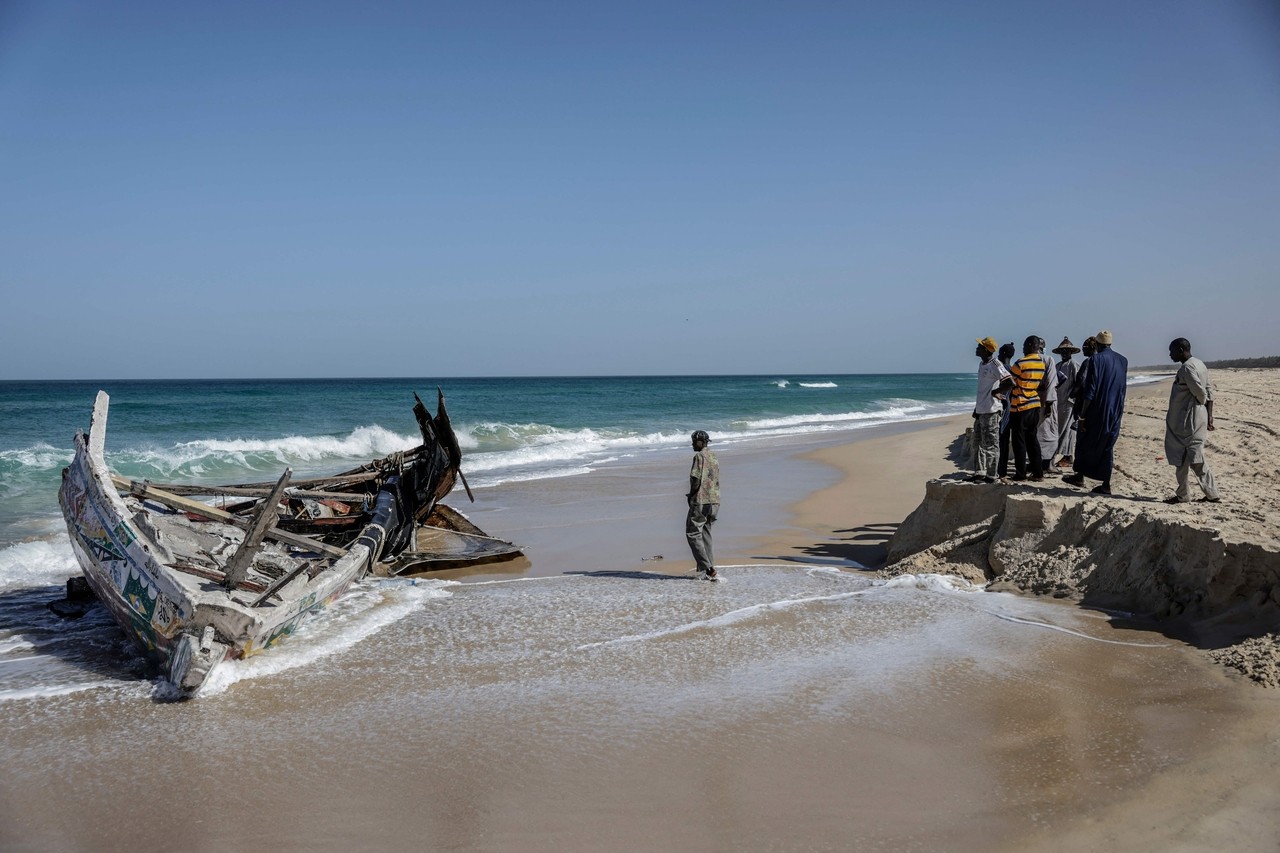
The death toll from a migrant boat disaster off Senegal's northwestern coast has risen to 39 after rescuers recovered additional bodies on Monday, November 9, as search operations continued for passengers still missing.
The vessel, which was carrying migrants hoping to reach Europe, capsized off the coastal town of Kébémer, north of the capital, Dakar, while travelling towards Spain.
The boat had departed from Saint-Louis, a northern Senegalese city, and was following the Atlantic migration route commonly used by West African migrants attempting to reach the Spanish coast.
Senegalese emergency services confirmed that the death toll had increased to 39 following the latest recovery of bodies. Only one passenger has so far been rescued alive, while several others are believed to be missing.
The exact number of people aboard the vessel has not been established, making it difficult for authorities to determine how many passengers remain unaccounted for.
Senegal's Ministry of Interior had initially reported 21 deaths and one survivor as of Saturday evening, November 7, while confirming that emergency teams had been deployed to search for possible survivors.
The government subsequently announced that it had mobilised relevant state agencies to continue the search, assist any survivors and support families affected by the tragedy.
Senegalese President Bassirou Diomaye Faye expressed condolences to the families of those who died and acknowledged the distress of relatives still waiting for information about their missing loved ones.
He also pledged to intensify the government's efforts to dismantle networks organising dangerous migrant crossings and create better opportunities for young people within the country.
In a statement issued on Sunday, the Ministry of Interior reiterated the government's determination to combat people-smuggling networks, particularly through stronger cooperation with neighbouring countries. It also urged greater public awareness of the dangers associated with irregular migration.
The latest disaster has once again drawn attention to the risks faced by thousands of young people attempting to reach Europe through the Atlantic Ocean.
Migrants departing from West Africa frequently use uncovered wooden fishing canoes, known locally as pirogues, to undertake the journey to Spain's Canary Islands. The crossing can cover approximately 800 miles across open waters, exposing passengers to rough seas, adverse weather conditions and prolonged periods without adequate supplies.
Economic difficulties, unemployment and poverty continue to push many young people in Senegal and other West African countries towards the dangerous journey in search of better living conditions and employment opportunities.
The Spanish migrant rights organisation Walking Borders reported that at least 635 people died or disappeared while attempting to reach the Canary Islands during the first five months of 2026, illustrating the continuing dangers along the migration corridor.
Meanwhile, Senegalese authorities are yet to establish the full circumstances surrounding the latest capsizing or account for all those who were aboard the vessel.
Rescue and recovery operations are ongoing as families await further information about their missing relatives.