In January 2004, Kenyan striker Dennis Oliech found himself in the company of some of football’s most exciting young talents after British newspaper The Guardian named him among the world’s most wanted young players, alongside Wayne Rooney, Robinho, Diego, Wesley Sneijder and Robin van Persie.
At 19, Oliech was representing Kenya at the Africa Cup of Nations in Tunisia and attracting interest from clubs abroad. The Guardian described him as a lively forward who had recently moved to France and wanted to play in the English Premier League. Its profile listed Marseille as his club, although he did not ultimately sign for the French side.
More than two decades later, the list offers an opportunity to revisit Oliech’s career and assess how the Kenyan forward turned early promise into a journey through professional football in Qatar, France and the United Arab Emirates.
Rooney went on to become one of Manchester United’s greatest players, while Sneijder won the Champions League with Inter Milan in 2010. Van Persie became a Premier League champion with Manchester United, while Robinho featured for major clubs including Real Madrid, Manchester City and AC Milan. Oliech did not reach the same global heights, but his career made him one of Kenya’s most prominent football exports.
Born in Nairobi on February 2, 1985, Oliech began playing at Dagoretti Santos before joining Mathare United. His pace, strength and direct approach made him one of the country’s most exciting young forwards. He became known as ‘Dennis the Menace’, a nickname associated with the mischievous boy in the popular comic strip of the same name, reflecting the problems his attacking style caused defenders.
His performances attracted overseas interest, including from Marseille, where he reportedly had trials. Instead, he moved to Qatar in 2003 to join Al-Arabi, beginning his professional career abroad.
The move opened the door to European football. In November 2005, Nantes confirmed that it had signed Oliech from Al-Arabi, with the transfer taking effect in January 2006. He made his debut for the French club in March that year, scoring four goals in 32 appearances, but his time there did not develop into the breakthrough many had anticipated.
A move to AJ Auxerre in 2007 proved more significant. Initially joining on loan, Oliech went on to spend several seasons at the club, making it the most defining chapter of his European career. He scored 25 goals in 165 appearances, according to figures reported by The Standard, and featured in the UEFA Champions League during the 2010-11 season.
Competing in Europe’s premier club competition was a significant achievement for a Kenyan footballer whose journey had started in Nairobi’s domestic football scene. His Auxerre years demonstrated that he could compete against established European sides, even if he did not eventually become one of the continent’s leading attacking stars.
After leaving Auxerre in 2013, he joined AC Ajaccio, another French club competing in Ligue 1. He scored on his debut before departing in 2015 and later continued his career with Dubai CSC in the United Arab Emirates.
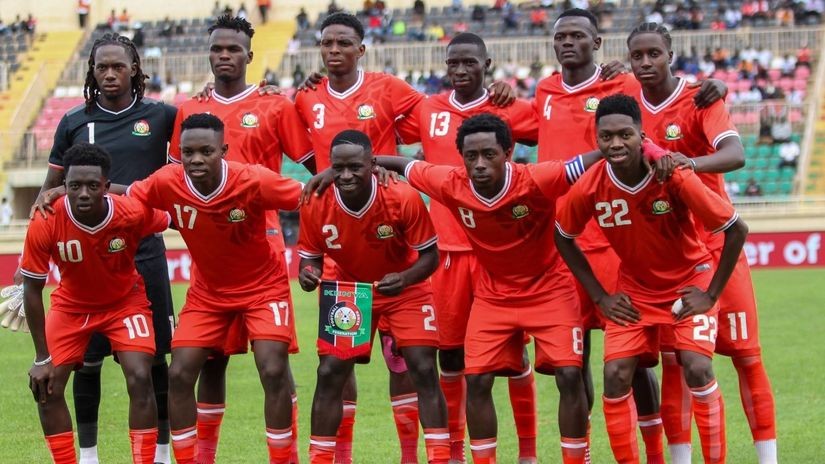
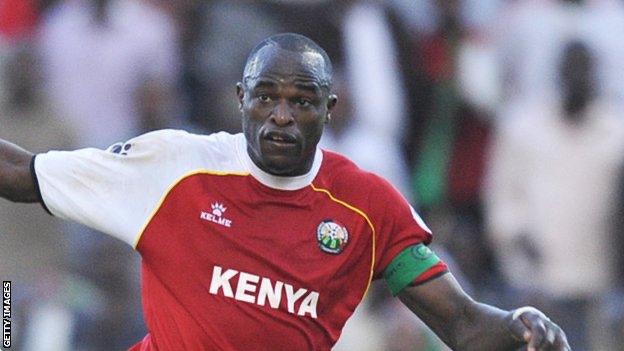
Oliech’s contribution to Kenya’s national team was equally important. He made his international debut against Nigeria in 2002 and became a key figure in the Harambee Stars attack. His winning goal against Cape Verde in September 2003 helped Kenya qualify for the 2004 Africa Cup of Nations, its first appearance at the tournament since 1992.
Kenya did not progress beyond the group stage in Tunisia, but the tournament placed Oliech before a wider continental audience. He went on to score 34 goals for the national team, according to Kenyan reporting, becoming one of its leading international goalscorers.
In March 2016, Oliech announced his retirement from international football, citing dissatisfaction with the support he felt he had received from football authorities.
He returned to Kenyan club football in January 2019, signing an 18-month contract with Gor Mahia. His arrival generated excitement among supporters, and he scored against Zamalek in a CAF Confederation Cup match in February 2019.
The return, however, ended controversially. Gor Mahia terminated his contract in August 2019, citing alleged misconduct, including absenteeism from training. Oliech disputed the circumstances of his departure and challenged the termination through his lawyers.
In January 2020, he announced his retirement from professional football at the age of 34.
Looking back at the Guardian’s 2004 list, Oliech’s career illustrates the difference between early promise and eventual achievement. While Rooney, Sneijder and Van Persie went on to win major European honours and establish themselves globally, Oliech’s achievements should also be considered within the context of the opportunities available to Kenyan players at the time.
He built a professional career across three countries, competed in the Champions League and became one of Kenya’s most influential international forwards. His inclusion alongside future global superstars was a significant recognition of Kenyan talent at a time when few local players attracted comparable international attention.
More than two decades later, Dennis ‘The Menace’ Oliech remains a memorable figure in Kenyan football, remembered for his attacking qualities, European adventure and contribution to Harambee Stars.