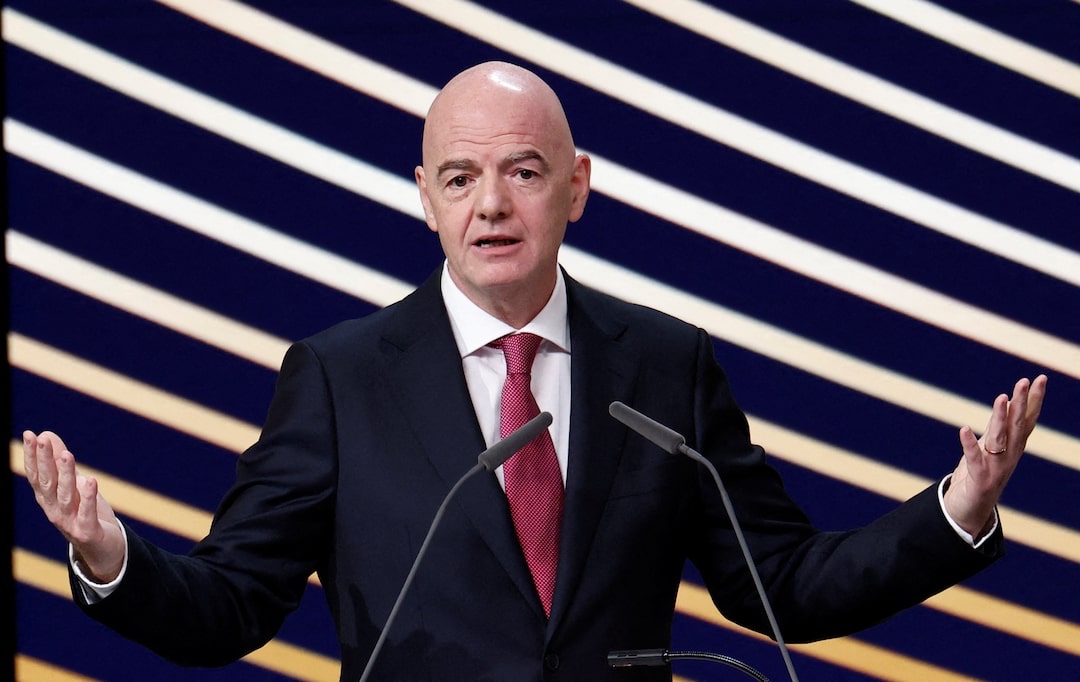
Gianni Infantino’s bid for another four-year term as FIFA president is unfolding against a growing dispute over the leadership and governance of world football, with criticism from influential football administrators contrasting with the support he continues to receive from several regional confederations.
The 56-year-old, who has led FIFA since February 2016, confirmed his intention to seek re-election at the organisation’s congress in Vancouver in May.
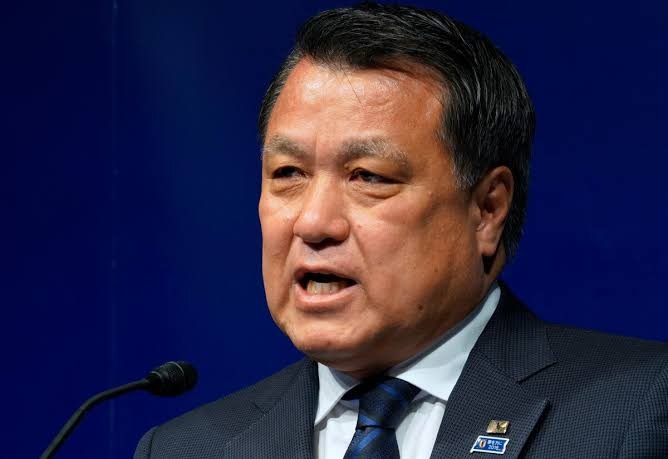
However, his campaign now faces opposition from French Football Federation president Philippe Diallo and Japan Football Association honorary president Kozo Tashima, setting up his first contested re-election since taking office.
FIFA confirmed on Thursday, November 19, that it had received three presidential candidacies, naming Infantino, Diallo and Tashima. Former Switzerland international Ramon Vega, who had also announced his intention to contest the position, was not included in the official list.
The submitted candidacies have been forwarded to FIFA’s electoral committee for examination, with the final list of admitted candidates expected by February 18, 2027.
The election is scheduled for March 18, 2027, during the 77th FIFA Congress in Rabat, Morocco.
Infantino’s position within the organisation is supported by a voting structure that gives each of FIFA’s 211 member associations one vote, regardless of the size or financial strength of its football industry.
This makes relationships with national federations and regional confederations particularly important in determining the direction of the organisation.
The Confederation of African Football (CAF) has maintained its support for Infantino, while South America’s CONMEBOL has also remained behind his leadership.
The Asian Football Confederation (AFC), which initially criticised his proposed private-investment venture, subsequently renewed its backing following his apology over the handling of the project.
His relationship with the confederations has become an important part of the contest, particularly as European football leaders have emerged among his most vocal critics.
The support is not uniform across every region, with associations in North and Central America, the Caribbean and Europe holding differing positions.
One of the biggest sources of opposition has been the proposed FIFA Forward Enterprise (FFE), a commercial venture that sought to bring private investors into an entity managing commercial rights linked to major FIFA competitions, including the World Cup.
The proposal, valued at approximately $20 billion, was expected to raise about $4.2 billion through the sale of a minority stake to investors. It attracted criticism over the proposed structure, transparency and the limited consultation with FIFA’s member associations and confederations.
UEFA and other football stakeholders questioned why such a major commercial arrangement was being pursued without sufficient involvement of the wider football community. The opposition intensified, with European officials calling for greater accountability and some demanding Infantino’s resignation.
The proposal was subsequently abandoned, but the controversy continued to affect relationships within FIFA. Infantino apologised to the FIFA Council over the way the initiative had been handled, although the apology did not resolve all the concerns raised by European administrators.
The dispute has also provided an opening for Diallo, who has positioned himself as an alternative focused on rebuilding trust and improving institutional accountability. His candidacy received backing from UEFA’s leadership, following efforts by European associations to identify a challenger.
Tashima has also placed governance reform at the centre of his campaign, arguing for greater institutional accountability and addressing what he considers an excessive concentration of power within FIFA.
His experience on the FIFA Council, where he has served since 2015, gives him familiarity with the organisation’s internal structures.
Beyond the investment controversy, Infantino’s eligibility to seek another term has become a separate governance dispute.
FIFA’s statutes limit a president to three terms of office. Infantino was elected in 2016, 2019 and 2023, but the FIFA Council ruled in December 2022 that his initial 2016–2019 period would not count towards the limit because he had completed the interrupted mandate of predecessor Sepp Blatter.
Former FIFA Governance Committee chairman Miguel Maduro has challenged that interpretation, arguing that the statutes do not distinguish between full and shortened presidential terms.
Human rights organisation FairSquare has also urged member associations to question Infantino’s eligibility, raising concerns over the lack of publicly disclosed reasoning behind the Council’s decision.
The controversy places FIFA’s own governance rules under scrutiny as the electoral process advances.
For African football, the contest carries particular significance. The continent has 54 FIFA member associations, giving it one of the largest voting blocs in the organisation.
CAF’s support therefore represents an important part of Infantino’s international backing, although individual associations ultimately exercise their own votes.
Infantino has also pledged at least $25 million in development funding to each member association through 2030, reinforcing the importance of FIFA’s financial relationship with national federations.
The commitment is particularly relevant to associations that depend on international funding to support infrastructure, grassroots programmes and football development.
However, the election will test more than the incumbent’s relationships with football administrators. It will also place questions of transparency, institutional independence and the distribution of power at the centre of the debate over FIFA’s future.
With the nominations now submitted, the contest is moving into its next stage. The challenge for Infantino’s opponents will be to translate their criticism into coordinated support across FIFA’s membership, while the incumbent faces questions about the decisions and governance practices that have defined his presidency.
Ultimately, the March 2027 election will offer FIFA’s member associations an opportunity to decide whether to continue with Infantino’s leadership or pursue a different direction for the organisation.