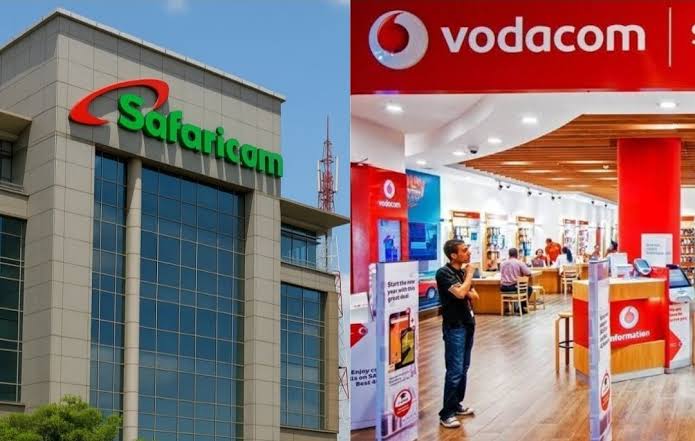
Vodacom’s group service revenue rose 29.4% to R85.1 billion in the quarter, the first to include Kenya’s Safaricom after Vodacom raised its stake to 55%. Safaricom contributed KSh115.26 billion (R14.59 billion) in service revenue, equal to 75.5% of Vodacom’s year-on-year increase. The results were published on November 10, 2026.
Vodacom completed its acquisition of a controlling stake in Safaricom with effect from June 30, 2026, lifting its effective holding from 35 percent to 55 percent. Vodafone Kenya, its Kenyan subsidiary, paid R25.8 billion (about US$1.6 billion) for 15 percent of Safaricom from the Government of Kenya. The quarter reported on November 10 is the first period in which Vodacom counts Safaricom as a subsidiary.
Group revenue rose 25.6 percent to R102.5 billion, helped by the consolidation. Service revenue, which covers calls, data and mobile money, grew 29.4 percent to R85.1 billion. On a pro-forma basis, which assumes Safaricom was part of the group for all of last year, service revenue grew 13.3 percent.
Safaricom’s contribution to the quarter was substantial. It added KSh115.26 billion (R14.59 billion) in service revenue, equal to 75.5 percent of the R19.33 billion year-on-year increase in Vodacom’s service revenue. Its EBITDA was KSh67.45 billion (R8.54 billion), and its financial services revenue was KSh51.26 billion (R6.49 billion), largely from M-PESA.
The gap between the reported 29.4 percent growth and the 13.3 percent pro-forma figure shows how much of the headline result comes from the acquisition. Investors looking for underlying growth should focus on the pro-forma number, since it compares like with like across both years.
Financial services are becoming a larger part of the group. Vodacom said the consolidation lifts financial services from 13 percent to more than 22 percent of group service revenue. Its mobile money platforms, including Safaricom’s M-PESA, processed transactions worth US$547.9 billion over the past 12 months.
Vodacom has also raised its ambitions. Chief Executive Shameel Joosub described the quarter as a defining moment for the group, and the company has lifted its revenue target to more than R300 billion by 2030, up from R200 billion. The company expects beyond-mobile services to contribute more than 32 percent of group service revenue with Safaricom included.
The acquisition also has a cash-flow timing effect. Vodacom paid Safaricom’s final dividend to outside shareholders, but consolidated Safaricom’s cash flow only from the second quarter of its financial year. That mismatch will affect how the cash position looks in the coming periods.
The next signal will be how quickly Vodacom reduces the borrowing it took on for the deal and whether the company’s payout ratio moves back towards its earlier level. Investors will also watch whether Safaricom’s growth in Kenya and Ethiopia keeps pace with the group targets.