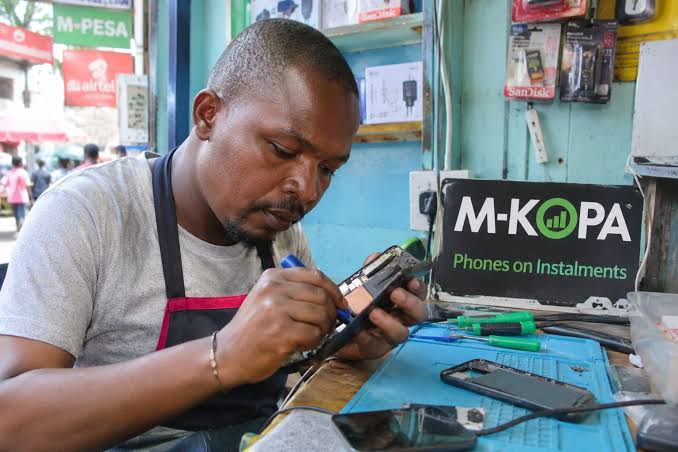
M-Kopa Kenya has intensified its fight against the illegal unlocking of smartphones sold on credit after linking a Nairobi repair technician to the alleged tampering of dozens of devices whose instalments had not been fully paid.
The dispute involves Benjamin Okello, a mobile phone technician accused of using specialised electronic equipment to interfere with M-Kopa's security systems, which remotely restrict devices when customers default on their payments.
In court documents, the financier said investigations by the Directorate of Criminal Investigations (DCI) linked Okello to the unauthorised alteration of 26 phones belonging to the company. Forensic analysis also indicated that 365 mobile phones had passed through flashing equipment recovered from his repair shop in the Mradi area of Mathare.
Police reportedly recovered 71 phones alongside computers, laptops, external hard drives and specialised diagnostic equipment, including Pandora, Chimera and U.F.I boxes.
M-Kopa said 24 of the 29 phones it identified from the recovered devices belonged to the company, with 23 allegedly tampered with to defeat its payment-control mechanisms.
A further examination identified 18 additional phones connected to its financing arrangements, valued at KSh303,487. Seventeen were reportedly still active on loan but appeared inactive on the company's device management system.
The case highlights the growing conflict between mobile phone financing companies and technicians accused of bypassing digital restrictions designed to secure devices until customers complete their payments.
M-Kopa operates a hire-purchase model under which customers make an initial payment and clear the remaining cost through daily, weekly or monthly instalments. The company retains ownership of financed devices until the purchase price is fully paid, according to an affidavit by its global fraud investigations manager, Edgar Samba.
When customers fall behind on payments, the company can remotely restrict the phones, effectively making them unusable until the outstanding instalments are addressed.
However, technicians with specialised flashing tools can potentially interfere with the software, allowing restricted devices to operate again without the financier's authorisation.
M-Kopa said it first received complaints in February 2025 involving customers whose financed phones had allegedly been stolen. It subsequently reported the matter to police on July 10, 2025, triggering investigations that led to the raid on Okello's premises.
The technician has denied wrongdoing, maintaining that the phones belonged to customers who had brought them to his shop for legitimate repairs, software servicing and replacement of components. He also challenged the legality of the police search and seizure of his equipment.
Okello and his lawyer, Gabriel Owade, petitioned the High Court seeking to invalidate Section 323 of the Penal Code, which deals with possession of property reasonably suspected to have been stolen or unlawfully obtained. They argued that the provision undermines the presumption of innocence and the right to remain silent.
The High Court dismissed the constitutional petition, allowing the criminal proceedings at the Makadara Law Courts to continue. However, it cautioned that the mere discovery of phones and diagnostic equipment at a repair shop does not, without additional circumstances, establish criminal conduct.
The case could have wider implications for Kenya's growing smartphone financing market, where remote locking has become an important tool for lenders managing repayment risks.
M-Kopa says it has helped nearly five million customers access more than KSh210 billion in credit across its markets. The company faces the challenge of protecting financed devices without unfairly exposing legitimate repair businesses and customers to criminal allegations.
Okello remains entitled to the presumption of innocence as the criminal case proceeds.