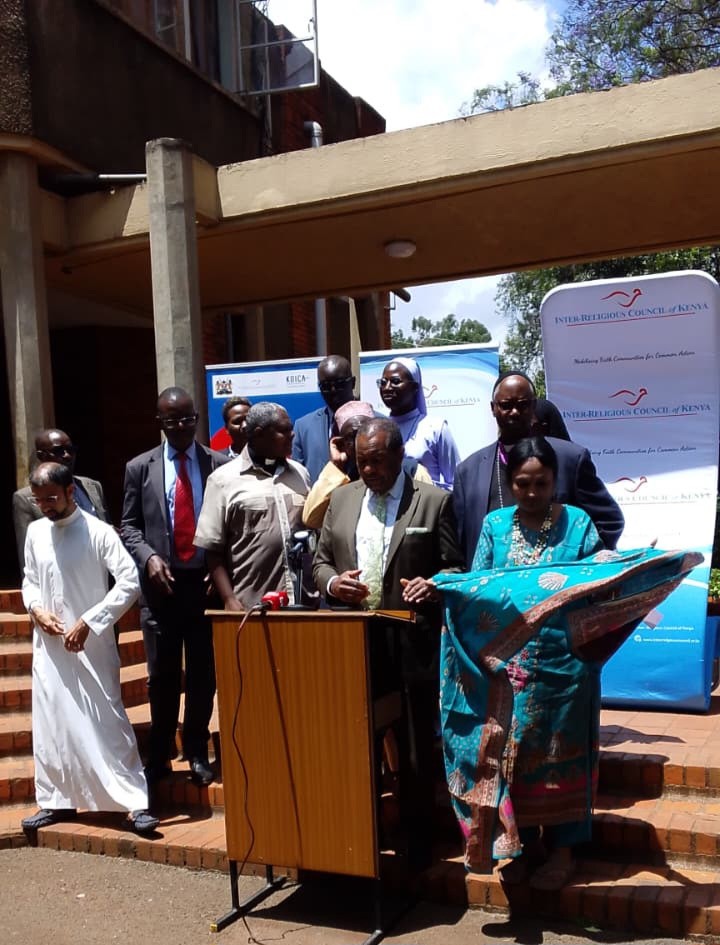
The Inter-Religious Council of Kenya (IRCK) has called on Kenyans to reject political violence and demand a transparent electoral process as the country prepares for the 2027 General Election.
Speaking during the council's State of the Nation Address on Thursday, Bishop Geoffrey Njunguna said the country was approaching the election period amid economic challenges, anxiety and painful memories of deaths linked to past election-related violence and protests.
He noted that many families were already struggling with difficult economic conditions, warning that political tensions could further strain the country if leaders and their supporters failed to exercise restraint.
Njunguna urged citizens not to allow themselves to be mobilised into violence or used to disrupt political meetings and public gatherings.
He also cautioned against accepting money from individuals seeking to recruit people to interrupt meetings, cause chaos or intimidate political opponents.
Instead, he encouraged Kenyans to take part in the democratic process by registering as voters and turning out to vote when the time comes.
The bishop further called on security agencies to remain impartial as they carry out their duties, insisting that all Kenyans should be protected and treated with dignity regardless of their political affiliations.
He also raised concern over recurring cases of femicide, calling for urgent action to end the killings before the country enters the election period.
On political leadership, the IRCK urged politicians to avoid statements and campaigns that could deepen divisions among Kenyans.
Njunguna said political leaders should focus on presenting their policies and development plans rather than using fear, hostility and divisive rhetoric to win public support.
The council also called on political actors to commit themselves to peace by signing and respecting peace agreements throughout the campaign period.
Religious leaders, he said, had resolved not to allow their places of worship to become platforms for political campaigning.
The council committed to keeping political actors out of its pulpits, saying religious platforms should remain spaces for spiritual guidance and national unity rather than partisan mobilisation.
The IRCK also addressed concerns surrounding media freedom and the role of journalists during the election period.
It called on the government and other stakeholders to protect media practitioners as they carry out their work, noting that journalists should be able to report without intimidation or interference.
At the same time, the council urged media organisations to uphold balanced reporting and prioritise the wellbeing of the country when covering political activities and election-related developments.
The council further called on the Independent Electoral and Boundaries Commission (IEBC) to provide regular updates on its level of preparedness for the 2027 polls.
It said consistent communication from the electoral body would help keep Kenyans informed and address concerns surrounding the management of the election.
The judiciary was also urged to communicate promptly on its preparedness and role in the electoral process, particularly in handling disputes that may arise before, during and after the polls.
The religious leaders said clear and timely communication from key institutions would be important in building public confidence as the country moves closer to the election.