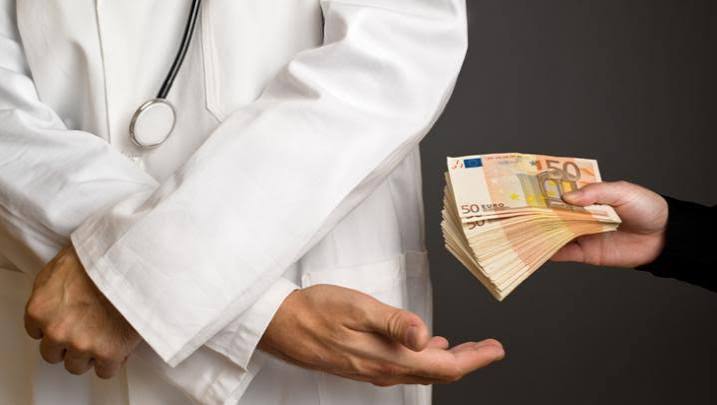
Bribes and unofficial favours are adding to the cost of getting treatment at Kenya’s public health facilities, with one in three people who had contact with a public clinic or hospital reporting that they had to pay a bribe, give a gift or do a favour to obtain care, according to an Afrobarometer survey cited in the World Bank’s November 2026 Kenya Economic Update.
The survey, conducted among 2,400 adults in April and May 2024, found that 63 per cent of respondents had contact with a public clinic or hospital in the preceding 12 months. Among those who sought care, 32 per cent said they had made an unofficial payment or favour to obtain the services they needed.
The findings point to a financial barrier in a system where access to treatment is already difficult for many households. Overall, 62 per cent of people who sought care said it was difficult to obtain the services they needed, while 82 per cent reported encountering care or medicine costs they could not afford.
The burden was heavier among poorer respondents. The World Bank’s analysis of the same survey found that the probability of paying a bribe when visiting a clinic or hospital increased by 10 percentage points between the least-poor and most-poor groups. Afrobarometer also found that 78 per cent of respondents experiencing high levels of lived poverty had difficulty obtaining care, compared with 47 per cent of well-off respondents.
A separate measure by Transparency International Kenya points to a deterioration in the health sector over time. Its 2025 Kenya Bribery Index put the prevalence of actual bribe payments in medical and health services at 37.1 per cent, up from 17.5 per cent in 2019 and 9.6 per cent in 2017. The measure compares bribe payments recorded with the total number of interactions in the sector; it is not a claim that 37.1 per cent of all patients paid a bribe.
The findings do not identify individual facilities or establish that all health workers demand unofficial payments. They reflect the experiences reported by service users. But for households already struggling to afford treatment, an unofficial charge or favour can add another obstacle between a patient and the care they need.
The figures raise questions about how national and county health authorities monitor informal charges, protect patients who refuse to pay, and ensure that access to public treatment is not determined by a person’s ability to offer extra money or favours.