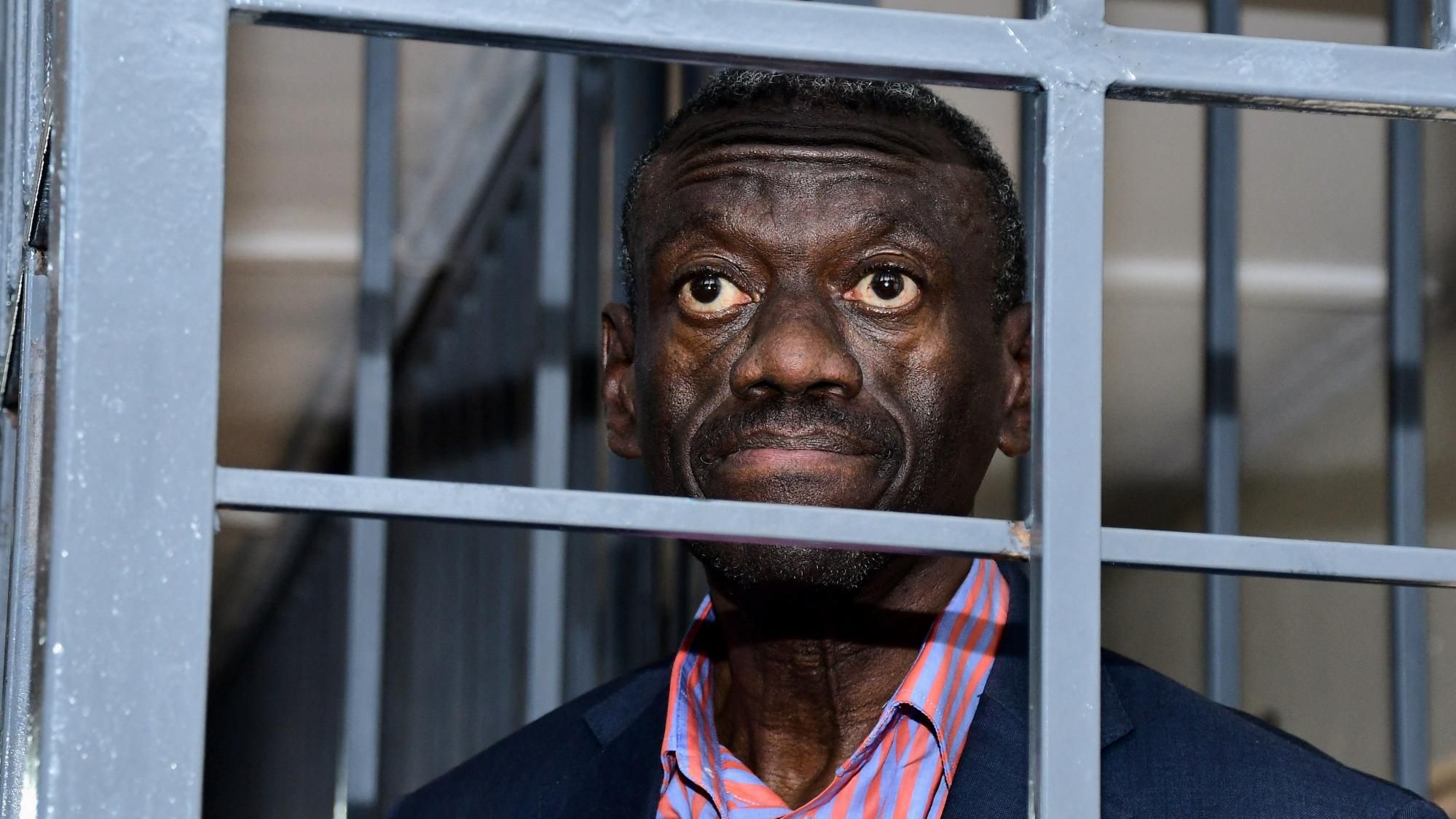
Kenyan cities Nairobi and Kisumu have featured prominently in the ongoing treason trial of Ugandan opposition politician Dr Kizza Besigye, with prosecutors alleging that meetings and activities linked to the case took place in the two cities.
The Kenya connection emerged during proceedings at the High Court in Kampala, where the prosecution presented audio and video recordings as part of its evidence against Besigye and his co-accused.
Besigye is jointly charged with his aide, Hajji Obeid Lutale, and UPDF officer Captain Denis Oola, also referred to as Denis Oola Ooya. The three have denied the allegations.
The court heard that the Ugandan government spent 59.32 million shillings to have two hours, 29 minutes and three seconds of audio recordings transcribed by Makerere University's School of Languages.
The recordings were allegedly made by British-American private security investigator Andrew Wilson, alias Orlando, in Athens, Geneva and Nairobi.
Wilson, who testified as the first prosecution witness, concluded his testimony on Thursday.
He told the court that while working on behalf of the Ugandan government, he secretly recorded audio and video of meetings in which Besigye allegedly discussed plans to overthrow the Ugandan government.
Wilson said some of the meetings involving Besigye and his associates took place in Nairobi, Athens and Geneva between 2023 and 2024.
A Nairobi meeting allegedly held on November 16, 2024, has emerged as a key part of the prosecution's case.
Wilson told the court that he was unable to preserve the recording after Kenyan police allegedly seized devices he had used during the meeting.
He said the Nairobi recording was consequently lost, while other recordings were later transferred to a hard drive and handed over to Uganda's Criminal Investigations Directorate.
Asked about a reference he made to Kenyan police and a gun at Riverside Theatre, Wilson told the court:
"When you say that it is the Kenyan police that put the gun at Riverside. What did you mean?"
He responded: "I assume it was the Kenyan police that organised the logistics for the meeting in Nairobi, my lord."
Kisumu has also featured in the prosecution's case, with the State alleging that Besigye and his associates discussed plans to establish a training camp in the Kenyan city.
According to Wilson's testimony, the discussions involved plans to train Ugandan opposition supporters in paramilitary skills and allegedly acquire weapons and other resources.
Prosecutors allege that Besigye, Lutale and Captain Oola held meetings in Uganda, Kenya, Greece and Switzerland as part of a plan to raise funds, acquire weapons and organise paramilitary activities aimed at overthrowing the Ugandan government.
The three accused have denied the allegations.
Wilson presented at least 11 devices he said he used to secretly record the meetings.
They included cameras concealed in a wall charger, USB charger, power bank and necklace, alongside audio recording equipment.
The cost of transcribing the recordings was disclosed by the second prosecution witness, Medadi Setanda, a coordinator at Makerere University's Department of Languages.
Setanda told trial judge Emmanuel Baguma that he received a request on September 5, 2025, from the CID compiler to listen to and transcribe audio contained on a flash disk.
He said the department charged 70,000 shillings per audio minute at the time.
The recordings, lasting nearly two and a half hours, therefore cost the Ugandan government 59.32 million shillings to transcribe.