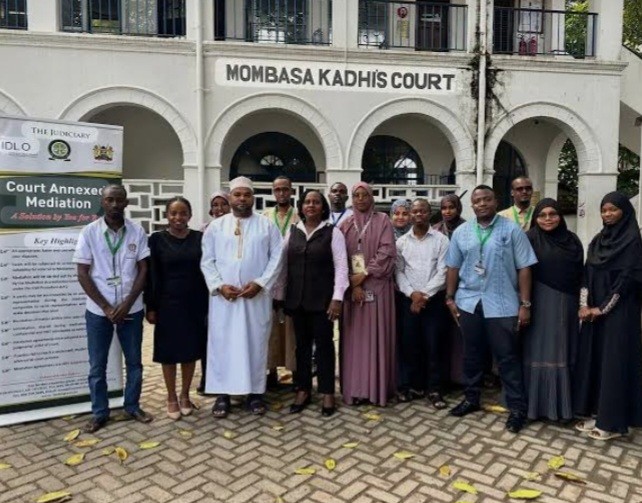
Muslim leaders have called on the Judicial Service Commission (JSC) to urgently fill vacant positions in Kadhi courts across the country, warning that the shortage of judicial officers is making it difficult for faithful to access justice.
The leaders say several areas have remained without resident Kadhis for extended periods, forcing Muslims seeking assistance with family and personal matters to travel long distances to access judicial services.
Speaking at Jamia Mosque in Kisumu, Kisumu Muslim Association Chairman Sheikh Musa Ismail Hajj cited Migori County as one of the areas affected by the vacancies, saying residents have struggled to access Kadhi courts due to the absence of a resident judicial officer.
He urged the newly appointed Chief Kadhi, Hassan Omar Daffa, to make the deployment of Kadhis to underserved areas a priority, noting that every Muslim should be able to access justice regardless of their location.
According to Sheikh Musa, filling the vacant positions would ease the burden on believers who currently have to travel outside their areas to have their disputes heard and resolved.
He also called for better working conditions for Kadhis, saying they require adequate institutional support to effectively carry out their responsibilities within the Judiciary.
Kadhi courts play an important role in resolving disputes involving Muslim personal law, particularly matters relating to marriage, divorce and inheritance. Their services are recognised under the Constitution, making their availability important to Muslims seeking legal assistance on such matters.
The Kisumu Muslim Association chairman further commended the Judiciary for completing the process of appointing a new Chief Kadhi following the death of his predecessor in 2025.
He welcomed Daffa's appointment, saying it was encouraging to see the position go to someone from a different region, unlike previous appointments which he claimed had largely favoured certain parts of the country.
Musa said the appointment had given Muslims in the Nyanza region a sense of inclusion and renewed hope that the region could one day produce a Chief Kadhi.
The concerns raised by the Muslim leaders come months after the Senate questioned the continued vacancies in 12 Kadhi court stations across the country.
The Senate raised concerns that the shortage of judicial officers was affecting the delivery of justice, particularly for Muslims who depend on the courts to resolve matters governed by Islamic personal law.
The vacancies have renewed calls for the Judiciary to strengthen the Kadhi court system by ensuring that all stations have officers to serve the communities within their jurisdiction.
Muslim leaders now want the JSC to work with the office of the Chief Kadhi to address the staffing gaps and improve access to judicial services.
They maintain that appointing Kadhis to the affected stations would reduce unnecessary travel, ease delays in resolving disputes and ensure that Muslims across the country enjoy equal access to justice.