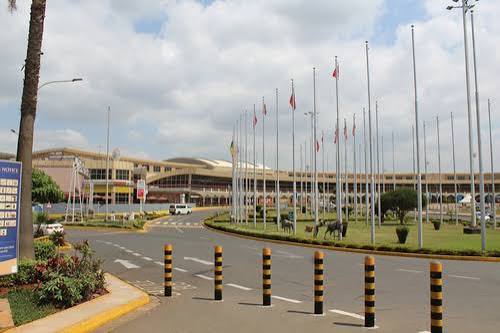
Parliament’s Transport Committee, chaired by Ndia MP George Kariuki, has urged China Road and Bridge Corporation (CRBC) to engage more Kenyan consultants, suppliers and contractors on the Sh154.2 billion JKIA upgrade. The committee has warned against foreign firms using locally registered subsidiaries to win contracts meant for Kenyan companies. The government signed the contract with CRBC in June 2026.
The Sh154.2 billion contract is a design-and-build deal, under which CRBC will carry out the main construction works. The government signed it on June 23, 2026, after a procurement process that drew interest from both local and international firms. The project is the largest airport modernisation in the country’s recent history.
Local participation has been a sensitive point throughout. The Ministry of Roads and Transport said the contract carried stringent local compliance requirements, and it turned down requests from international firms for more time to form local partnerships. The Transport Committee’s concern is that contracts meant for Kenyan companies could go to foreign firms that use local subsidiaries as a route in.
The engineering side of the project has also been assigned. Dar Al-Handasah was appointed as the engineer-consultant in July 2026, moving the project into its implementation phase. The firm is a Lebanese consultancy, which means the consultancy role is one of the areas where local firms may be able to take a larger share.
The financing has drawn scrutiny. The ministry has said about 70 percent of the cost will be funded through debt, and Nation has reported that the state plans to borrow more than Sh100 billion for the upgrade. Treasury CS John Mbadi has put the expansion at about Sh155.3 billion, and has disputed reports that it could cost Sh375 billion.
Transparency concerns have led to legal challenges. The Consumer Federation of Kenya (COFEK) has filed a constitutional petition challenging the procurement over transparency and public participation. The High Court has declined to halt the project, but it has ordered the government to file the contract and the tender award notice within 21 days.
The court case has also touched on who ultimately owns or benefits from the consortium. The government has denied claims linking Zimbabwean businessman Wicknell Chivayo to the project. The court said the allegation rested on press reports, and it has not made a finding on it.
The local-participation question goes to the heart of who benefits from the project. Kenyan firms that can take on subcontracts, supply materials or provide professional services stand to gain jobs and skills. The committee’s warning about subsidiaries signals that Parliament will test whether the local content commitments are real or nominal.
The next signals will be the contract documents the court has asked the government to file, any response from CRBC to the committee’s demand, and the subcontracting arrangements that emerge as construction begins. The 36-month schedule will also show whether the project can deliver on time while meeting its local content obligations.