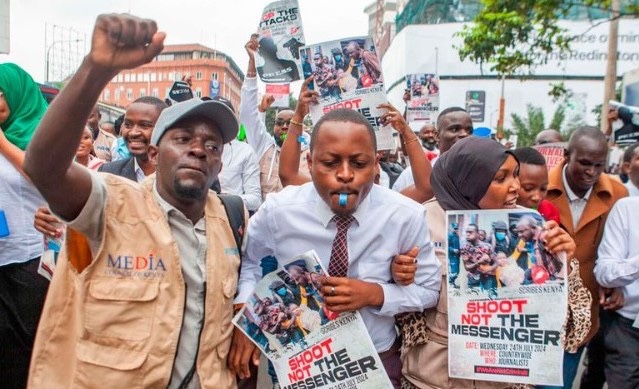
The Media Council of Kenya (MCK) has raised concern over the rising cases of attacks and threats against journalists, warning that the situation could worsen as the country approaches the next election period.
Speaking on press freedom violations in Kenya, MCK Manager for Press Freedom and Advocacy Rebecca Mutiso revealed that the council documented 47 cases of violations between July and September.
According to Mutiso, the incidents included 34 cases of physical assault against journalists, highlighting the growing risks faced by media practitioners while carrying out their professional duties.
The report showed that male journalists were the most affected, accounting for 36 of the recorded cases, while female journalists accounted for nine.
Nairobi County recorded the highest number of press freedom violations, with 13 cases reported during the three-month period.
Other areas also experienced attacks against journalists, with Homa Bay County recording some of the sharpest incidents during the reporting period.
Mutiso identified goons as the leading perpetrators of attacks against journalists. Police officers were the second-largest category of alleged perpetrators, accounting for 12 cases, while politicians were linked to eight incidents.
The latest figures represent a significant increase compared to previous years, raising concerns about the safety of journalists as political activities intensify ahead of the upcoming elections.
During the same period last year, the Media Council recorded 17 cases of press freedom violations, compared to 24 cases reported two years ago.
The increase from 17 to 47 cases within a year points to a worrying trend that could undermine the media's ability to independently report on issues affecting the country.
Mutiso further warned that the growing hostility towards journalists has started affecting their willingness to cover politically sensitive events.
She noted that some journalists have already expressed fears about covering the upcoming elections, raising concerns that intimidation and violence could interfere with the public's access to accurate and independent information.
Kenya has, however, registered an improvement in its position on the World Press Freedom Index, moving to position 106.
Despite the improvement, Mutiso cautioned that the country remains in the red zone, indicating that significant challenges continue to affect press freedom.
She emphasised that improved international rankings should not be mistaken for progress if attacks against journalists continue without accountability.
The Media Council is now calling for collective action from government institutions, security agencies, political leaders and other stakeholders to protect journalists and ensure those responsible for attacks are held accountable.
The council maintains that journalists must be allowed to carry out their work without intimidation, harassment or violence, particularly during election periods when independent reporting plays a critical role in informing voters.
The rising cases have renewed calls for stronger protection mechanisms and an end to impunity for crimes committed against media practitioners.