Former Chief Justice David Maraga has opposed proposed changes to Kenya’s electoral laws that could remove the mandatory livestreaming of polling station results, insisting that the Constitution must remain the guiding authority in the management of elections.
Maraga, who is the presidential flagbearer of the United Green Movement Party and Kenya’s 14th Chief Justice, said the country’s electoral system must uphold the constitutional principles of accuracy, verifiability, security, accountability and transparency.
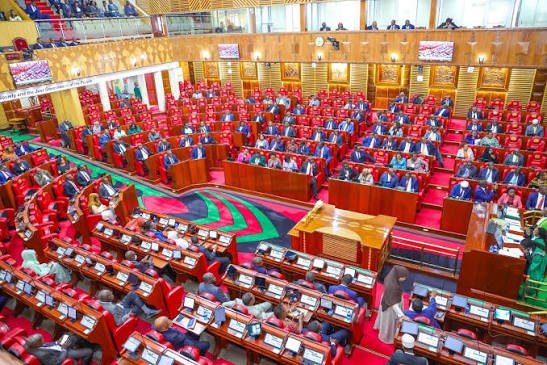
In a statement responding to the National Assembly’s passage of the Elections (Amendment) (No. 2) Bill, 2024, Maraga declared that no law could supersede the Constitution, commonly referred to as the *Katiba*.
He vowed to work with the People’s Coalition for Electoral Reforms to oppose what he described as attempts to return Kenya to the era of the former Electoral Commission of Kenya (ECK), which oversaw the disputed 2007 General Election.
“I will work with the People’s Coalition for Electoral Reforms to thwart any efforts to return us to the dark era of ECK or the post-election violence of 2007/08,” Maraga said.
His remarks add to the growing debate over the implications of the proposed amendments for electoral transparency and public confidence ahead of the 2027 General Election.
The Bill seeks to amend Section 39 of the Elections Act by removing the express legal requirement for the Independent Electoral and Boundaries Commission (IEBC) to livestream the announcement of results at polling stations.
If enacted in its current form, the change would mean the commission would no longer be legally compelled under that provision to broadcast the announcements live, although it could still do so voluntarily.
The proposed amendment does not, by itself, abolish electronic transmission of results or the publication of official results documents. However, the debate centres on whether removing mandatory livestreaming would reduce the public’s ability to observe results announcements in real time and compare them with figures transmitted and tallied at subsequent stages.
Maraga’s intervention invokes Article 86 of the Constitution, which requires the IEBC to ensure that votes are counted, tabulated and the results announced promptly by the presiding officer at each polling station, with accurate and verifiable results openly and accurately collated and announced by the commission.
The constitutional requirements for transparency and verifiability remain central to discussions about the legal framework governing the 2027 polls.
The former Chief Justice also referenced the country’s electoral history, warning against a return to practices associated with the ECK era and the violence that followed the disputed December 2007 presidential election.
The 2007/08 post-election violence resulted in more than 1,000 deaths and displaced hundreds of thousands of people, leaving a lasting impact on Kenya’s political and electoral institutions.
As the Bill progresses through the legislative process, the question of how election results will be announced, transmitted, verified and made accessible to the public is expected to remain a key issue in the preparations for the 2027 General Election.
Maraga’s position places constitutional safeguards and public scrutiny at the centre of the debate, as political actors and electoral reform advocates weigh the implications of the proposed changes for confidence in the next election.