The Directorate of Criminal Investigations (DCI) and the United States Drug Enforcement Administration (DEA) have signed a Memorandum of Cooperation to strengthen intelligence sharing, financial investigations and cross-border efforts to combat drug trafficking.
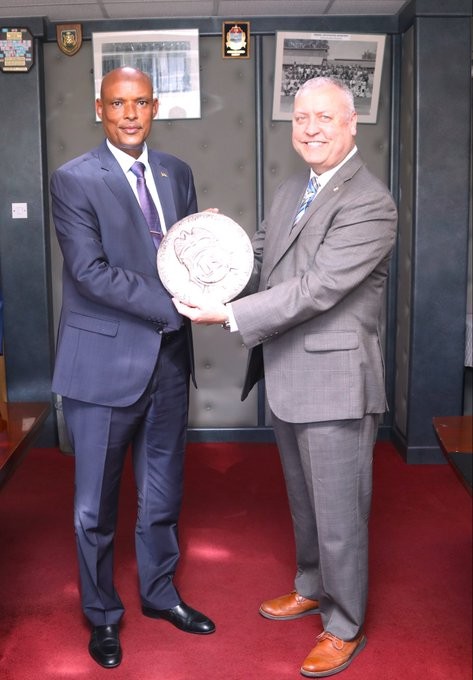
The agreement was signed on Thursday, October 22, with DCI Director Mohamed I. Amin and DEA Acting Special Agent in Charge Christopher A. Dziedzic representing the two agencies.
According to the DCI, the pact will strengthen investigative capabilities through intelligence-led operations, financial investigations and the application of modern investigative techniques, with the aim of disrupting drug trafficking networks and responding more effectively to emerging criminal threats.
Speaking during the signing ceremony, Amin said drug trafficking and the illicit narcotics trade continued to threaten public health, national security and the wellbeing of communities.
He said the evolving nature of the trade required coordinated action among law enforcement agencies, noting that no single country or institution could effectively tackle the problem in isolation.
Amin thanked the US government for its continued support, saying the agreement reflected the shared commitment of the two countries to combating transnational organised crime.
Dziedzic expressed confidence that the cooperation framework would improve the effectiveness of investigations and advance the agencies' common objectives in tackling drug trafficking and related criminal networks.
He emphasised the importance of mutual trust and sustained cooperation in addressing the cross-border nature of narcotics-related crime.
The agreement builds on an existing partnership between the DCI and the DEA, which has included training, intelligence-sharing initiatives and operational support.
In February 2026, more than 15 DCI officers had completed a four-week basic narcotics investigations course at the DEA Academy in Quantico, Virginia. The training focused on techniques for investigating and dismantling transnational drug trafficking networks.
In July 2026, the DCI also received operational vehicles donated by the DEA through the US Embassy in Nairobi to support surveillance, intelligence-led operations, rapid response and nationwide investigations by the Anti-Narcotics Unit.
The DCI's Anti-Narcotics Unit is mandated to investigate drug-related offences, apprehend suspected traffickers and coordinate with local and international agencies to disrupt narcotics networks. Its operations cover key entry and exit points, including airports, seaports, border crossings and major highways.
The latest agreement provides an additional framework for cooperation as Kenyan authorities pursue drug trafficking networks whose activities can span multiple jurisdictions and involve complex financial transactions.
Also present at Thursday's signing ceremony were Deputy Director DCI John Onyango, DEA Country Attaché Karl Ash, Special Agent Advisor Scott Jenkins and other senior DCI officers.
The agencies are expected to use the cooperation framework to strengthen investigations and coordination against drug trafficking. The DCI's announcement did not specify the agreement's duration or disclose additional implementation details.