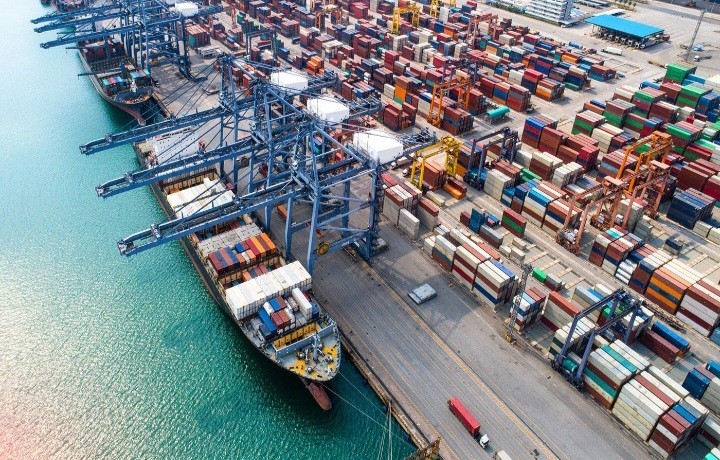
The Kenya Ports Authority (KPA) has outlined ongoing plans to expand and modernise the Port of Mombasa as part of efforts to increase cargo handling capacity and improve efficiency in port operations.
The authority shared the plans while hosting an international delegation that visited the port to learn about its operations, infrastructure development and Kenya's role in international trade.
The delegation travelled to Kenya through the Friedrich Naumann Foundation for Freedom, a German institution involved in international cooperation and economic development.
It was led by Fernando Alejandro Garcia Merino, the Executive President of the Association of Manufacturers in Honduras. The team toured the Port of Mombasa, where they were briefed on the facility's operations and ongoing efforts to strengthen its position as a major trade and transport hub in the region.
Speaking during the visit, KPA Head of Operations Salim Kumaka highlighted several infrastructure projects aimed at improving the port's ability to handle growing cargo volumes.
Among the key developments he mentioned was the construction of marine infrastructure at Dongo Kundu, alongside dredging works to deepen and improve shipping channels.
The projects are expected to enhance the port's capacity to accommodate vessels and support the movement of goods through one of East Africa's major maritime gateways.
Kumaka also took the delegation through the authority's use of digital systems and modern technology in cargo handling and other port operations.
He explained that the adoption of technology was part of broader efforts to improve service delivery, reduce operational delays and make port activities more efficient.
The use of digital systems is also intended to strengthen coordination among different players in the shipping and logistics chain, allowing cargo to be handled more effectively.
The visit provided the international delegation with an opportunity to understand how the Port of Mombasa operates and the investments being made to improve its infrastructure.
For Kenya, the port remains an important gateway for international trade, serving the country's import and export needs as well as providing access to regional markets.
Its continued expansion and modernisation are therefore seen as important in supporting trade, improving transport efficiency and strengthening the country's position in regional and global commerce.
KPA's engagement with the delegation also offered an opportunity to showcase the developments taking place at the facility and share experiences on port management, infrastructure investment and the growing role of technology in maritime transport.