Kenya's growing reliance on domestic borrowing is increasing the exposure of commercial banks to government debt, raising concerns about the relationship between public financing needs and credit available to businesses.
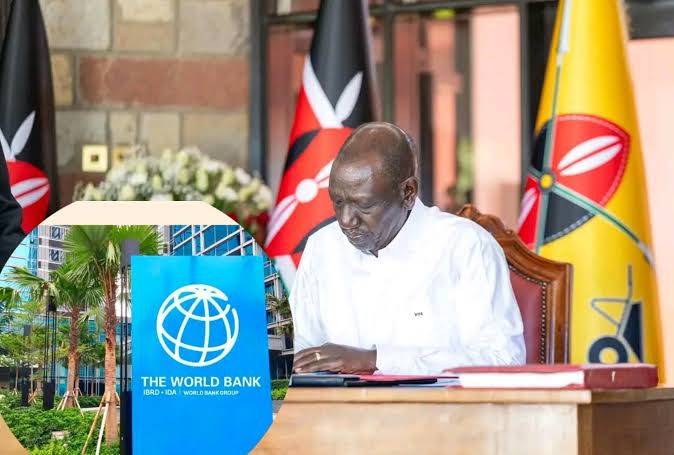
The World Bank's November 2026 Kenya Economic Update warns that increased domestic borrowing has deepened the connection between the government and the banking sector, creating risks for financial stability and private-sector investment.
Gross public debt stood at 69.9% of GDP at the end of June 2026, with domestic debt accounting for 56.2% of the total.
The government relied heavily on net domestic borrowing to finance its budget deficit, which widened to 6.8% of GDP in the 2025/26 financial year.
The growing reliance on domestic financing means banks are increasingly exposed to the government's ability to manage its debt and meet financial obligations.
This relationship is commonly described as the sovereign-bank nexus. It arises when financial institutions hold significant amounts of government debt, linking their financial health more closely to the government's fiscal position.
The World Bank warns that increased exposure to government borrowing could crowd out private-sector credit, limiting the funds available to businesses seeking loans for expansion, investment and daily operations.
The concern is particularly important because Kenya's private-sector credit market has only recently begun recovering. Credit growth reached 10.6% in September 2026, compared with 5.0% a year earlier.
Although lending improved, the recovery has been uneven. Manufacturing credit contracted by 1.8%, while real estate lending declined by 3.9% during the same period.
The government and private businesses therefore remain in competition for financing from the domestic financial system, particularly when public borrowing requirements are elevated.
Interest payments are adding to the pressure on public finances. The World Bank put government interest costs at 5.8% of GDP, limiting the resources available for other spending priorities.
The report also warned that further fiscal slippages and high debt-service costs could increase government financing needs, crowd out private credit and weaken investment.
This creates a difficult balancing act for policymakers. The government needs financing to meet its obligations and fund public services, but sustained reliance on domestic borrowing can place pressure on the same financial resources businesses depend on.
The World Bank says preserving macroeconomic stability will require stronger fiscal management and reforms that support private investment.
For Kenyan businesses, the issue goes beyond government debt figures. The availability and cost of credit can determine whether companies can purchase equipment, increase production, hire workers or expand into new markets.
The challenge is to ensure that financing public expenditure does not undermine the private investment needed to generate jobs and sustain economic growth.