
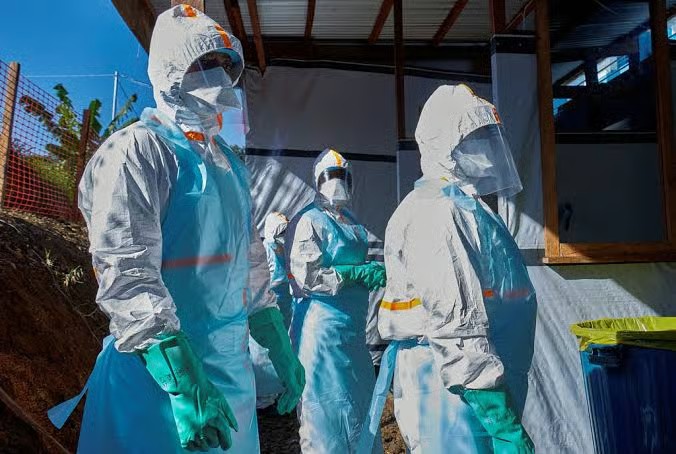
Kenya will begin distributing medical supplies worth Sh171 million to health facilities in 13 high-risk counties on Friday, October 9, as the government intensifies efforts to contain the imported Bundibugyo Ebola case.
Public Health Principal Secretary Mary Muthoni announced the distribution during an Ebola taskforce meeting on Friday, saying the supplies include laboratory equipment and protective gear intended to strengthen preparedness and protect frontline healthcare workers.
“The distribution list has been finalised, and it begins today,” Muthoni said, adding that 12,000 protective coveralls were available for the response.
She said storage conditions at 25 health facilities had been assessed ahead of the distribution and urged facilities to use the supplies prudently, particularly those serving high-risk areas.
Muthoni acknowledged support from development partners, including the World Health Organization (WHO), Africa Centres for Disease Control and Prevention (Africa CDC), the governments of India and China, STRIDES and Amref Health Africa. She also called on additional partners to support the country's response.
The ministry is also intensifying contact tracing to identify people who may have been exposed to the virus. Muthoni said officials were working to account for all identified contacts within 48 hours while strengthening public communication to help interrupt possible transmission chains.
“The contact tracing is proceeding very well currently but we need to push to 100 per cent in the next 48 hours,” she said.
Medical Services Principal Secretary Dr Ouma Oluga said the government was working to protect healthcare workers while ensuring the Ebola response did not disrupt routine medical services.
He noted that hospitals must continue providing essential services, including maternal care, chemotherapy and dialysis, even as they prepare to manage suspected Ebola cases.
“We must also ensure that there is no threat or disruption to the services that we avail, even as we position ourselves to prepare for this incident,” Oluga said.
He added that hospital administrators and healthcare workers would receive the necessary training and information to protect themselves and other patients.
Government Spokesperson Charles Owino urged politicians and other public figures to avoid politicising the outbreak or spreading unverified information, warning that irresponsible communication could undermine containment efforts and affect confidence among international visitors and investors.
“This is a very serious issue. It does not just affect us, it affects the whole globe,” Owino said.
He emphasised the importance of coordinated communication, adding that the government would continue providing updates through its technical teams.
Kenya confirmed an imported case of Bundibugyo Ebola virus disease involving a Kenyan citizen who had lived in the Democratic Republic of Congo. The patient travelled to Nairobi after passing through Uganda and later died after receiving care at Nairobi Hospital.
The Ministry of Health initially identified 57 contacts linked to the case. On October 8, Health Cabinet Secretary Aden Duale said 66 people suspected of having come into contact with the patient had been accounted for and were being quarantined at the National Police Service Hospital in Nairobi. Authorities were continuing to trace additional people who might have been exposed.
The government is relying on contact tracing, laboratory testing, protective equipment and public awareness to limit the risk of further transmission. The response will depend on identifying and monitoring exposed individuals, protecting healthcare workers and ensuring designated facilities have the supplies needed to manage suspected cases.


