The Kenyan government has formally declared Ebola disease, including the Bundibugyo virus, a formidable epidemic disease and introduced new regulations governing screening, isolation, quarantine, contact tracing and the handling of suspected and confirmed cases.
The declaration was made through Legal Notice No. 203, published in a special issue of the Kenya Gazette Supplement No. 240 dated October 12, 2026, by Health Cabinet Secretary Aden Duale under Section 35 of the Public Health Act.
In a separate Legal Notice No. 204, the CS issued the Public Health (Ebola Disease) Rules, 2026, establishing a framework for preventing and controlling the spread of the disease in Kenya.
The new rules provide for enhanced screening at the country's entry points, including airports, seaports and land border crossings, as well as measures for identifying, assessing and monitoring individuals who may have been exposed to the virus.
Under the regulations, anyone entering or leaving Kenya may be required to undergo screening and provide information about their health, travel history, possible exposure and symptoms through a health declaration.
Travellers are required to provide truthful and accurate information.
Where screening or other available information raises reasonable suspicion of Ebola infection, port health officers may arrange further medical assessment, testing, isolation or quarantine.
The rules also empower health officials to impose travel restrictions or quarantine where necessary to prevent transmission.
However, such measures must be based on an assessment of exposure, with the grounds, requirements and duration communicated to the affected person.
Individuals identified as contacts of suspected or confirmed Ebola cases may be placed under quarantine for 21 days from their last relevant exposure and monitored daily for symptoms.
The regulations provide that contacts whose test results are negative after two diagnostic tests conducted in accordance with the relevant protocols may be released from quarantine before the 21-day period expires.
Anyone who develops symptoms consistent with Ebola while under quarantine must be moved to isolation and managed as a suspected case.
The rules require suspected and confirmed cases to be accommodated separately from contacts, with medical officers responsible for arranging safe referrals to designated health facilities for further assessment and treatment.
The Kenya National Public Health Institute has been designated as the lead national technical institution responsible for coordinating and overseeing Ebola prevention, preparedness, response and recovery activities.
The institute is also required to coordinate disease surveillance, laboratory diagnosis, case investigation, contact tracing, infection prevention and control, emergency preparedness and public health risk communication.
The new regulations require people who become aware of, or have reasonable grounds to suspect, an Ebola case or death to notify a medical officer of health, the nearest health facility or a national government administrative officer.
Healthcare professionals and people in charge of health facilities must immediately report suspected or confirmed cases to the medical officer responsible for the area.
Testing for Ebola is restricted to the national reference laboratory or laboratories designated by the Cabinet Secretary.
Other laboratories that receive specimens from suspected cases must immediately refer them to an authorised facility.
Medical officers are also required to investigate suspected cases and deaths promptly and identify and assess people who may have been exposed to the virus.
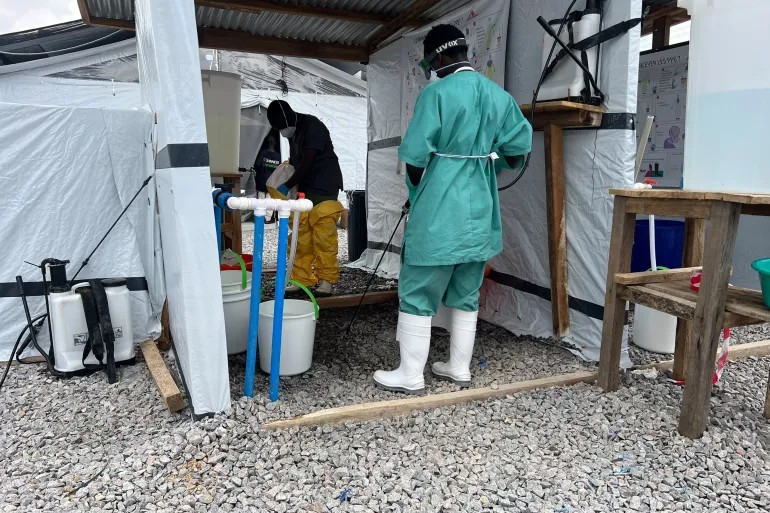
The regulations further allow health officials to inspect premises, vehicles, equipment and other items suspected of contamination and order appropriate decontamination.
Restrictions on the use of affected premises or vehicles must be limited to the period necessary to address the public health risk.
The regulations introduce strict procedures for handling and burying people who die from suspected or confirmed Ebola disease.
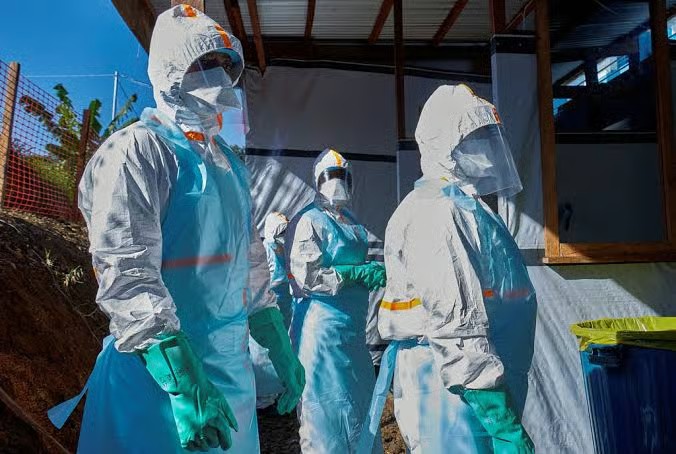
Bodies must be handled by trained personnel wearing appropriate protective equipment and placed in sealed, leak-resistant body bags. They must not be washed, embalmed, undressed or redressed for funeral purposes.
The medical officer of health is responsible for arranging burial without undue delay at a suitable site, subject to applicable legal requirements, including death registration and burial permits.
Where possible, officials must consult the deceased person's next of kin on burial arrangements and allow family participation and religious or cultural observances that are consistent with infection prevention and control measures.
The rules prohibit the transfer or repatriation outside Kenya of the body of a person who has died from Ebola disease.
The regulations make it an offence to deliberately provide false or misleading information, fail without reasonable excuse to comply with lawful screening or notification requirements, obstruct investigations, or assist someone to leave isolation or quarantine contrary to a lawful order.
Offenders are liable to penalties specified under Section 164 of the Public Health Act.
The Cabinet Secretary is required to review the continued necessity of the rules and restrictions at intervals of no more than three months.
Measures must be varied or withdrawn promptly when the assessed public health risk no longer justifies them.
The rules will cease to have effect 12 months after commencement unless revoked earlier.
The government says the regulations are intended to strengthen surveillance, facilitate early detection and ensure that measures to control Ebola are proportionate to public health risks while respecting human dignity and fundamental rights and freedoms.