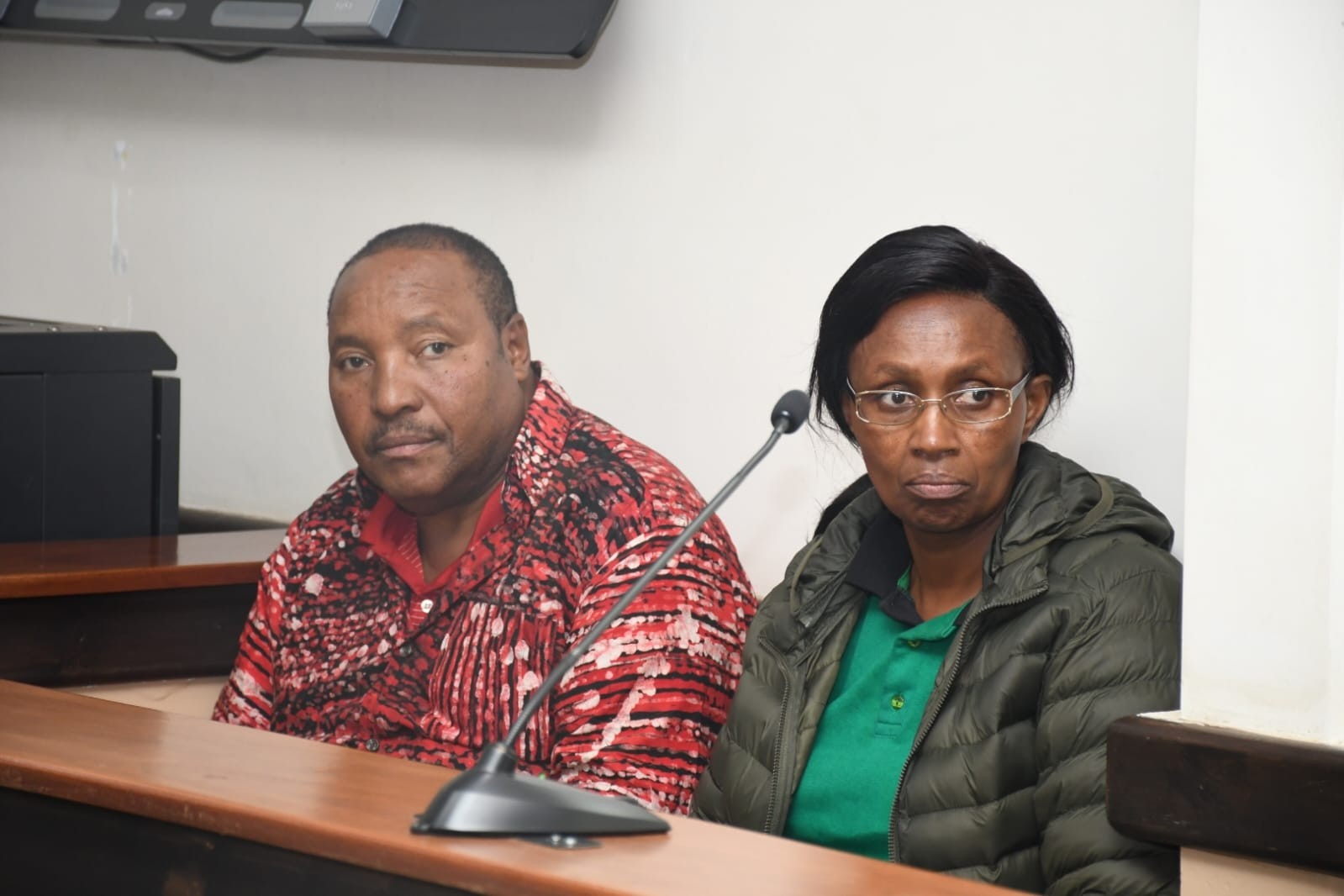
The High Court has upheld the corruption convictions and sentences of former Kiambu Governor Ferdinand Waititu and his co-accused in a ruling arising from multiple offences linked to his tenure as county chief.
The co-accused are Waititu’s wife, Susan Wangari Ndungu; former Kiambu County Chief Officer for Roads, Transport, Public Works and Utilities Luka Mwangi Wahinya; and Charles Chege Mbuthia, a director of Testimony Enterprises Limited.
The appellants had challenged their convictions on charges including conflict of interest, dealing with suspect property, abuse of office, fraudulent practices in procurement and fraudulent acquisition of public property.
In a ruling delivered by Lady Justice Rose Ougo, the High Court upheld the convictions on the other charges and overturned the acquittal previously granted by the subordinate court on the money laundering charges.
The court also revoked the appellants’ bonds, ordering that Susan Wangari Ndungu be detained at Lang’ata Women’s Prison, while Waititu, Wahinya and Mbuthia be held at Nairobi Remand Prison pending mitigation and sentencing on the money laundering charges before the subordinate court.
The appellants were granted 14 days within which to appeal the decision.
The prosecution was led by Senior Deputy Director of Public Prosecutions Vincent Monda and Assistant Director of Public Prosecutions Faith Mwila.
The matter is scheduled for mitigation and sentencing at the Anti-Corruption Magistrate’s Court on October 19, 2026.
The case stems from a procurement scandal involving the award of a road tender by the Kiambu County Government during Ferdinand Waititu’s tenure as governor.
Investigators examined the award of a road construction contract to Testimony Enterprises Limited, with the prosecution alleging irregularities in the procurement process and the unlawful acquisition of public funds.
Waititu, who served as Kiambu governor from 2017 until his impeachment in January 2020, was accused alongside his wife and other county officials of offences linked to the tender.
Prosecutors alleged that the dealings involved a conflict of interest and fraudulent practices in the award and execution of the contract.
The case became one of the high-profile corruption prosecutions involving a former county governor, drawing attention to public procurement procedures, accountability in county governments and the management of public resources.