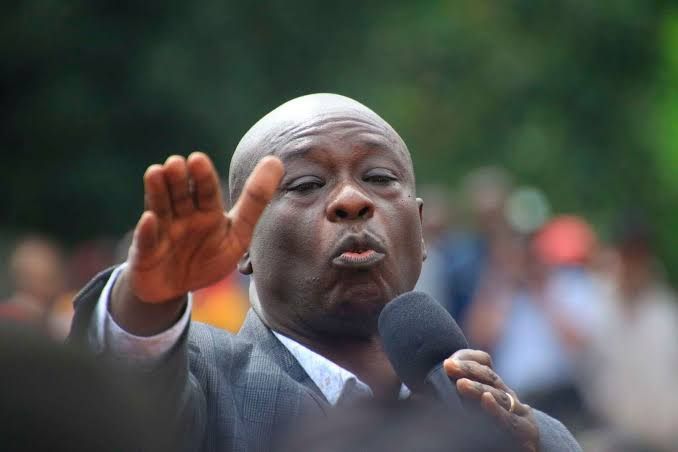
Democracy for Citizens Party (DCP) leader Rigathi Gachagua has advised Kenyans living in the United States to hold off on returning home, citing limited economic opportunities and what he described as failures in governance.
Advice for Kenyans abroad
Speaking to Kenyans in Oregon on Friday night, Gachagua said those living in the US should remain there and, where possible, help other Kenyans seeking opportunities abroad.
“Don’t be in a hurry to come back to Kenya. Pale si kuzuri,” Gachagua said.
Gachagua attributed the situation to a lack of jobs and what he termed poor leadership, arguing that the government had failed to make effective use of the expertise available among Kenyans in the diaspora.
He questioned the need for government officials to undertake foreign benchmarking trips to study systems that could, in his view, be addressed by Kenyans living abroad.
Engaging diaspora professionals
Instead, he urged the government to engage professionals in the diaspora and tap into their skills to address challenges at home without spending public resources on overseas trips.
Gachagua pointed to flooding as one area where he believed Kenya could learn from its citizens abroad. He said heavy rainfall in parts of the US does not routinely produce the level of flooding witnessed in Kenya because of better drainage infrastructure.
He also cited healthcare as another sector facing significant challenges, saying the state of public services was among the reasons he was cautioning Kenyans abroad against rushing back.
The former deputy president also criticised the state of devolution in Kenya, saying the system was delivering better results in the US than it was at home.
Gachagua is currently on a tour of the United States that began on August 26.
Opposition leadership concerns
He had announced before leaving Kenya that the visit would include engagements with Kenyans living in the diaspora.
Gachagua also cautioned opposition leaders against settling on a joint presidential candidate too early, arguing that doing so could expose the opposition to interference and internal divisions ahead of the 2027 General Election.
He said he spoke by phone with Embakasi East MP Babu Owino earlier on Friday and advised him against pushing for the immediate selection of an opposition flagbearer.
According to Gachagua, an early announcement would give the government more time to infiltrate opposition ranks and exploit divisions within the coalition.
“I told Babu Owino, I have been around for long and I know how to do these things,” he said.
He urged opposition parties to first consolidate their support, strengthen their political structures and build a united political base before deciding who should challenge President William Ruto.
Gachagua cited the 2002 General Election, when Mwai Kibaki was chosen as the opposition's presidential candidate roughly two months before the poll, as an example of why there was no need to make an early decision.
He nevertheless maintained that he considers himself a leading contender for the opposition ticket in 2027.
Gachagua said his priority was for the opposition to field a single candidate to avoid splitting the anti-government vote and improve its chances of defeating Ruto.
He added that he would support whoever the opposition ultimately selects as its presidential candidate.
His remarks come as opposition leaders intensify efforts to forge a united political front ahead of the 2027 election, with several figures already positioning themselves for the presidency.