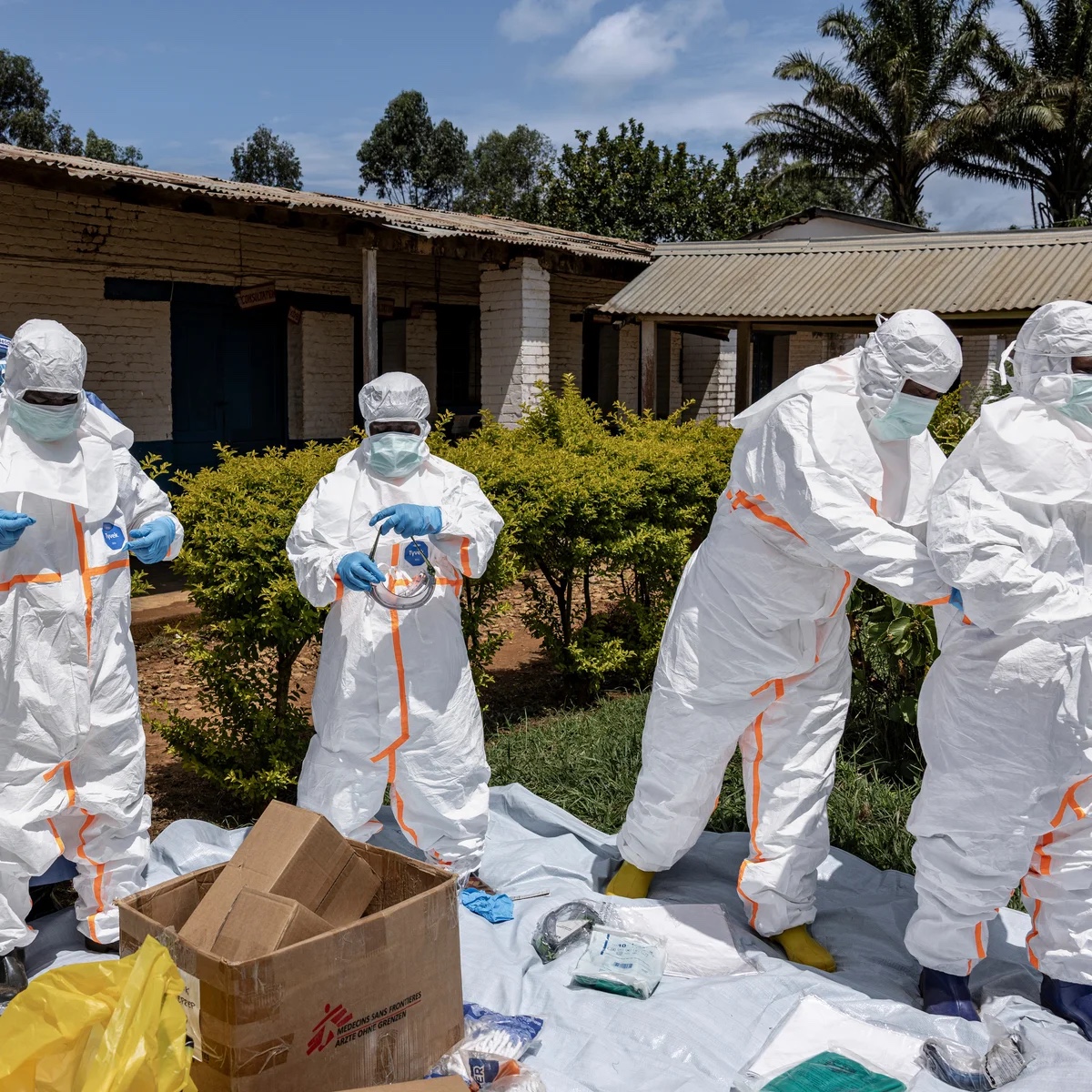
The number of confirmed Ebola cases in the Democratic Republic of Congo (DRC) has surpassed 10,000, raising concerns over the potential spread of the deadly virus to other African countries.
According to the latest situation report from the country’s public health institute, the outbreak has recorded 10,060 confirmed cases, with the death toll reaching 4,887 as of Tuesday.
The outbreak, caused by the Bundibugyo strain of the Ebola virus, was first announced in mid-May. It has since become the largest and deadliest Ebola outbreak recorded in the DRC, surpassing the epidemic that occurred between 2018 and 2020.
Globally, the current outbreak ranks as the second-largest and second-deadliest Ebola epidemic on record, behind the 2014–2016 West African outbreak. That epidemic infected more than 28,600 people and claimed over 11,000 lives, mainly in Guinea, Liberia and Sierra Leone.
Concern over the latest outbreak has intensified following reports of cases in other African countries, including Kenya and Nigeria.
Earlier this month, Kenya reported its first Ebola case before confirming nine cases in total. The outbreak followed the death of a man in Nairobi who had travelled from the DRC through Uganda.
Nigeria also reported an Ebola case last week, making it the fourth African country to report an infection linked to the wider outbreak.
Health officials are investigating how the Nigerian patient, identified as the wife of a Swiss diplomat, contracted the virus despite having no known history of travel to the DRC. The Swiss government said she was believed to have contracted the disease in Uganda.
The woman and her husband were evacuated to hospitals in Switzerland on Monday for medical care.
Meanwhile, Uganda, which reported 20 Ebola cases in May and June, has said it currently has no active infections. Most of the cases recorded during that period were imported from neighbouring DRC.
The World Health Organization declared Uganda Ebola-free in August following the end of the earlier outbreak.
However, authorities in the East African country have introduced additional precautionary measures amid fears of further cross-border transmission.
On Sunday, Uganda’s Health Minister announced that citizens returning from the DRC with a history of travel to the country would be placed under quarantine for 21 days.
The measures are intended to help authorities monitor potentially exposed individuals and limit further transmission as health agencies continue to respond to the outbreak.
The rising case count in the DRC, alongside reported infections in neighbouring and other African countries, has heightened the importance of cross-border surveillance, early detection and coordinated public health responses.
Health authorities continue to face the challenge of containing the outbreak while preventing further spread across the region.