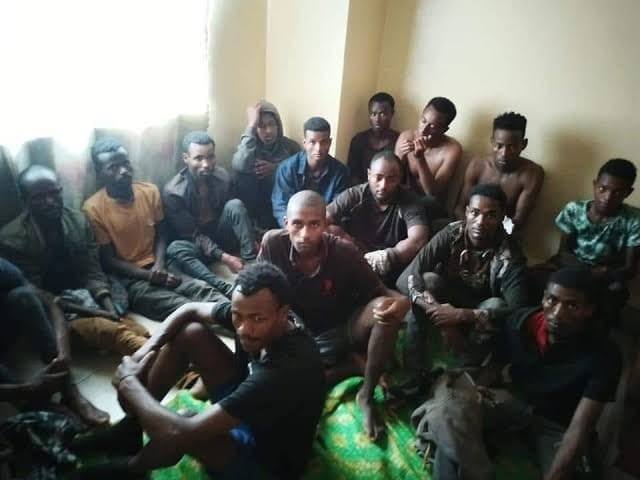
Police have rescued 65 Ethiopian nationals from a house in Mihang’o, Nairobi, where they were reportedly found in a weak and emaciated condition, raising concerns over possible human trafficking.
Three Kenyan nationals have been arrested for questioning as detectives investigate the circumstances under which the Ethiopian nationals ended up at the premises.
The rescue has drawn attention to the possible exploitation of vulnerable people, with investigators expected to establish whether the individuals were being held against their will and identify anyone else who may have been involved.
Details surrounding how the group arrived at the house, how long they had been there and whether they were being transported to another destination have not yet been established.
The three Kenyans are being questioned as investigations continue. Their arrest does not, on its own, establish their involvement in human trafficking, and the circumstances of the case remain under investigation.
The condition in which the Ethiopian nationals were reportedly found has also raised concerns about their immediate welfare and the need to establish their identities, backgrounds and individual circumstances.
Human trafficking involves the exploitation of people through means such as coercion, deception or abuse of vulnerability. However, authorities will need to establish the facts of this particular case before determining whether a trafficking offence occurred.
Members of the public have been urged to report credible concerns about possible trafficking or unlawful confinement to the police, particularly where people appear to be held in residential premises under suspicious circumstances.
Possible warning signs may include overcrowded houses where occupants have little freedom to move, people who appear malnourished or distressed, or situations in which individuals seem to be under the control of others.
Landlords, caretakers, property managers and residents have been encouraged to report credible concerns to the relevant authorities rather than attempting to investigate suspected cases themselves.
The public has also been cautioned against confronting suspected traffickers or attempting private rescues, as such actions could put vulnerable people at greater risk and interfere with ongoing investigations.
Authorities have further warned against sharing victims’ names, photographs or unverified claims on social media, noting that exposing their identities could threaten their safety and dignity.
Members of the public with relevant information have been asked to report it discreetly to the police and allow investigators to establish what happened.