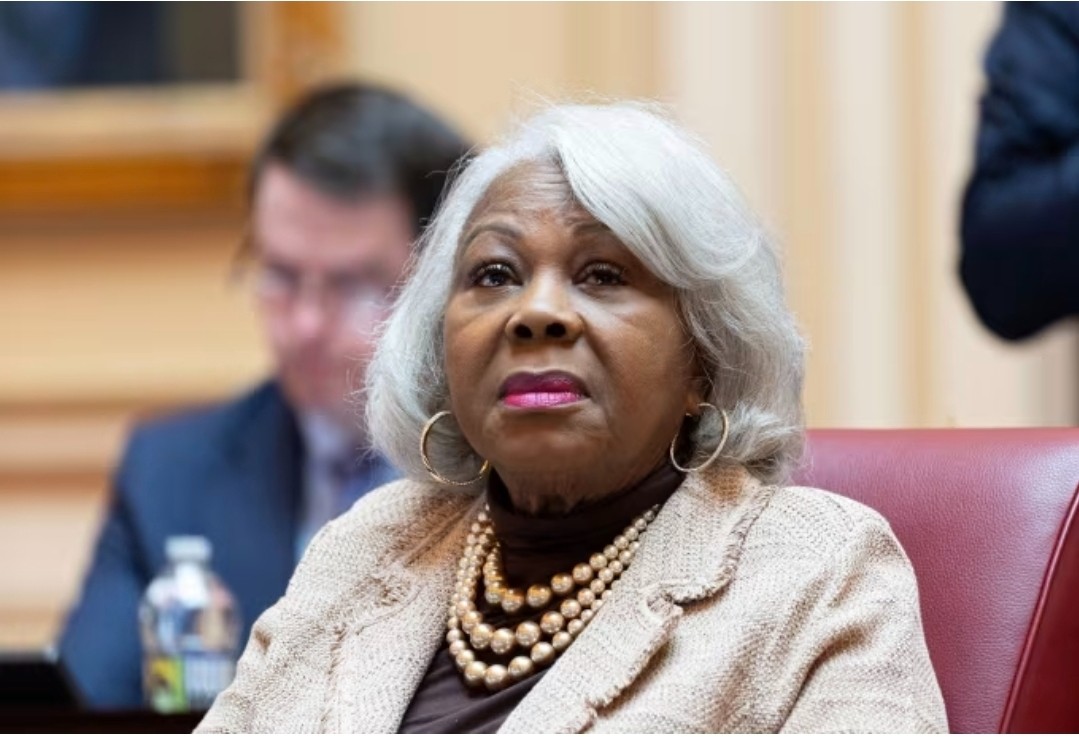
Virginia State Senator L. Louise Lucas has been indicted alongside six other people, including members of her family, over allegations of running an illegal marijuana business and laundering its proceeds.
The 82-year-old Democrat, who serves as president pro tempore of the Virginia Senate, is accused of participating in a racketeering conspiracy involving the purchase and sale of marijuana in quantities exceeding legally permitted limits.
According to the indictment, Lucas and her alleged co-conspirators operated several businesses and shops that were used to sell illegal amounts of the drug over several years, with the proceeds allegedly used to build family wealth.
FBI Director Kash Patel said Lucas worked with a close-knit group of relatives and associates to establish what he described as a criminal marijuana enterprise.
Patel further alleged that Lucas exploited her position as chairwoman of the Senate Finance and Appropriations Committee to shield the enterprise from criminal scrutiny and influence legislation for financial gain.
Lucas faces charges including racketeering conspiracy, conspiracy to possess and distribute marijuana, and conspiracy to launder money. A Justice Department spokesperson said she had surrendered to law enforcement.
The indictment marks a significant legal development for Lucas, who has been a prominent advocate for marijuana legalisation in Virginia and has supported legislative efforts to establish a regulated market for the drug.
Virginia recently passed a law allowing regulated retail marijuana sales to begin on July 1, 2027.
However, the allegations against Lucas concern claims of illegal sales and activities that prosecutors say went beyond the limits permitted by law. The charges remain allegations, and the indictment does not constitute proof of guilt.
Racketeering refers to engaging in an organised pattern of illegal activities, often through a business or network of associates, to generate money or other benefits. Such activities can include drug trafficking, fraud, bribery and money laundering. A racketeering conspiracy charge generally alleges that people agreed to participate in an enterprise through unlawful conduct, rather than accusing them of a single isolated offence.
Money laundering involves disguising the origins of money obtained through illegal activities to make it appear legitimate.
The case is expected to draw attention to the intersection of political influence, business interests and marijuana regulation in Virginia, where lawmakers have been working towards establishing a legal retail market.