A United States religious freedom watchdog has accused the Indian government of targeting Muslim communities through a nationwide voter registration exercise that has resulted in the removal of millions of names from electoral rolls.
The US Commission on International Religious Freedom (USCIRF) raised concerns on Thursday, November 19, alleging that the revision of voter lists was disproportionately affecting Muslims, India's largest religious minority.
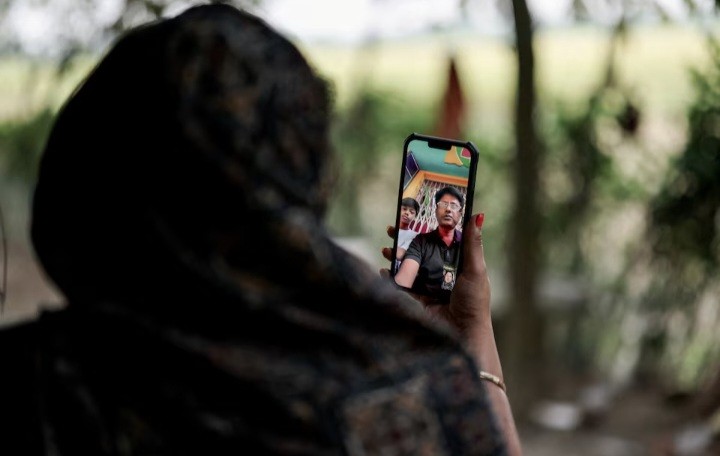
The commission said the exercise had raised serious questions about the treatment of religious minorities, particularly amid allegations that some people whose names were removed from voter registers were being labelled foreigners and facing deportation.
Asif Mahmood, chair of the US commission, accused the Indian government of using the voter registration process to exclude Muslim citizens from participating in elections.
"The Indian gov't is targeting Muslim citizens by removing them from voter rolls, calling them 'foreigners,' and now illegally deporting them," Mahmood said in a statement.
The controversy follows a nationwide revision of electoral registers that reportedly resulted in approximately 130 million names being removed, marking the largest deletion of voters in India's history.
The scale of the exercise has raised concerns among opposition politicians, civil rights groups and religious freedom advocates, who question whether the process is being conducted fairly.
According to data cited in the report, the omissions have disproportionately affected Muslims, who make up India's largest minority population.
Rights organisations have also expressed concern over what they describe as increasing discrimination against Muslim communities since Prime Minister Narendra Modi's Hindu nationalist Bharatiya Janata Party (BJP) came to power in 2014.
The voter registration exercise has become particularly controversial because of its connection to a separate government campaign aimed at identifying and removing suspected illegal immigrants.
Critics argue that the two exercises risk exposing legitimate Indian citizens to exclusion and possible deportation.
Gene Mills, another commissioner at USCIRF, condemned the alleged treatment of Muslim citizens, describing the reported expulsions as a serious escalation in the targeting of religious minorities.
He urged the US State Department to designate India a "country of particular concern", a classification used by Washington for governments involved in particularly serious violations of religious freedom.
However, the commission's recommendations are not binding on the US government, and Washington has not acted on its recent calls for India to receive the designation.
India's Election Commission has defended the voter roll revision, saying the exercise is intended to remove duplicate entries, deceased individuals, people who have relocated and other ineligible voters.
The electoral body has also maintained that individuals whose names have been wrongly excluded have the opportunity to appeal and seek reinstatement.
New Delhi has repeatedly rejected allegations of religious discrimination, maintaining that government policies are designed to benefit citizens across different religious communities.
India's Foreign Ministry has also criticised USCIRF, describing the commission as biased and accusing it of interfering in the country's internal affairs.
The Indian Embassy in Washington did not immediately respond to a request for comment on the latest allegations.
The dispute has also triggered protests in different parts of India, with opposition groups and student demonstrators questioning the timing and implementation of the voter registration exercise.
Some opposition politicians have alleged that the revisions could disproportionately affect voters considered unlikely to support the ruling BJP.
The concerns come amid broader criticism of India's treatment of religious minorities, with human rights organisations pointing to incidents involving hate speech, demolition of Muslim-owned properties and laws they say restrict religious freedom.
Other contentious issues include India's religion-based citizenship legislation, anti-conversion laws and the removal of Jammu and Kashmir's special constitutional status.
UN experts have previously raised concerns about some of these policies, with the United Nations describing India's citizenship law as fundamentally discriminatory.
However, the Indian government has consistently rejected claims that its policies target particular religious communities, arguing that programmes such as food subsidies and rural electrification are implemented to benefit people regardless of their faith.
The latest criticism has placed India's electoral process under renewed international scrutiny, particularly over the rights of minority communities to participate in democratic processes without discrimination.
While the Election Commission maintains that the exercise is aimed at improving the accuracy of voter registers, the US watchdog's intervention has intensified calls for greater transparency and safeguards to ensure eligible citizens are not unfairly excluded.
The dispute now presents a broader challenge for India, as questions over electoral integrity, religious freedom and minority rights continue to attract attention both domestically and internationally.