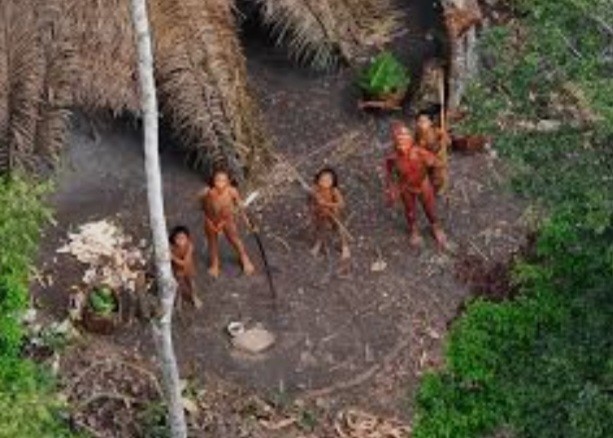
A rare encounter in Brazil's Amazon rainforest has drawn attention after between 20 and 30 members of the uncontacted Awá Indigenous community emerged from the forest and approached a government outpost in search of food.
The unexpected appearance, reported this week, has raised renewed attention to the lives of Indigenous communities living in voluntary isolation and the challenges they face in protecting their territories and survival.
The Awá people are among the Indigenous communities inhabiting the Amazon, one of the world's largest tropical rainforests, where thousands of people continue to live in remote areas with limited or no contact with the outside world.
More than 10,000 Indigenous people are estimated to live in isolation across the Amazon region, with some communities maintaining little interaction with modern society.
The latest encounter involved between 20 and 30 members of the Awá community, who reportedly approached a Brazilian government outpost after emerging from the surrounding forest.
Their immediate request was for food, making the encounter particularly significant given the limited contact such communities have with outsiders.
Unlike Indigenous groups that have established regular relationships with neighbouring communities and government agencies, uncontacted peoples often depend entirely on the forest for food, shelter and other basic needs.
Their decision to approach a government facility is therefore an unusual development that has attracted attention to their circumstances.
The Awá are traditionally known as hunter-gatherers, relying on the forest for their livelihoods through hunting, fishing and gathering wild fruits and other natural resources.
However, their way of life has faced growing pressure from activities such as illegal logging, land encroachment and deforestation, which threaten the territories they depend on for survival.
The Amazon rainforest has experienced decades of environmental destruction, with Indigenous territories increasingly exposed to outside activities that disrupt traditional lifestyles and threaten biodiversity.
For communities living in voluntary isolation, contact with outsiders also carries significant health risks.
Because they have limited exposure to common infectious diseases, uncontacted Indigenous populations can be particularly vulnerable to illnesses that may spread through contact with outsiders.
Even relatively common infections can have devastating consequences for communities with little immunity or access to modern medical treatment.
Brazil has established policies aimed at protecting Indigenous groups living in isolation, including restricting unauthorised access to their territories and monitoring areas where they are known to live.
The country's Indigenous affairs agency, the National Foundation of Indigenous Peoples (FUNAI), plays a central role in protecting these communities and monitoring their territories.
Such protections are intended to allow isolated groups to maintain control over their way of life without being forced into contact with the outside world.
The appearance of the Awá community has therefore raised questions about the circumstances that prompted the group to leave the forest and seek assistance.
Their encounter also serves as a reminder that despite growing technological development and modernisation, some communities continue to live largely beyond the reach of the modern world.
For the Awá, the forest remains central to their identity, culture and survival, making the protection of their ancestral territories essential to preserving their way of life.