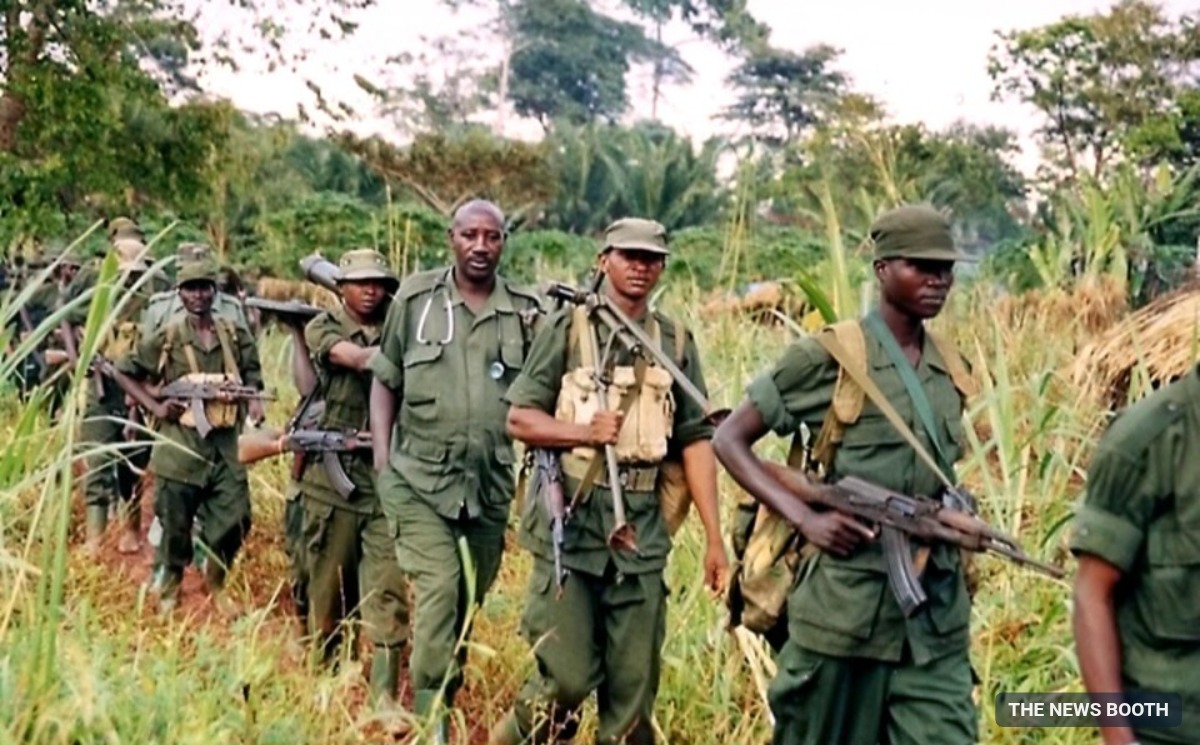
Uganda has defended its military operations in eastern Democratic Republic of Congo (DRC), insisting its joint offensive against the Allied Democratic Forces (ADF) remains ongoing after remarks by its army chief triggered a diplomatic protest from Kinshasa.
In a statement issued in Kampala on Friday, November 27, Acting Director of Defence Public Information Colonel Chris Magezi said the Uganda People’s Defence Forces (UPDF) would continue pursuing ADF remnants and their leaders wherever they seek refuge, including Isiro in Haut-Uele Province.
Magezi maintained that the joint military offensive with the Armed Forces of the Democratic Republic of Congo (FARDC) had weakened the armed group, forcing its fighters to split into smaller units and flee deeper inland.
He said Uganda remained committed to pursuing the ADF and its leaders under the framework of Operation Shujja, the joint military arrangement between the two countries.
The statement follows the summoning of Uganda’s diplomatic representative in Kinshasa on November 24 after General Muhoozi Kainerugaba, Uganda’s Chief of Defence Forces and Senior Presidential Advisor for Special Operations, made controversial remarks about the conflict in eastern DRC.
In a series of posts on X, Kainerugaba expressed support for the Front for the Refoundation of the Nation (FRN), a rebel movement associated with former Congolese president Joseph Kabila, taking control of Walikale in North Kivu.
He reportedly said the UPDF would not oppose the group’s advance and warned that Ugandan forces could capture the town themselves if the movement delayed.
The remarks also included demands concerning Isiro Airport and threats against foreign fighters operating in eastern DRC, further raising concerns in Kinshasa about Uganda’s intentions in the conflict.
In its diplomatic protest, the Congolese Foreign Affairs Ministry described the statements as particularly serious and demanded an explanation from Kampala. It called on Uganda to clarify whether the remarks represented its official position and take measures to prevent similar statements in future.
The controversy has raised questions about the relationship between the two neighbours, whose militaries have been cooperating against the ADF while the Congolese government continues to confront other armed groups in the east.
Responding to the allegations, Magezi said several armed groups were operating in the region, accusing some militia forces, including those identified as Wazalendo, of attacking vulnerable communities in Ituri and North Kivu.
He cited alleged attacks against women and children from the Bahema and Tutsi communities, arguing that the UPDF had a responsibility under international humanitarian law to protect vulnerable populations whenever possible.
The allegations were presented as Uganda’s military position, rather than independently established findings.
Magezi further said Uganda supported a peaceful resolution of the conflict involving the Congolese government and the various armed groups operating in the region. He added that Kampala would not support or facilitate foreign mercenary forces working alongside violent militias to terrorise civilians.
The diplomatic disagreement comes as Uganda adjusts its military deployment in eastern DRC. In a separate announcement on Friday, the UPDF said it would begin withdrawing troops from Lubero town in North Kivu within the next two weeks, handing security responsibilities to FARDC.
Ugandan troops have operated in Lubero since January 2025, pursuing ADF remnants who moved into the area to escape pressure from joint military operations in North Kivu and Ituri.
The planned withdrawal marks a change in the deployment of Ugandan forces in the town but does not signal the end of Operation Shujja or a complete withdrawal from eastern DRC.
Uganda and the DRC launched Operation Shujja in November 2021 to target the ADF, an armed group linked to the Islamic State that has carried out deadly attacks in both countries.
The operation has involved coordinated military action by UPDF and FARDC forces against ADF bases and fighters in eastern DRC. Despite sustained military pressure, the group continues to pose a security threat in the region.
Uganda’s latest statement therefore maintains its commitment to the joint campaign even as the diplomatic dispute places renewed scrutiny on its military chief’s comments and the two countries’ relationship.