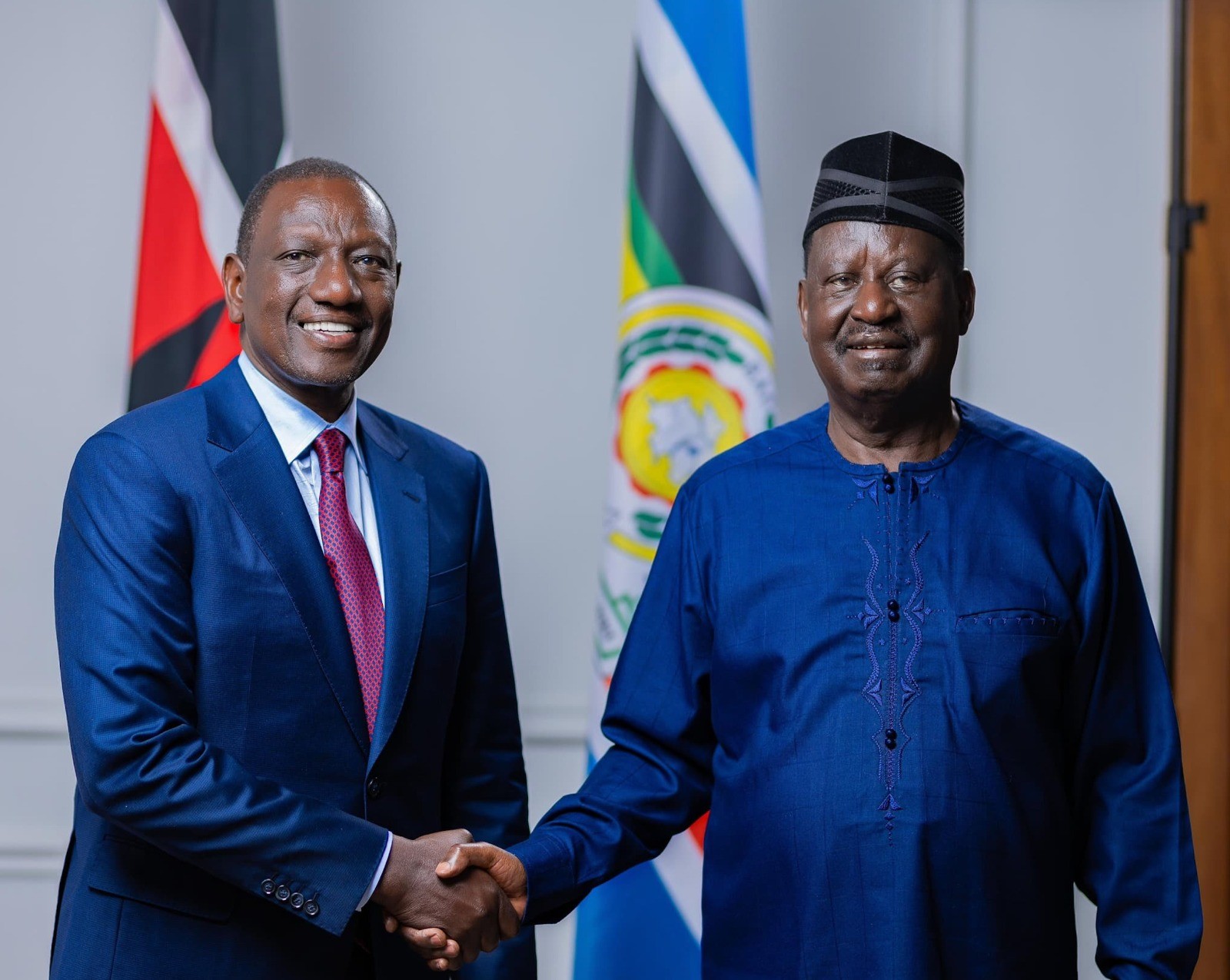
More Kenyans oppose the Broad-Based Government arrangement between President William Ruto and the late former Prime Minister Raila Odinga than those who support it, a new survey by TIFA Research has revealed.
The survey shows that 43 per cent of Kenyans are against the political arrangement, compared to 32 per cent who support it.
The findings point to growing public dissatisfaction with the partnership, which was formed following the Gen-Z-led protests of June 2024.
According to TIFA, 15 per cent of respondents said they had no opinion on the arrangement, while another 10 per cent said they were unaware of the Broad-Based Government agreement.
The survey comes at a time when the political arrangement is facing growing pressure, particularly within the Orange Democratic Movement (ODM), which has experienced internal divisions over its cooperation with Ruto's United Democratic Alliance (UDA).
TIFA noted that dissatisfaction among supporters of the two political camps, especially within ODM, has contributed to divisions in the opposition party.
The disagreements have also provided room for Nairobi Senator Edwin Sifuna to pursue a presidential bid under the Linda Mwananchi Movement, which has positioned itself as an alternative political force.
Meanwhile, the faction of ODM that continues to support cooperation with President Ruto is still engaged in discussions with UDA over a possible political coalition ahead of the 2027 General Election.
However, the future of the partnership remains uncertain as the two sides are yet to settle key issues surrounding their possible electoral agreement.
Among ODM's main demands are the deputy president's position in a potential 2027 coalition and an agreement on political zoning.
Under the zoning arrangement, ODM wants UDA and other Kenya Kwanza parties to avoid fielding candidates in areas considered its political strongholds, particularly in parliamentary and other elective seats.
TIFA also raised questions about the future of the Ten-Point Agenda, which was unveiled by President Ruto and the late Raila Odinga as part of their cooperation agreement.
The survey noted that recent silence surrounding the implementation of the reform agenda has created uncertainty over whether it remains a key condition in the relationship between the two political camps.
Regionally, support for the Broad-Based Government varies significantly across the country.
Northern Rift recorded the highest level of support at 68 per cent, followed by Central Rift at 57 per cent.
Support was also relatively strong in Nyanza, although TIFA did not provide a specific percentage in the findings.
On the other hand, Mt. Kenya and Nairobi recorded the lowest support levels, at 12 per cent and 13 per cent respectively.
The findings show a sharp regional difference in how Kenyans view the political arrangement, with support remaining particularly low in some of the country's key political regions.
In Northern Rift, support for the arrangement increased significantly from 43 per cent in TIFA's June survey to 68 per cent in the latest findings.
Central Rift also recorded relatively high support, while Mt. Kenya continued to register low levels of approval with little change from previous surveys.
The findings highlight the political challenges facing the Broad-Based Government as the country moves closer to the 2027 General Election, with questions remaining over the strength of the Ruto-ODM partnership and its ability to maintain support among voters.