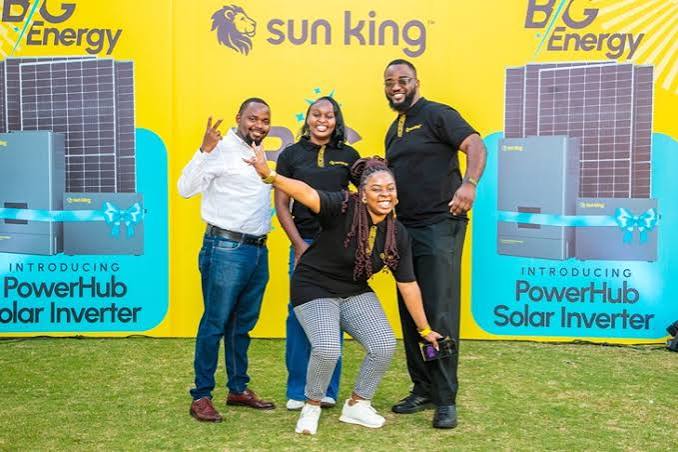
Solar energy provider Sun King has expanded its PowerHub inverter range in Kenya to include systems with capacities of up to 30 kilowatts (kW), targeting businesses, large households and institutions with higher electricity needs. The expansion broadens the company’s offering beyond smaller household systems to customers requiring power for more appliances, equipment and business operations.
The products were unveiled in Nairobi on October 8, 2026, as demand grows for alternatives to unreliable grid electricity and fuel-powered generators. The expanded portfolio now ranges from 2.2kW to 30kW, allowing customers to select systems according to their power requirements and the appliances they intend to operate.
The larger systems are designed to serve customers including shops, offices, schools, healthcare facilities and light industrial operations. Depending on the system configuration, they can support equipment such as water pumps, washing machines, microwaves and air conditioners, which generally require more power than basic lighting and phone-charging systems.
Sun King’s PowerHub systems can be connected in parallel, allowing two or more units to operate together to increase combined inverter capacity. Customers can also expand installations by adding solar panels and battery storage as their electricity needs grow, potentially reducing the need to replace an entire system when demand increases.
The company’s PowerHub Pro configuration includes a 5kW inverter, a 5-kilowatt-hour battery and approximately 2.7kW of rooftop solar capacity. Its PowerHub Max provides a 10kW inverter, a 20kWh battery and an 11kWp solar array, while the PowerHub Ultra offers a 30kW inverter and battery storage options ranging from 15kWh to 120kWh.
Sun King’s country business leader Elisha Adie said growing demand for reliable electricity was pushing solar providers to introduce systems capable of powering larger appliances, businesses and essential services.
The systems could also help some businesses reduce reliance on diesel generators during power interruptions. Replacing generator use with solar energy may reduce fuel consumption and associated emissions, although the actual savings depend on how much electricity the solar installation supplies and how frequently a generator would otherwise operate.
A larger inverter does not automatically mean longer backup periods. Inverter capacity determines how much power a system can deliver at a given moment, while battery capacity affects how much energy is available when solar generation is low or unavailable. The size of the solar array and the customer’s consumption patterns also influence performance.
Sun King said the PowerHub range is available across Kenya through its nationwide agent network. Reported payment options begin with a down payment of Sh22,600 and monthly instalments from Sh15,500, although actual terms depend on the selected system and financing arrangement.
The expansion signals a move into a higher-capacity segment of Kenya’s solar market. For businesses and large households considering the technology, the decision will depend on installation costs, energy demand, battery storage, financing terms and the extent to which solar can reduce reliance on grid electricity or generators.