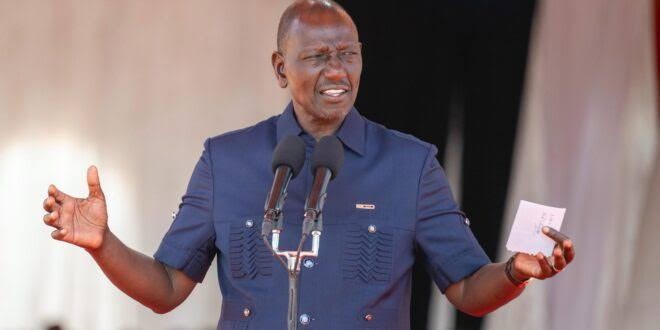
President William Ruto has defended the sale of a 24.76% stake in Kenya Pipeline Company (KPC) to Nigerian billionaire Aliko Dangote’s business interests for approximately Sh42.5 billion, amid questions about negotiations, the valuation of state assets and the returns earned by public institutions that sold their shares.
The transaction involved about 4.5 billion shares previously held by state-backed institutions, including the National Social Security Fund (NSSF) and several pension schemes. Dangote confirmed the acquisition on October 21, 2026, during the Financial Times Africa Summit in London, ending speculation over the identity of the investor behind a major block trade on the Nairobi Securities Exchange.
Ruto has defended the transaction as evidence of growing investor confidence in Kenya’s capital markets and a step towards attracting private investment into strategic infrastructure. The government has been pursuing the sale of stakes in state-owned enterprises as part of efforts to mobilise capital for national development projects.
However, the deal has attracted scrutiny because several public institutions bought substantial quantities of KPC shares during the company’s initial public offering earlier in 2026 before selling part of their holdings less than eight months later.
The negotiations between Dangote and the fund managers representing the selling institutions centred on the price per share. According to the publication, the sellers initially sought Sh9.50 per share, while Dangote was unwilling to accept that price. The transaction was ultimately structured around a price of Sh9.04 per share, alongside an arrangement involving the dividend entitlement.
The negotiations also involved a declared dividend of Sh0.32 per share. Dangote reportedly agreed to forgo the dividend he would otherwise have received, allowing the selling pension schemes to retain approximately Sh1.4 billion. The deal makers argued that the final arrangement delivered a reasonable return to the sellers.
The valuation debate follows KPC’s stock market listing on March 9, after the government sold part of its ownership through an IPO priced at Sh9 per share. State-backed institutions had invested billions of shillings in the offering, helping meet the subscription threshold after demand from some private investors fell short of expectations.
Critics have questioned whether the institutions received sufficient value from selling their shares so soon after investing public funds in the company. However, determining the actual returns requires examining each institution’s acquisition cost, sale proceeds, dividends, transaction expenses and investment objectives. The small difference between the IPO price and the subsequent sale price alone does not establish whether the institutions made a profit or loss.
Dangote’s acquisition makes him KPC’s second-largest shareholder, behind the Kenyan government, which retained a 35% stake after the IPO. Uganda National Oil Company holds a further 20.15%, giving the Nigerian industrialist a significant position in a company central to Kenya’s petroleum distribution network.
The investment also comes as Dangote advances plans for a proposed petroleum refinery in Lamu, potentially strengthening links between fuel production and distribution across East Africa. The transaction is likely to keep attention on the management of public investments, transparency in share sales and the commercial value of strategic state assets.