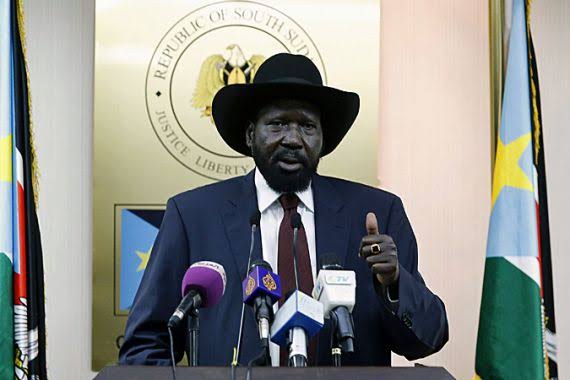
South Sudan’s President Salva Kiir has dissolved the transitional unity government and moved to establish a caretaker administration as the country prepares for general elections scheduled for December 22, 2026.
The move brings to an end the power-sharing government created under the 2018 peace agreement.
The changes follow Kiir’s assent to amendments to the National Elections Act, which removed requirements for completion of a permanent constitution and national census before elections can take place.
Under the amended law, Kiir remains president with full constitutional powers throughout the election period until an elected president is sworn in.
Kiir’s order removed the First Vice-President and the other four vice-presidents and dissolved the national legislature, state governments and state legislatures.
The outgoing arrangement had been established under the 2018 Revitalised Agreement on the Resolution of the Conflict in South Sudan, which created a broad power-sharing structure aimed at ending years of civil war.
The amended electoral law gives the president authority, within three months of the election, to relieve the First Vice-President and other vice-presidents in accordance with the Transitional Constitution.
The changes come amid continuing political tensions involving First Vice-President Riek Machar and his SPLM-IO movement. Machar has been under house arrest and faces treason charges.
The caretaker administration is expected to run government affairs during the electoral period as South Sudan moves towards its first national election since gaining independence in 2011.
Kiir’s government argues that changes to the legal framework were necessary to allow elections to proceed after repeated delays in implementing provisions of the 2018 peace agreement.
The electoral process, however, continues to face scrutiny over preparedness and inclusivity.
Peace monitors and other critics have previously raised concerns about outstanding reforms, security challenges and the participation of opposition groups.
The National Elections Commission has set December 22 as election day.
The vote is intended to conclude a prolonged transitional period that has been extended several times since the peace agreement was signed.