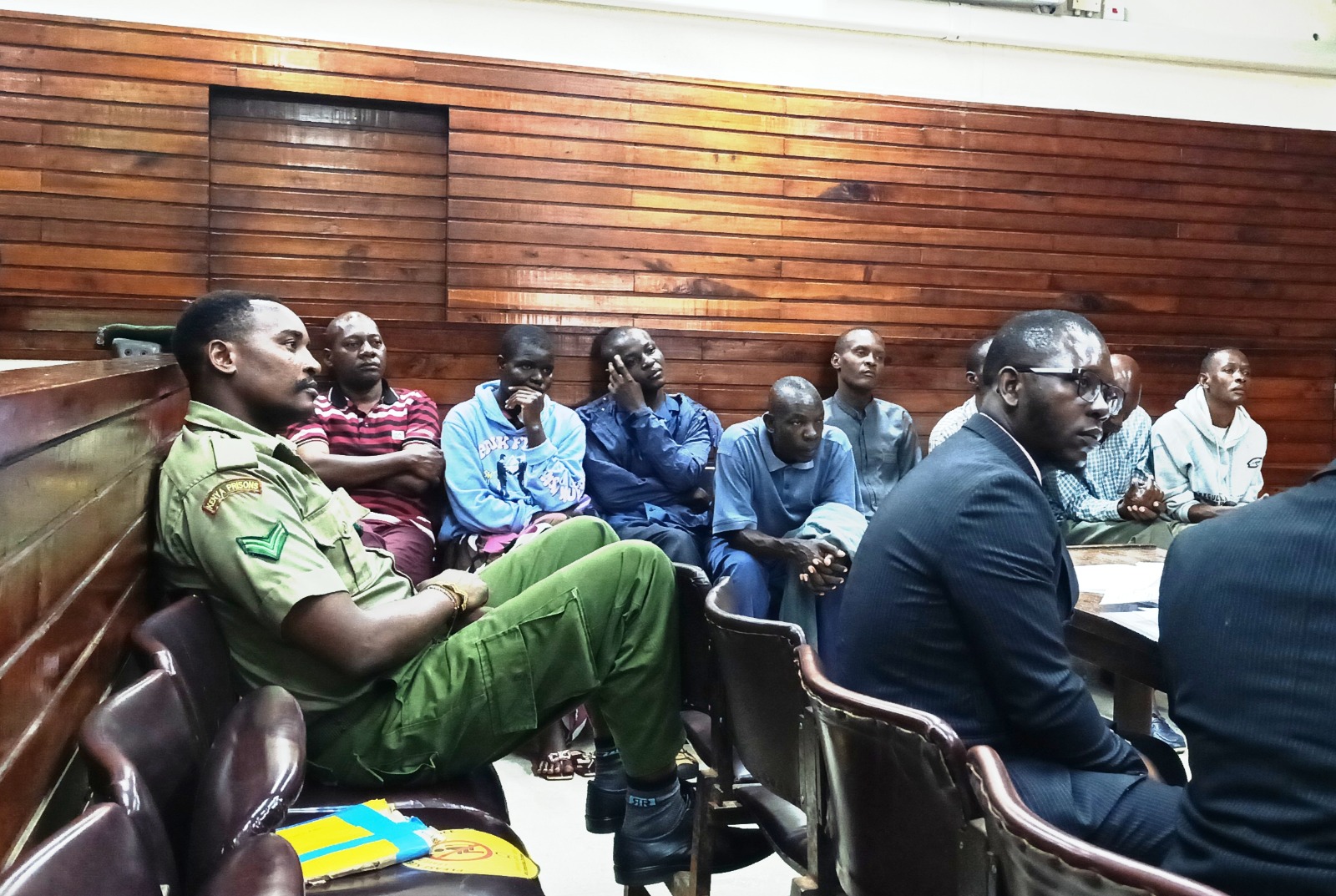
A Safaricom SIM card registered to a prisoner serving a 50-year sentence at Shimo La Tewa Maximum Security Prison was allegedly used in a mobile phone linked to controversial preacher Paul Nthenge Mackenzie, the Mombasa High Court has heard.
The revelation emerged during the ongoing trial of Mackenzie and seven co-accused over the Kwa Binzaro deaths in Kilifi County, where the remains of 28 people were exhumed from shallow graves.
Testifying before Lady Justice Wendy Kagendo, 41-year-old Kalume Kitsao Rimba acknowledged registering five Safaricom numbers in his name but denied using them to communicate with Mackenzie or conduct mobile money transactions while in prison.
Rimba told the court that he registered the numbers to build his M-Shwari portfolio and qualify for mobile loans.
He maintained that the registrations were legitimate and insisted he had no direct association with Mackenzie, whom he knew only through media reports about the Shakahola deaths.
Led in his testimony by Assistant Director of Public Prosecutions Frankline Sirima, Rimba said he was serving a 50-year sentence after pleading guilty to drug trafficking in 2024.
The witness recalled that prison officers searched his cell on September 20, 2025, recovering two Bibles containing handwritten papers with names and telephone contacts.
He said officers later informed him that one of his SIM cards had been used to transfer money to Mackenzie, who is also being held at the facility.
A second search the following day led to the recovery of two SIM cards, which Rimba said he had kept since his arrest in March 2024.
Although he denied personally using the cards in prison, Rimba admitted occasionally lending one to a fellow inmate, Charles Kalume, who would borrow money from him to make telephone calls. He added that Kalume sometimes borrowed mobile phone handsets from other prisoners.
The prosecution alleges that Mackenzie used telephone numbers registered in other people’s names to communicate with his co-accused.
According to the prosecution, the communications involved instructions to intensify doomsday preaching and encourage followers in Kwa Binzaro to fast, allegedly contributing to the deaths under investigation.
The court also heard evidence from prison officers James Mnjala and Sergeant Stanislous Bongo Chikuta concerning searches carried out at Shimo La Tewa Maximum Security Prison.
Mnjala told the court that officers conducted surprise searches after receiving intelligence that inmates, including suspects in the Shakahola cases, were keeping prohibited items in their cells.
The searches reportedly led to the recovery of a mobile phone, ropes, plastic containers, boxes and nails from different cells.
Chikuta, the 50th prosecution witness, testified that searches conducted on August 30 and September 19, 2025, resulted in the recovery of mobile phones and SIM cards from inmates.
He further told the court that DCI officers searched Mackenzie’s cell on September 20, 2025, recovering a notebook, handwritten notes and a Bible. The notebook allegedly contained telephone numbers and identification details recorded under the name of prosecution witness Emily Achieng, who testified virtually from Kisumu.
Chikuta also confirmed participating in the search of Rimba’s cell and documenting the recovery of the Bibles and handwritten papers.
Prison regulations prohibit inmates from possessing unauthorised mobile phones and SIM cards. The testimony is expected to form part of the prosecution’s evidence as the court examines the alleged communications and their possible connection to the deaths in Kwa Binzaro.
Mackenzie was recently convicted alongside 28 co-accused in connection with the Shakahola massacre, in which 191 people, including 190 children, died.