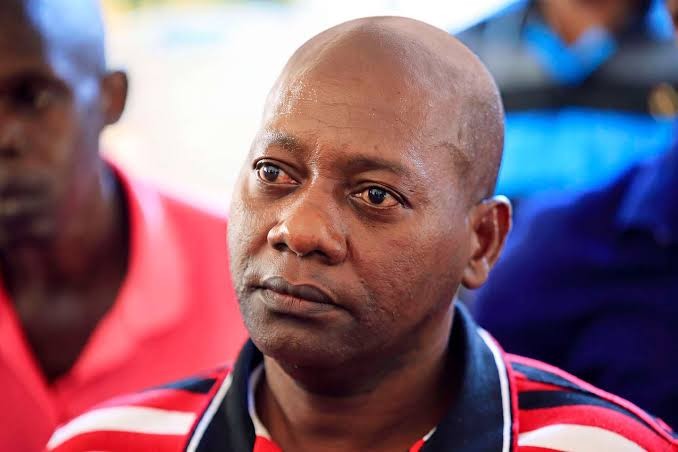
Families of victims of the Shakahola tragedy are demanding compensation from the government, calling for the confiscation of controversial preacher Paul Nthenge Mackenzie’s assets to help compensate those who lost their loved ones.
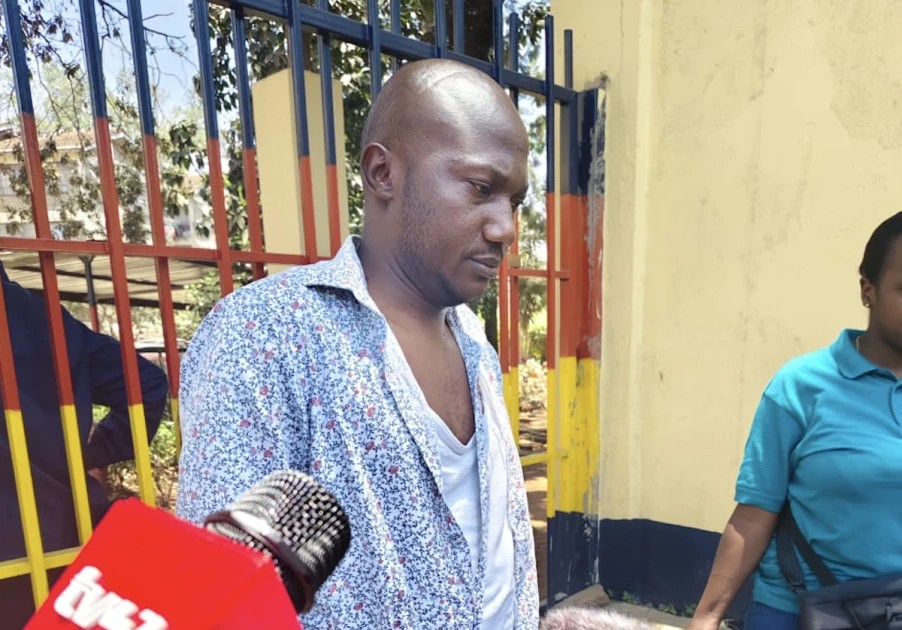
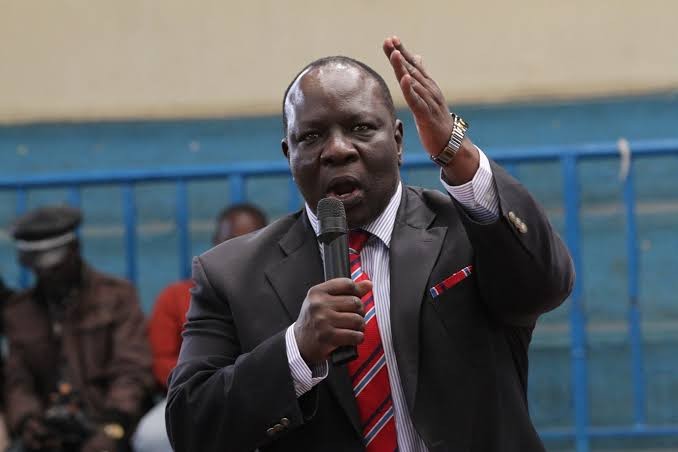
Led by Michael Ruwa, who lost seven family members in the tragedy, the families want the government to seize Mackenzie’s property and distribute the proceeds to bereaved families.
Speaking in Malindi, the families said the deaths had caused them immense grief, leaving many without relatives who had played critical roles in supporting their households.
Ruwa said compensation would help address some of the losses suffered by families, who have endured years of uncertainty and anguish following the discovery of mass graves in Shakahola Forest, Kilifi County.
Mercy Fondo, another affected family member, called for firm legal action against Mackenzie, saying the tragedy had left families struggling with lasting emotional pain following the loss of their loved ones.
Meanwhile, Wallid Sketty, an official of the human rights organisation Vocal Africa, said confiscating Mackenzie’s assets would send a strong warning to individuals who use religion to promote misleading ideologies and manipulate vulnerable members of society.
Sketty said such action would demonstrate that people who exploit religious beliefs and cause harm to their followers must be held accountable, adding that families should not be left to bear the consequences alone.
The demands come days after the High Court in Mombasa convicted Mackenzie and 28 co-accused over the murder of 191 people, including 190 children and one adult, in one of Kenya’s most disturbing cases involving religious extremism.
In a judgment delivered on October 19, 2026, Justice Diana Kavedza found that the prosecution had proved its case, rejecting the defence argument that the victims had voluntarily fasted to death. The court found that the accused had participated in a system of enforced fasting that led to the deaths.
The court heard that followers of Mackenzie’s Good News International Church were encouraged to starve themselves and their children in the belief that doing so would enable them to reach heaven. Children were targeted first under the fasting regime, according to the court’s findings.
Mackenzie and his co-accused are scheduled to be sentenced on November 6, 2026, following a mitigation hearing set for October 30. The defence has indicated plans to appeal the convictions.
The case came to national attention in April 2023, when authorities began uncovering mass graves in Shakahola Forest, where Mackenzie’s followers had established a secluded religious community. More than 400 bodies have since been recovered, although the murder convictions in the case relate to 191 deaths.
The tragedy sparked widespread calls for stronger oversight of religious organisations and greater accountability for individuals accused of exploiting faith to harm their followers.
As the sentencing date approaches, the affected families are now seeking not only justice through the courts but also compensation for the devastating losses they say have permanently changed their lives.