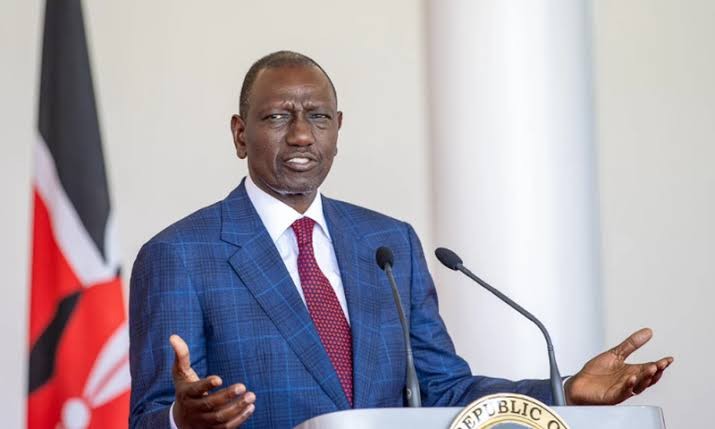
President William Ruto has challenged opposition leaders seeking to succeed him in the 2027 General Election to present clear policy alternatives, saying the contest should be based on track records, development plans and proposals for addressing Kenyans’ needs.
Speaking during Mashujaa Day celebrations at Kipchoge Keino Stadium in Eldoret on Tuesday, October 20, Ruto defended his administration’s economic agenda and challenged political opponents to explain how they would address the country’s challenges if elected.
“If you have a better plan for our farmers, young people, traders and workers, put it before the people of Kenya. Beyond what you oppose, what do you propose?” he asked.
The President said candidates should be prepared to explain what they would do differently instead of building their campaigns around criticism of government programmes.
He cited affordable housing, healthcare reforms and agricultural support as areas where opponents should present alternative proposals if they disagreed with his administration’s approach.
“If you disagree with Affordable Housing, tell Kenyans how you would provide decent homes and create jobs. If you oppose our healthcare reforms, explain how you would ensure that no family is forced to organize a harambee to settle a hospital bill.”
Ruto also challenged political leaders to explain how they would support farmers, young people and workers, insisting that criticism should be accompanied by practical proposals for improving livelihoods.
He said the same standard should apply to major infrastructure projects, including the Rironi–Mau Summit Highway, the planned railway extension towards Kisumu and Malaba, the Isiolo–Mandera Corridor and the modernisation of Jomo Kenyatta International Airport.
The President said such projects should remain open to scrutiny over their costs, financing, environmental impact and public value, while those proposing alternatives should explain how their plans would connect counties, expand markets and create employment.
“No government program is above criticism. No leader is beyond accountability,” he said.
Ruto further argued that Kenya’s political competition should move away from ethnic mobilisation and personal attacks towards a contest over policies and development priorities.
His remarks came as he acknowledged public frustration over the cost of living, taxation, unemployment and the pace of change. He noted that young Kenyans had taken to the streets to express their concerns, emphasising that winning an election did not remove the government’s responsibility to listen to citizens.
“Citizens retain the right to question their government, challenge its decisions and demand better,” he said.
Ruto further said his administration would present its record and outline the next phase of its development agenda as the country approaches the 2027 election.
“I will present to Kenyans an account of what my administration has achieved and what remains to be done.”
The President said voters should assess leaders on their records, visions and plans, adding that democratic competition should produce better policies rather than deepen divisions.