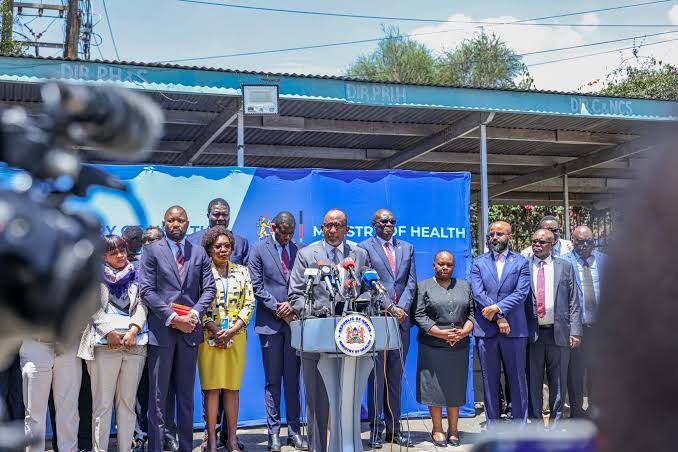

Public Health Principal Secretary (PS) Mary Muthoni has reassured Kenyans that the country does not have an active Ebola outbreak following the management of a single imported case.
Her remarks come after the government suspended meetings in hotels as part of measures announced following the imported Ebola case, raising public concern over the potential spread of the disease.
In a public message on her official social media handles, Muthoni said the patient had died and was safely buried in strict adherence to established health protocols.
"We do NOT have an active Ebola outbreak in Kenya. We recently managed a single imported case," she said.
The PS urged Kenyans to remain calm while maintaining high standards of hygiene to minimise the risk of disease transmission.
She advised members of the public to wash their hands frequently with soap and clean water, avoid contact with suspected cases and report suspected symptoms through official health channels.
Muthoni's reassurance comes amid heightened public attention to Ebola and questions about the precautions being taken by the government following confirmation of the imported case.
The suspension of hotel meetings has added to concerns among members of the public and businesses, particularly those that rely on hotels to host conferences, workshops and other gatherings.
The government has urged the public to remain vigilant and follow official health guidance as authorities continue to manage the situation.
Muthoni emphasised the importance of observing preventive measures while avoiding unnecessary panic.
At the same time, PS Muthoni called on Kenyans to maintain proper hygiene and report any suspected cases through the appropriate channels laid out by the government through the Ministry of Health.
The PS's statement seeks to reassure the public that the reported case does not amount to an active Ebola outbreak in the country.
Ebola spreads mainly through direct contact with the blood or other body fluids of a person who is infected and has developed symptoms.
These fluids include vomit, diarrhoea, saliva, urine and breast milk.
The virus can enter the body through broken skin or the eyes, nose and mouth, making unprotected contact with an infected person a significant risk.
The disease can also spread through contact with the body of someone who has died from Ebola, as the virus may remain infectious after death.
Handling contaminated items such as bedding, clothing, needles and medical equipment without appropriate protective measures can also lead to infection.
Humans can contract Ebola through contact with infected wildlife, including certain bats and primates, or their blood and tissues.
Unlike airborne diseases such as measles, Ebola does not typically spread through the air simply by being near an infected person or sharing a room.
People infected with the virus generally become contagious after developing symptoms, which can appear between two and 21 days after exposure.