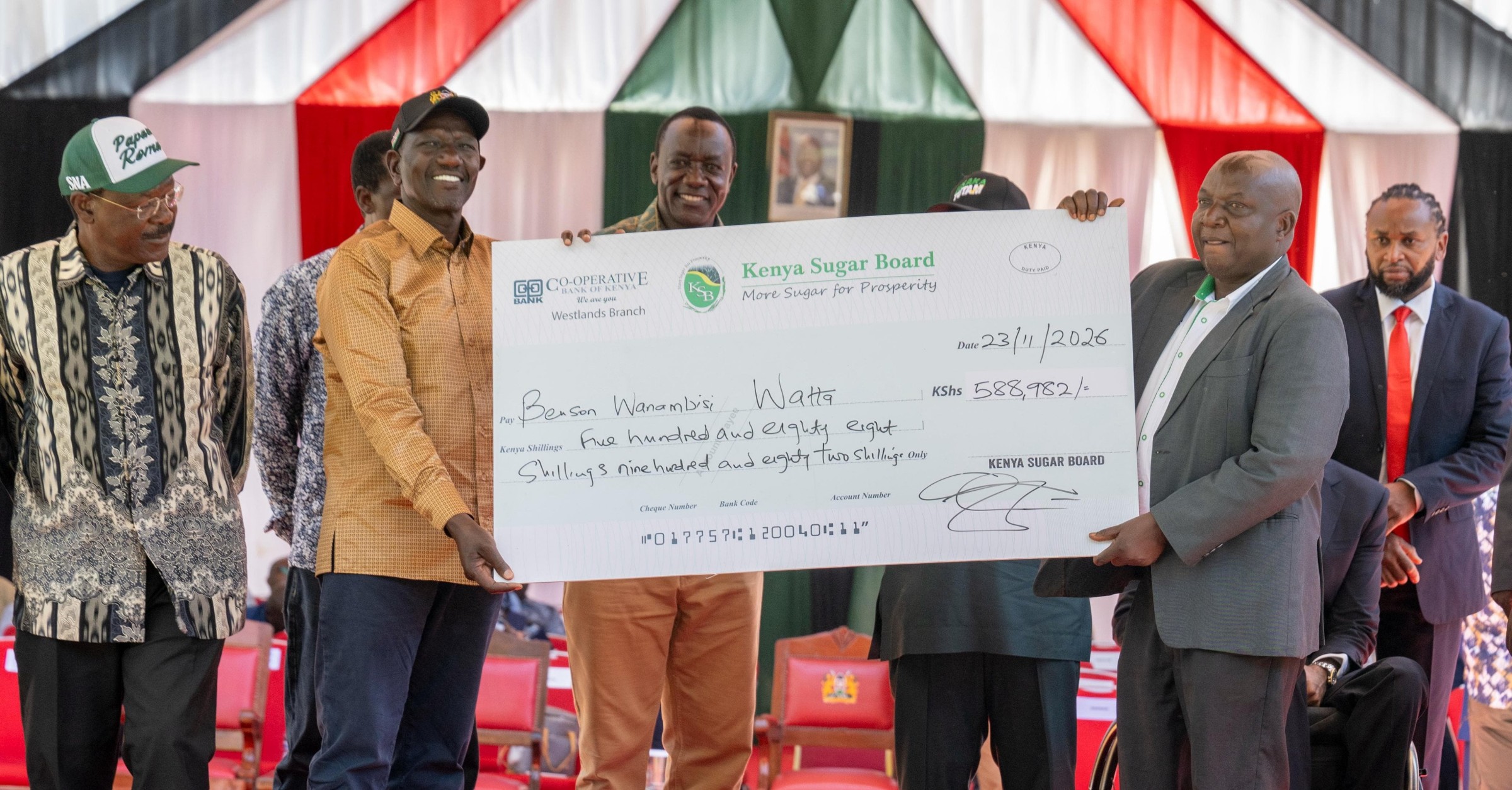
The government has begun distributing this year's KSh1.2 billion bonus to farmers supplying cane to public sugar factories across the country, in a move aimed at improving farmers' earnings and revitalising the sugar industry.
The exercise was launched at Nzoia Sugar Factory in Kanduyi Constituency, Bungoma County, where farmers received a total of KSh195 million as part of the annual bonus payment.
The announcement was made during an event presided over by President William Ruto, who described the payments as a major milestone in efforts to ensure sugarcane farmers benefit from their produce in the same way as growers of other agricultural crops.
Ruto said the government was committed to transforming the sugar sector and improving the livelihoods of farmers who have for years faced challenges, including delayed payments and accumulated debts.
He announced that farmers supplying cane to Mumias Sugar Factory in Kakamega County would receive their bonuses next week.
The exercise will also cover farmers delivering cane to Chemilil and Muhoroni sugar factories in Kisumu County, as well as Sony Sugar Factory in Migori County.
The KSh1.2 billion allocation is expected to benefit growers across the country's sugarcane-producing regions, providing them with additional income as the government continues implementing reforms in the sector.
According to the President, the leasing of public sugar factories to private investors has helped improve operations and introduced more reliable payment systems for farmers.
He noted that farmers supplying cane to the leased factories are now paid weekly after delivery, unlike in the past when some growers had to wait for years before receiving their money.
Factory employees have also benefited from the changes, with workers now receiving their salaries regularly every month.
At Nzoia Sugar Factory, the President highlighted investments made by the Rai Group, which is managing the facility, saying the company had invested KSh1.9 billion in factory modernisation, renewal of the nuclear estate and irrigation projects covering 3,600 acres.
The company has also paid KSh688 million in taxes to the government, according to Ruto.
The government has further undertaken measures to reduce the financial burden that previously affected public sugar factories.
Among the interventions was the writing off of KSh117 billion in debts owed by sugar companies, a move intended to give the factories room to improve production and strengthen their operations.
Farmers have also been supported through access to affordable fertiliser, with the government setting the price of a 50-kilogramme bag at KSh2,000 to lower production costs.
The reforms are beginning to reflect in the country's sugar production, which has recorded significant growth.
Ruto said Kenya was expected to produce approximately 900,000 metric tonnes of sugar this year, with the government targeting an increase to 1.2 million metric tonnes as part of efforts to achieve self-sufficiency.
The country has for years relied on sugar imports to bridge the gap between local production and national demand, putting pressure on the industry and raising concerns about the sustainability of local farming.
The government says the combination of factory investments, improved payments, debt relief and affordable farm inputs will help increase production and strengthen the competitiveness of local sugar manufacturers.
The latest bonus payments are therefore expected to provide additional financial support to farmers while encouraging more growers to remain in sugarcane farming.
As the exercise continues to other factories next week, attention will remain on whether the ongoing reforms can sustain production growth and eventually reduce Kenya's dependence on imported sugar.