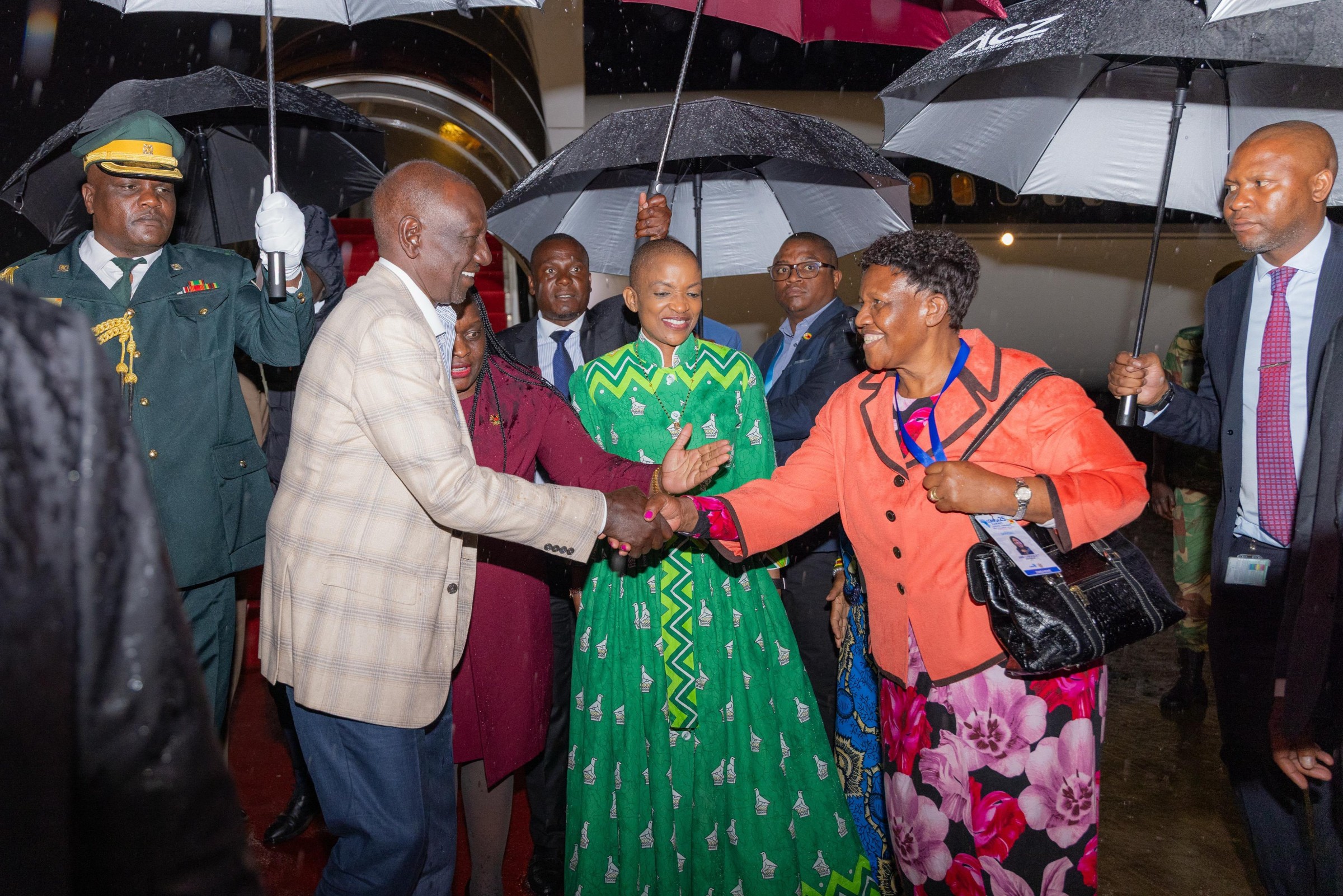
President William Ruto is in Harare, Zimbabwe, for the 25th Summit of the Common Market for Eastern and Southern Africa (COMESA) Heads of State and Government, where regional leaders are expected to chart a new path towards economic integration, industrialisation and increased trade across member countries.
The summit, scheduled for Thursday, October 22, 2026, brings together leaders from the 21-member regional economic bloc to review progress in regional integration and discuss strategies to strengthen trade, attract investment, enhance peace and security, and expand business opportunities.
Ruto is expected to hand over the COMESA chairmanship to Zimbabwean President Emmerson Mnangagwa, marking the end of Kenya’s tenure at the helm of the regional organisation.
Zimbabwe will take over the chairmanship for the 2026–2027 term, with Eswatini serving as vice-chairperson and Kenya as rapporteur.
Other leaders expected to attend include Zambian President Hakainde Hichilema, who has confirmed his participation in the meeting.
Mnangagwa is hosting the summit, which will provide a platform for heads of state and government to deliberate on shared economic priorities and strengthen cooperation among member countries.
The meeting is being held under the theme, “One Market, One Future: Advancing Inclusive Industrialisation, Investment and Regional Integration in COMESA.”
In a statement upon arrival, Ruto said discussions would focus on deepening regional integration, strengthening peace and security, accelerating the implementation of the African Continental Free Trade Area (AfCFTA), and unlocking the economic potential of Africa’s natural resources through value addition.
The summit’s significance lies in its potential to translate regional cooperation agreements into tangible economic benefits for businesses and ordinary citizens.
COMESA brings together 21 member states, creating a substantial market for goods, services and investment across Eastern and Southern Africa.
For Kenya, stronger regional integration could open up additional markets for locally manufactured products, agricultural produce, processed foods and other exports.
Reducing trade barriers and improving transport and border infrastructure could also lower the cost of doing business, strengthen supply chains and create employment opportunities.
A key focus will be industrialisation and value addition, particularly in agriculture, manufacturing and critical minerals.
Rather than exporting raw materials, member states are seeking to expand local processing and manufacturing so that more economic value, investment and jobs remain within the region.
The leaders are also expected to consider ways of accelerating the implementation of the African Continental Free Trade Area, which seeks to establish a single continental market for goods and services and increase trade between African economies.
COMESA’s regional arrangements are expected to complement these wider continental efforts.
Another major item on the agenda is the COMESA Medium-Term Strategic Plan for 2026–2030, which will guide the bloc’s priorities over the next five years.
The plan focuses on deeper regional integration, increased intra-COMESA trade, industrial development, infrastructure connectivity, digital transformation and improved livelihoods.
Ahead of the heads of state summit, the COMESA Business Forum brought together business executives, investors and policymakers to explore financing opportunities, digital technology, industrial competitiveness and ways of strengthening regional value chains.
Discussions also focused on attracting investment and improving the ability of local businesses to compete in regional and international markets.
The summit also comes amid continued efforts by African countries to reduce their dependence on raw commodity exports and build stronger manufacturing sectors capable of creating jobs for their growing populations.
For Zimbabwe, hosting the meeting provides an opportunity to showcase its trade, tourism and investment potential while strengthening its position within the regional bloc.
The incoming chairmanship will also allow Mnangagwa to steer discussions on trade facilitation, industrialisation and cross-border investment.
For Kenya, the leadership transition marks the conclusion of Ruto’s tenure as COMESA chairperson, while maintaining the country’s participation in the bloc’s decision-making structures.
The summit therefore presents an opportunity for member states to agree on practical measures to improve cross-border commerce, attract investment and strengthen regional economic resilience.
Its ultimate impact, however, will depend on how effectively governments implement the decisions reached, remove persistent trade barriers and translate regional commitments into opportunities for businesses and citizens.