President William Ruto has assented to two bills aimed at adjusting tax laws and strengthening the operations of the Kenya Revenue Authority (KRA).
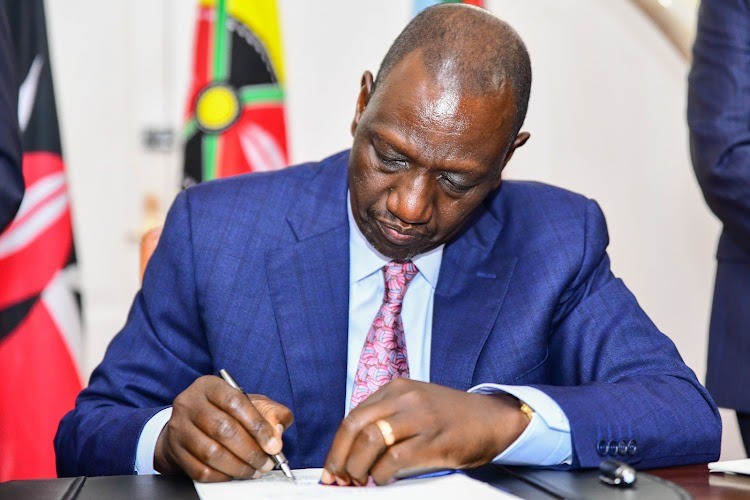
The President signed the Tax Laws Amendment Bill, 2026, and the Kenya Revenue Authority Amendment Bill, 2026, during a ceremony at State Lodge in Eldoret.
The Tax Laws Amendment Bill provides for the reduction of Value Added Tax (VAT) on petroleum products from 16 per cent to 8 per cent, a measure intended to cushion households and businesses against the impact of rising fuel prices.
According to Deputy Chief of Staff in the Executive Office of the President, Josphat Nanok, the legislation extends the fuel tax relief introduced in April 2026 following disruptions linked to the crisis in the Middle East.
The reduction is capped at 90 days, with the Cabinet Secretary for the National Treasury empowered to extend it for a further 90 days through a Gazette notice.
The measure is expected to help contain pressure on transport costs and the prices of essential goods and services, which are influenced by petroleum prices.
The Tax Laws Amendment Bill also introduces changes to excise duty on construction-related products. It shifts the basis for calculating excise duty on tiles from weight to size and reduces the duty on sanitary ware, including ceramic sinks and similar fixtures, from KSh50 per kilogramme to KSh30 per kilogramme.
It also aligns the description of imported flat glass with East African Community protocols, allowing qualifying glass products from within the region to be imported without excise duty.
The changes are intended to support the construction and housing sectors, which are significant contributors to economic activity and employment.
The second legislation, the Kenya Revenue Authority Amendment Bill, 2026, introduces changes to the governance, funding and operational framework of the tax agency.
The law amends provisions governing the appointment and removal of KRA board members, removing references to ex-officio membership to align the legislation with the authority's current board composition.
It also clarifies the respective roles of the Cabinet Secretary and the President in matters relating to resignations and termination of appointments.
The amendments further provide for the Managing Director of the Kenya Ports Authority to serve on the KRA board, reflecting the operational relationship between the two institutions.
To strengthen KRA's financial capacity, the legislation provides for funding amounting to not less than two per cent of the revenue estimated for collection by the authority in the financial estimates for each financial year.
The law also updates the list of statutes administered by KRA, bringing the Retirement Benefits Act, the Tobacco Control Act and the Tea Act under its revenue-related mandate.
The two bills were presented for presidential assent following their passage through the National Assembly, completing the legislative process required for their enactment.
The fuel VAT reduction is expected to be a key focus for motorists, transport operators and businesses seeking relief from the impact of higher petroleum prices.