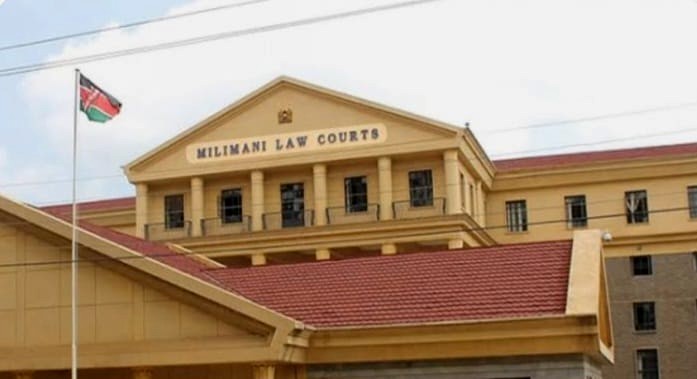
A lawyer has moved to the Milimani High Court seeking to stop Parliament from forwarding an election amendment Bill to the President for assent if it removes the legal requirement for live-streaming results announced at polling stations.
John Muremi Njomo wants the court to issue conservatory orders restraining the National Assembly and the Senate from presenting the Elections (Amendment) (No. 2) Bill, 2024, also known as Senate Bill No. 29 of 2024, for presidential assent in a form that scraps the live-streaming obligation.
In his petition, Njomo challenges Clause 22 of the Bill, arguing that any provision seeking to repeal or omit the requirement under Section 39 of the Elections Act should be stopped.
The provision requires the Independent Electoral and Boundaries Commission (IEBC) to establish and maintain a mechanism for live-streaming election results announced at polling stations.
The petitioner is asking the court to certify the application as urgent and issue interim orders pending an inter partes hearing, where the parties would have an opportunity to present their arguments.
Alternatively, Njomo wants the court to suspend the operation of Clause 22 and any resulting provision of an Act of Parliament to the extent that it removes the live-streaming requirement.
He is also seeking orders preserving the existing legal position to allow the IEBC to continue its planning, procurement and preparations for the General Election scheduled for August 10, 2027, as well as any by-elections, on the basis that the requirement remains in force.
The petition comes amid legislative efforts to amend the Elections Act, with the proposed changes raising questions about the future of mandatory live-streaming of polling-station results.
The National Assembly and Senate have been named as respondents alongside the Attorney General, while the IEBC is listed as an interested party in the case.
Njomo has further asked the court to certify the petition as raising substantial questions of law under Article 165(4) of the Constitution.
If the request is granted, the Chief Justice could assign an uneven number of judges, not fewer than three, to hear and determine the matter.
The court is being asked to preserve the live-streaming requirement while the legal challenge is considered, with the petitioner’s requests subject to the court’s determination.