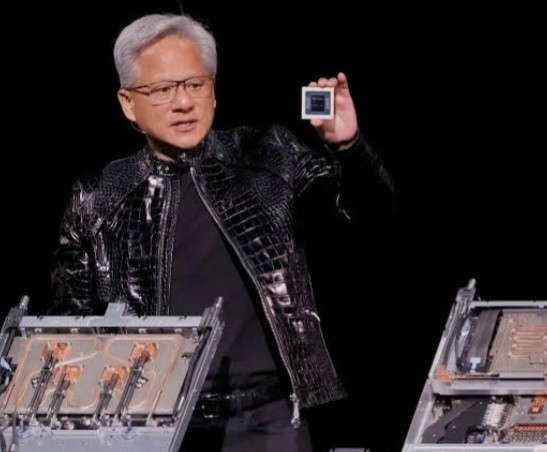
Nvidia's board of directors is facing a major decision over the future of its chief executive officer, Jensen Huang, following a growing scandal involving alleged foreign espionage, reported romantic relationships and concerns over the company's business dealings with China.
The board reportedly convened on Wednesday night to discuss Huang's future at the technology giant, with sources familiar with the matter telling CNN that some insiders within the Trump administration expected him to be removed from the position.
The controversy comes after reports emerged that Huang had an extramarital relationship with Kimberly Powell, Nvidia's vice president of healthcare. The CEO had already come under scrutiny over a separate alleged relationship with Alice Huang, a woman whom US officials suspect was working as a Chinese spy.
Huang publicly apologised on Sunday for an extramarital affair but did not identify the person involved.
The allegations have raised questions about whether the Nvidia boss could have been targeted by a foreign intelligence operation and whether sensitive company information or business interests were exposed.
Nvidia's board has since engaged New York-based law firm Wachtell, Lipton, Rosen and Katz to investigate whether Huang was the target of a foreign intelligence effort.
The allegations have also triggered concerns over Nvidia's compliance with US export restrictions on advanced artificial intelligence chips, particularly those intended for the Chinese market.
Alice Huang was reportedly a director at Singapore-based cloud computing and data centre company Megaspeed International in 2023. The company has come under scrutiny over allegations that it helped channel restricted American semiconductor technology to China.
US officials have previously raised concerns about Megaspeed's business activities, with analysts estimating that the company purchased more than US$4 billion worth of Nvidia semiconductors.
However, Megaspeed has denied any wrongdoing, insisting that its operations comply with the law.
Former CIA counterintelligence analyst Peter Mattis said it remained unclear whether Alice Huang was already working for Chinese intelligence when she first became involved with the Nvidia CEO or whether the relationship was later exploited by China's intelligence service.
Beijing has rejected the spying allegations, describing them as an attempt to smear China.
The controversy has also attracted attention from US lawmakers, with Democratic senators Elizabeth Warren and Chris Coons writing to senior Trump administration officials demanding that all documents relating to Nvidia's advanced chip exports and the suspected intelligence operation be preserved.
They also questioned whether government officials had been aware of the alleged security risks but failed to take action to prevent the continued flow of advanced chips to companies linked to the suspected operative.
Meanwhile, the uncertainty surrounding Huang's leadership has unsettled investors, with Nvidia shares falling sharply in after-hours trading.
The company's stock dropped by approximately 8.6 per cent, wiping out more than US$300 billion in market value during the week, as investors assessed the possible consequences of a leadership change.
Market analysts have also raised concerns about Nvidia's succession plans, noting that the company has no clear publicly announced replacement for its long-serving founder and chief executive.
The board comprises 11 directors, including Huang himself, with several members having worked alongside him for decades. This has raised questions about whether the board can make an independent assessment of the allegations.
The developments come at a critical time for Nvidia, whose advanced processors have become central to the global artificial intelligence boom and the competition between the United States and China for technological dominance.
US President Donald Trump has publicly expressed support for Huang, saying the CEO had denied knowing that Alice Huang was allegedly involved in Chinese espionage.
With the board's deliberations ongoing, the outcome could have far-reaching implications for Nvidia, its investors and the wider global technology industry.