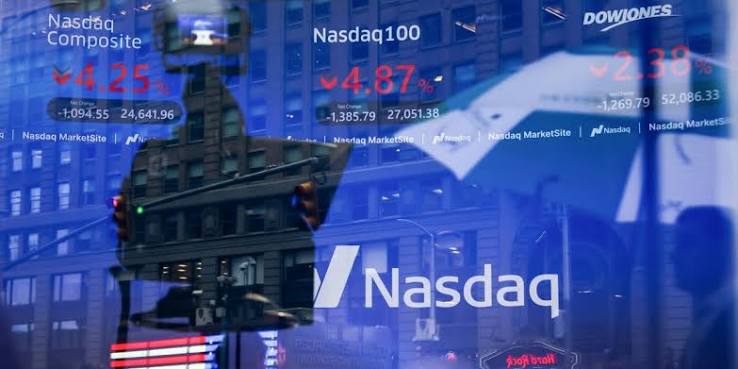
The Nasdaq Composite has entered correction territory after a massive sell-off in artificial intelligence and semiconductor stocks, as investors reacted to fears that political pressure in the United States could slow the construction of data centres powering the AI industry.
The technology-heavy index plunged 5.52% on Thursday, November 5, closing at 24,315 points and falling more than 10% below its October 6 record closing high. It was the Nasdaq's steepest daily decline in 19 months.
The sell-off wiped approximately $2.5 trillion from the market value of the Nasdaq 100, with major chipmakers and companies supplying artificial intelligence infrastructure bearing the brunt of investor withdrawals.
Nvidia shares dropped 9.3%, while Broadcom fell approximately 9%. Advanced Micro Devices plunged 17.3%, reflecting concerns that a slowdown in data centre construction could weaken demand for processors and other specialised computing equipment.
The Philadelphia Semiconductor Index, which tracks major chip manufacturers, tumbled more than 12%, recording one of its steepest declines in recent years.
The immediate trigger was the outcome of the November 3 US midterm elections, in which Democrats won control of both chambers of Congress and several key state governorships.
Investors fear the political shift could bring greater scrutiny of the rapid expansion of data centres, particularly their electricity consumption, water requirements, environmental impact and pressure on local communities.
Senator Bernie Sanders has called for a nationwide moratorium on new data centre construction until stronger safeguards are established. Representative Alexandria Ocasio-Cortez has also backed efforts to pause new projects while lawmakers develop rules governing the industry's expansion.
The proposals have raised concerns among investors that new restrictions, permitting delays or additional operating requirements could slow billions of dollars in planned infrastructure spending.
However, the election results do not mean a national construction ban is imminent. Democrats will take control of Congress when the new legislative session begins in January 2027, and any proposed legislation would still face the legislative process and potential opposition from President Donald Trump.
The sell-off also reflects growing questions about whether technology companies can generate sufficient returns from their enormous investments in artificial intelligence.
Major technology groups have committed hundreds of billions of dollars to data centres, advanced chips and computing infrastructure. Investors are increasingly concerned about the time required for those investments to translate into sustainable profits, particularly as borrowing costs remain elevated.
The pressure extended beyond chipmakers. Data centre operators and infrastructure suppliers also recorded heavy losses, while broader US markets declined sharply. The S&P 500 dropped 4.36%, and the Dow Jones Industrial Average lost 3.44%.
For investors, the correction highlights how sensitive the AI boom has become to political decisions, financing conditions and doubts about future earnings.
For the technology industry, the immediate concern is whether uncertainty surrounding data centre development will delay projects that underpin demand for advanced chips, electricity and cloud computing services.