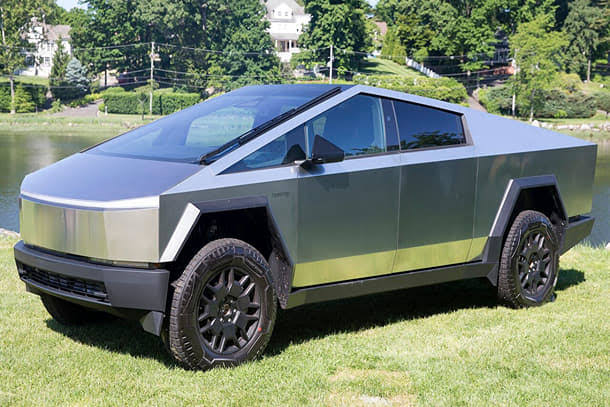
Tesla plans to wind down Cybertruck production at its Texas Gigafactory around the middle of 2027, as the electric vehicle manufacturer shifts factory capacity towards its autonomous Cybercab programme following years of weaker-than-expected demand for the futuristic pickup truck.
Chief Executive Officer Elon Musk announced the planned production changes on Friday, November 6, 2026, in a post on X, saying the decision would allow the company to increase Cybercab manufacturing. He did not clarify whether Cybertruck production would be transferred to another facility or discontinued entirely.
The announcement marks a significant change for a vehicle that was introduced as one of Tesla's most ambitious products and promoted as a futuristic competitor to traditional American pickup trucks manufactured by Ford and General Motors.
The Cybertruck began reaching customers in late 2023 after years of anticipation. However, its sales have struggled to match the expectations set before its launch. Musk had previously projected that the company could eventually sell approximately 250,000 units annually.
According to Kelley Blue Book figures , Tesla sold 20,237 Cybertrucks in the United States in 2025, representing a 48% decline from the 38,965 units sold in 2024. The figures highlighted the difficulty the company faced in maintaining demand for the electric pickup.
The vehicle has also encountered several challenges, including multiple recalls, quality-control concerns and repeated price adjustments. Its distinctive angular design and heavy stainless-steel body attracted attention during its launch but also limited its appeal in several potential markets.
European expansion has presented additional challenges because the vehicle's design raises concerns under pedestrian safety regulations. These restrictions have made it difficult for Tesla to secure approval in markets with stricter vehicle safety requirements.
The production shift comes as Musk increasingly positions Tesla as an artificial intelligence, robotics and autonomous transportation company rather than solely an electric vehicle manufacturer.
The Cybercab is central to this strategy. The vehicle is designed for autonomous transportation and does not feature conventional steering wheels or pedals. Tesla intends to use it as part of a wider robotaxi network, although regulatory approval and the expansion of commercial operations remain important challenges.
The Austin factory is currently Tesla's only known production facility equipped to manufacture the Cybertruck's specialised components. The company has not announced a replacement production location or confirmed whether the model will eventually be discontinued.
Tesla's decision therefore leaves questions about the future of the Cybertruck and the company's ability to convert its autonomous driving ambitions into a commercially sustainable business.