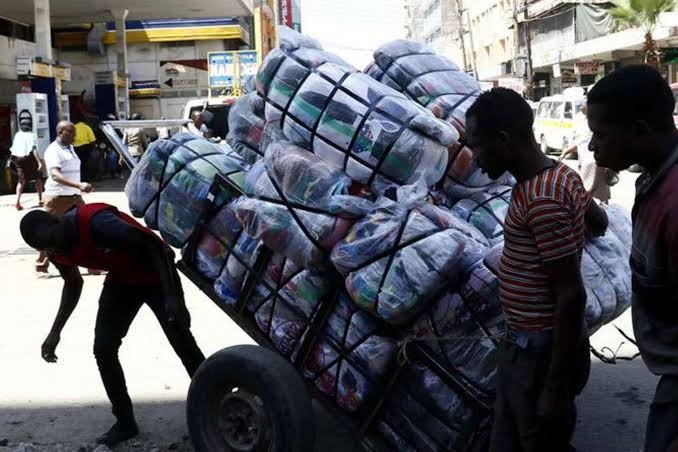
Mitumba traders in Nairobi are currently reporting sluggish sales as tough economic conditions squeeze household budgets, leaving fewer shoppers walking through their stalls and putting daily earnings under pressure.
The traders, who sell second-hand clothing that has long been a go-to option for budget-conscious Kenyans, say customers are increasingly choosing to spend on essential goods first. Clothing is being pushed down the shopping list as families stretch limited money to cover more pressing needs.
The slowdown is hitting traders where it hurts most: their daily takings. With fewer buyers and less money changing hands, many say it is becoming harder to meet the routine costs of keeping their businesses running.
For a sector that supports many livelihoods in the capital, the trend is a worrying one. The traders warn that declining sales are threatening their livelihoods, with some struggling to sustain their businesses amid reduced consumer purchasing power. The pressure is real, and it is being felt at the stall.
The situation reflects a broader reality for many urban households, where limited disposable income forces difficult choices about what to buy and what to postpone. When money is tight, second-hand clothes, though cheaper than new ones, can still become a purchase that families put off.
Mitumba trading is a business built on volume, where a steady flow of customers keeps stock moving and income coming in. When foot traffic thins out, the effect is felt quickly, because traders depend on daily sales to keep going.
Behind each stall is often a family that relies on the income, which is why even a modest dip in sales can ripple through households. Their experience offers a ground-level view of how economic pressure is reshaping consumer behaviour, with shoppers buying what they must and holding back on what they can delay. Whether the market recovers will largely depend on whether household purchasing power improves, something the traders will be watching closely.