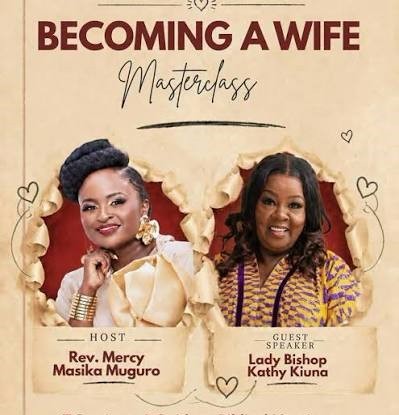
Kenyan gospel singer Mercy Masika has sparked a national conversation about marriage, gender roles and women’s empowerment after announcing her upcoming *Becoming a Wife* masterclass. The Christian programme, scheduled for November 21 to December 12, 2026, has attracted criticism from Kenyans who question why women are being taught how to become better wives while men face fewer similar expectations.
Masika presented the masterclass as an opportunity for women who want to build marriages guided by biblical principles. She announced that Lady Bishop Kathy Kiuna would be among the speakers, describing her as a mentor whose example of faith and marriage had influenced her own journey.
The announcement, however, quickly drew reactions from prominent Kenyan women, including media personality Janet Mbugua, who questioned the timing and emphasis of the programme. Mbugua argued that discussions about marriage cannot be separated from the broader challenges facing women and girls, including gender-based violence, sexual abuse and concerns about personal safety.
She also challenged the tendency to place responsibility for maintaining a marriage primarily on women. In her view, a woman cannot save a relationship through personal effort alone if her partner is unwilling to contribute, making marriage preparation a responsibility that should involve both sexes.
Her criticism has resonated with Kenyans who argue that marriage is a partnership requiring mutual respect, emotional maturity, communication and shared responsibility. Some social media users have questioned why programmes teaching women how to fulfil their roles as wives are more visible than initiatives preparing men to become responsible husbands.
Actress Catherine Kamau, popularly known as Kate Actress, also weighed in on the discussion, noting that marriage is not the only aspiration women have. She pointed to other priorities, including education, financial security and mental wellbeing, arguing that these goals deserve attention alongside conversations about relationships.
Masika, however, has maintained that the programme is intended for women who want to understand marriage from a Christian perspective. Responding to criticism, she said the classes would focus on building families and promoting a Kingdom mindset. Supporters of the initiative argue that women should be free to seek guidance on marriage without being ridiculed for their personal or religious choices.
Media personality Mashirima Kapombe defended Masika, saying that disagreeing with a woman's initiative should not become a reason to attack her. She argued that women’s empowerment should include respecting their freedom to pursue projects that reflect their beliefs, even when others do not agree with them.
The debate has also prompted a response from the programme’s organisers. In that a companion *Becoming a Husband* session featuring content creator Kabi WaJesus was introduced following calls for men to receive similar guidance. The development has added another dimension to the discussion about whether marriage education should address both partners equally.
The controversy highlights a broader question about the role of faith-based institutions in modern Kenyan society. While marriage mentorship can offer practical and spiritual guidance, critics argue that it should not encourage women to tolerate abuse or assume sole responsibility for relationship problems. Supporters, meanwhile, maintain that preparing women for marriage and holding men accountable are not mutually exclusive goals.
As the masterclass approaches, the debate is likely to continue beyond Masika’s programme. At its centre is a question that reaches beyond celebrity commentary: how can couples be prepared for healthy, lasting marriages while ensuring that responsibility, dignity and safety remain shared priorities?