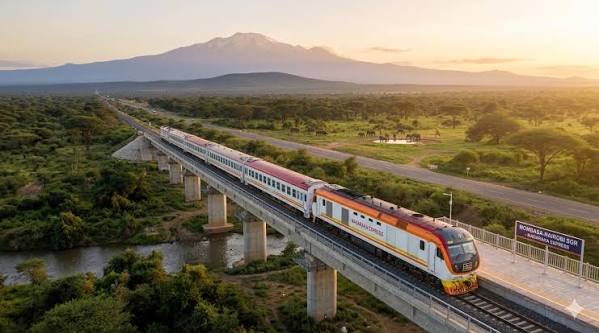
Kenya could have saved up to US$900 million in the initial construction of the Standard Gauge Railway (SGR) between Mombasa and Nairobi if the project had been delivered at costs comparable to a similar railway in Tanzania, according to the World Bank’s November 2026 Kenya Economic Update. The report attributes part of the potential savings to governance weaknesses, including non-competitive contracting and irregularities in land acquisition and compensation.
The Mombasa-Nairobi railway cost approximately US$7.6 million per kilometre, compared with US$5.7 million per kilometre for the Dar es Salaam-Dodoma railway in Tanzania and US$5.3 million per kilometre for the Djibouti-Addis Ababa line.
The World Bank says that using the Tanzanian railway’s cost metric could have reduced Kenya’s initial construction bill by as much as US$900 million. At least 30 per cent of that potential saving is attributed to governance-related factors rather than differences in terrain or technical requirements.
These factors included a preference for direct contracting instead of competitive tendering, land speculation, and alleged fraud involving land titling, valuation and compensation payments.
The report argues that procurement practices can significantly influence the final cost of major public infrastructure projects. Direct awards and public-private partnership proposals originating from unsolicited bids, without full transparency, remain common concerns.
It also highlights the risks associated with awarding contracts to companies linked to public officials. Such arrangements can create conflicts of interest and increase the possibility of collusion and additional cost markups during project implementation.
The financial implications extend beyond individual projects. The World Bank estimates that corruption and collusion, through higher public investment costs and reduced revenue collection, are likely to have increased Kenya’s annual fiscal deficits by about two percentage points of GDP.
That additional deficit translates into higher borrowing requirements over time. The report also warns that governance risks can increase the cost of sovereign borrowing by weakening creditor confidence and raising perceptions of repayment risk.
For a country already facing elevated public debt and high interest payments, inefficient procurement can therefore have consequences well beyond the original project budget.
The World Bank recommends stronger transparency and accountability in public procurement, alongside more effective implementation of existing legal safeguards. Competitive tendering, disclosure of beneficial ownership and stronger oversight of public investment are among the measures needed to reduce opportunities for inflated costs and conflicts of interest.
The report’s findings place renewed focus on how Kenya selects contractors, negotiates infrastructure deals and supervises projects. Ensuring that public investments deliver value for money will be central to limiting waste and easing the pressure on government finances.