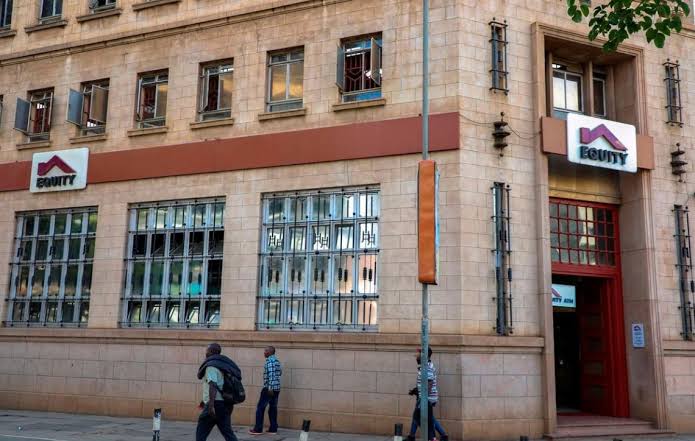
Equity Bank has obtained High Court orders allowing it to freeze assets worth Sh303.2 million belonging to four individuals and five companies accused of receiving part of Sh1.49 billion allegedly diverted from the lender between November 2023 and June 2024. The orders, made public on November 4, 2026, seek to preserve the funds as the bank pursues recovery through the courts.
The case centres on alleged fraudulent transactions involving Equity Bank's salary-processing general ledger, an internal account used to facilitate payments to employees of corporate clients. The lender claims its former Manager of Salary Processing, David Machiri Kimani, exploited his authorised access to initiate transfers disguised as legitimate salary payments.
According to court documents, the transactions involved more than 40 transfers made using the former manager's assigned computer and user credentials. The funds were allegedly channelled through third-party accounts before being transferred to other entities, with some reportedly converted into cryptocurrency.
The defendants named in the case include Kimani, Owen Karanja Kuguru and Ruth Muthoni Kamau, alongside five companies: KT Owen Group Limited, Axteron Technologies Limited, Mac and Gray Trading Limited, Blue Kenfresh Limited and Goodmans Fresh Limited, among others linked to the proceedings.
The court authorised the freezing of accounts held at UBA, Absa, NCBA, Stanbic Bank and Co-operative Bank, with individual limits adding up to Sh303.2 million. It also ordered the preservation of identifiable cryptocurrency holdings linked to three defendants on Binance and other digital asset platforms.
The court further directed that identifiable cryptocurrency holdings be converted into ordinary currency within 10 days, with the proceeds deposited in a Central Bank of Kenya-licensed tier-one bank. The Central Bank of Kenya was appointed as the escrow agent to hold the funds pending determination of the recovery case.
However, the defendants have disputed aspects of the bank's allegations. One businessman maintained that companies linked to him provided legitimate trade-finance, import and shipping services, arguing that they were unaware the payments allegedly originated from Equity Bank.
The court noted that its finding of a strong preliminary case did not mean the lender would automatically succeed at trial. It also declined to issue additional tracing and accounting orders before the full hearing.
The Sh303.2 million freeze represents only part of the Sh1.49 billion Equity Bank is seeking to recover. The next stage will involve determining the defendants' liability and whether the lender can establish its claims against the individuals and companies named in the recovery suit.