Kenya has secured re-election to the International Telecommunication Union (ITU) Council after receiving 136 votes, emerging as the leading candidate in Region D, which represents Africa, in the elections held in Doha, Qatar.
The result gives Kenya another four-year term from 2027 to 2030, extending its participation in decisions shaping international telecommunications policy and the development of digital technologies.
Kenya narrowly finished ahead of Côte d'Ivoire, which received 135 votes, while Senegal came third with 134. Tanzania secured 131 votes, followed by Egypt with 128, completing the top five African countries in the election.
Kenya's election results and competitors
The 13 countries with the highest vote tallies in Africa's regional group were elected to the 48-member Council, which oversees the organisation's activities between its four-yearly Plenipotentiary Conferences.
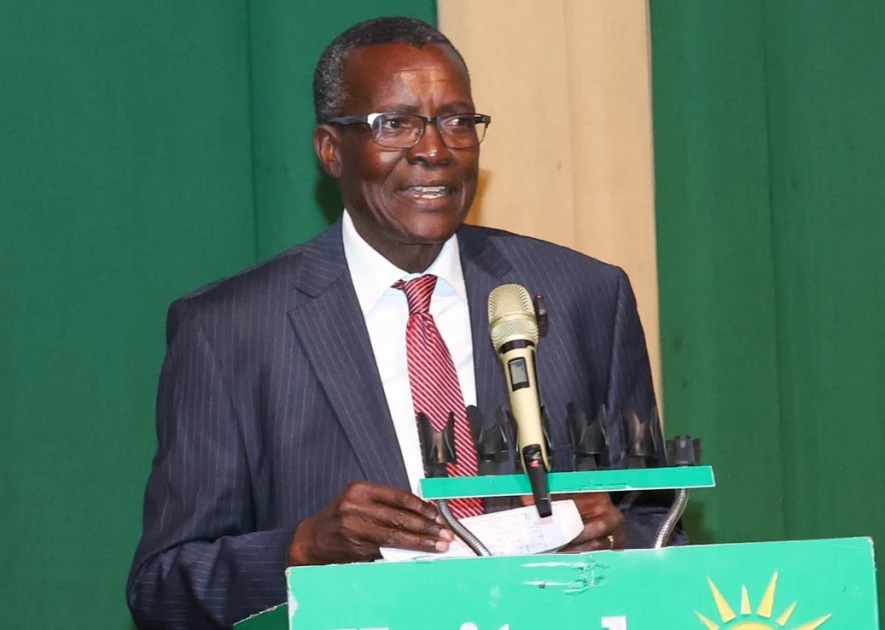
The Kenyan campaign was spearheaded by Cabinet Secretary for Information, Communications and the Digital Economy William Kabogo Gitau, working alongside the Kenyan Ambassador to Qatar and the Communications Authority of Kenya (CA).
Ahead of the election, Kenya intensified its diplomatic outreach through bilateral engagements, receptions for representatives of ITU member states and a high-level luncheon hosted by Kabogo on the sidelines of the 2026 Plenipotentiary Conference (PP-26) in Doha.
The engagements were aimed at strengthening partnerships and securing support from member states for Kenya's continued representation on the Council.
The re-election extends Kenya's presence in the organisation's governing body, where it has served since 1982. The country joined the ITU in 1964, establishing a relationship spanning 62 years.
Kenya's long-standing ITU membership
The Council plays a central role in overseeing the ITU's policies, strategies and activities between Plenipotentiary Conferences.
Its responsibilities include considering international telecommunications policy matters and supervising the implementation of decisions guiding the organisation's work.
The ITU brings together 194 member states and works on international telecommunications standards, radio-frequency spectrum coordination, satellite orbit management and efforts to expand global connectivity.
Kenya's continued membership provides an opportunity to participate in decisions affecting the development of telecommunications infrastructure, digital services and emerging technologies.
Kenya's focus for the new term
The country has highlighted its experience in mobile money innovation, digital financial inclusion and the development of information and communications technology infrastructure as part of its contribution to global digital cooperation.
During its new term, Kenya will seek to advance priorities including affordable connectivity, digital inclusion, innovation and improved access to technology, particularly for underserved communities.
Kenya's re-election also gives the country another opportunity to advance Africa's interests in global digital governance while contributing to international efforts to make communications and technology more accessible.
The 2026 Plenipotentiary Conference runs from November 9 to 27 in Doha and brings together ITU member states to determine the organisation's strategic direction and elect its leadership and Council members for the next four years.