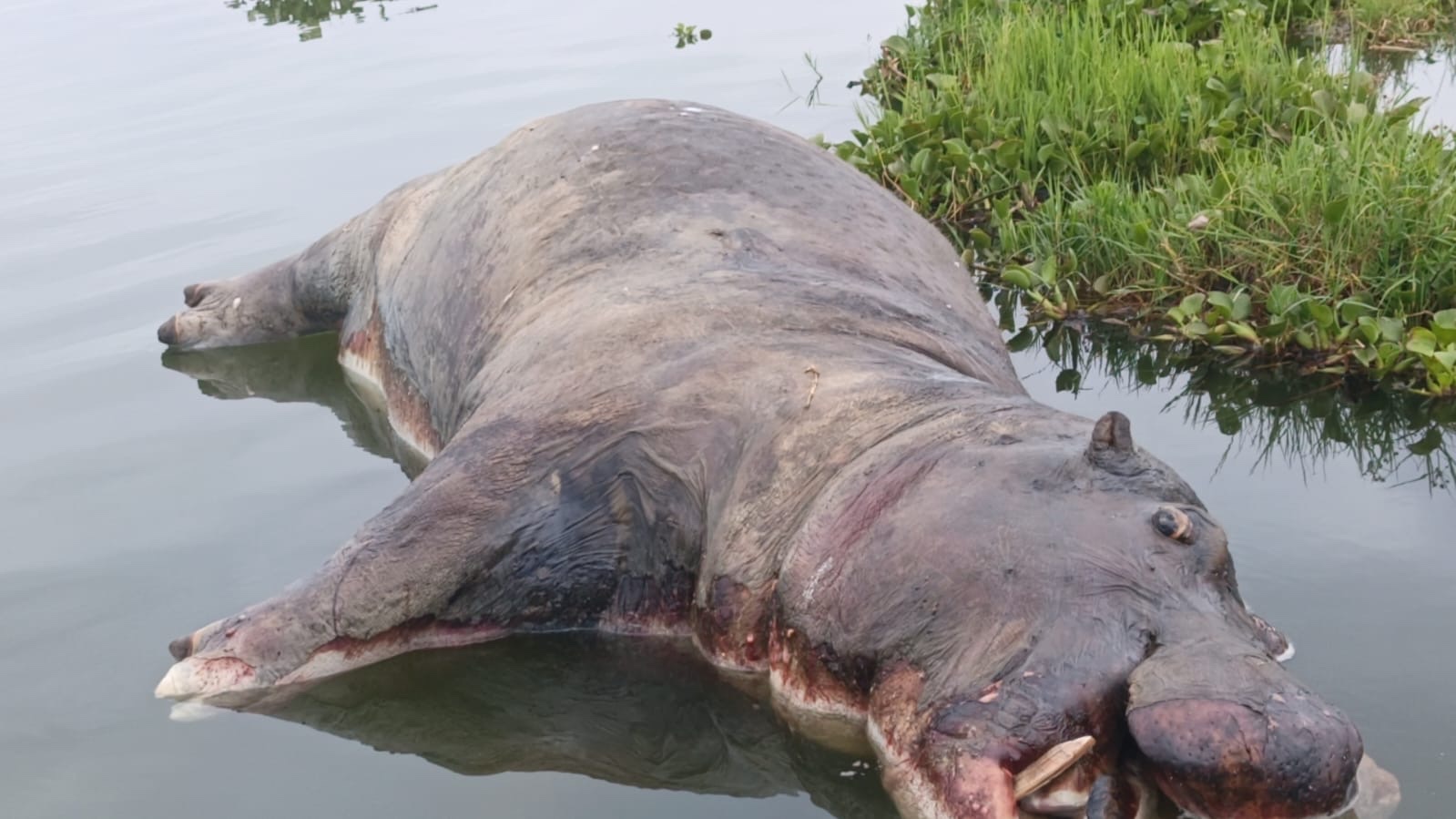
Two hippopotamuses at Lake Naivasha in Nakuru County have died after consuming harmful materials, including discarded synthetic fishing nets and excessive maize stalks, according to the Kenya Wildlife Service (KWS).
KWS said veterinary investigations and detailed postmortem examinations were conducted following the deaths of the two hippos at Lake Naivasha in Naivasha Sub-County.
In the first case, a sub-adult female hippopotamus was found to have a large amount of discarded synthetic fishing nets in its digestive system.
The examination established that the nets had formed a compacted mass, causing a complete blockage at the point where the stomach connects to the small intestine.
KWS said the blockage prevented the normal movement of food through the animal’s digestive system.
The tentative cause of death was identified as cardiopulmonary failure, hypovolemic shock and endotoxemia resulting from the foreign-body obstruction at the gastroduodenal junction.
In the second case, an adult female hippopotamus suffered from severe gas accumulation in its multi-chambered stomach.
The excessive gas caused the stomach to expand and push the diaphragm forward into the chest cavity. This severely compressed the lungs and interfered with the animal’s ability to breathe normally.
Veterinary teams identified acute gastrointestinal bloat as the likely mechanism that led to respiratory distress and eventual cardiopulmonary failure.
Maize stalks were found among the contents of the hippo’s stomach. According to KWS, the material may have contributed to dietary overload and excessive fermentation, resulting in the accumulation of gas and severe bloating.
The wildlife agency has raised concern over the growing threats facing wildlife around Lake Naivasha and called for greater responsibility among people living and working around the lake.
KWS has particularly appealed to fishermen, local communities, Beach Management Units and other stakeholders to ensure that fishing nets, gear and other equipment are handled and disposed of responsibly.
The agency also warned against exposing wildlife to inappropriate food materials that could pose serious risks to their health.
The deaths highlight the dangers posed by human activities and waste to wildlife in areas where communities and animals share the same environment.
KWS urged Kenyans to take wildlife protection seriously, noting that safeguarding the environment is a shared responsibility.
The agency said responsible actions by individuals and communities can help protect wildlife and support a future where people and nature can coexist.
KWS has encouraged members of the public and stakeholders around Lake Naivasha to remain vigilant and adopt practices that reduce risks to wildlife.
The agency said protecting wildlife requires collective action from communities, visitors, fishermen and other people whose activities take place around wildlife habitats.